
What we now need is a year of repentance, reparation and prayer. Repentance to turn back to Jesus Christ and make him once more, what he was in the early Church, the heart and the soul of our daily personal prayer.
 The Greco-Roman Stoics were all inspired by the words of the Delphic Oracle to “Know Thyself”. This was for them the beginning of wisdom. They believed that until self-knowledge was in place then you could not even begin to change yourself, never mind others. Fr Bernard Bassett SJ used to say in his retreats that if your friend would not tell you the truth, pay an enemy to do it for you. It was a lesson that he would have learnt the hard way in his Jesuit training where the famous “Ring” was used to do what you might otherwise have to pay an enemy to do for you. Each had to take their turn, and regularly, in this degrading charade. The famous Jesuit obedience would ensure that nobody would hold back from denouncing the faults and failings of others, who one by one had to stand at the centre of a ring composed of one’s peers whose accusations would regularly reduce even the toughest to tears. This usually happened when the presiding priest would then compare the moral mess that you were, to the moral perfection of the man you aspired to become. Nor would this telling the truth be confined to the “Ring” as it was part of the training to inform superiors of any misdemeanour of others and check up on whether or not another was “at prayer” or examining their conscience at the prescribed times to further their own personal endeavour to achieve their objective of stoical perfection.
In the years after the war when God was in his heaven and everything seemed well with the Church it would never have been considered “cricket” to criticise the spirituality of other religious orders, at least openly. After all, “dog does not eat dog” in the Catholic Church. But seventy years on when the religious orders and the religious congregations of both men and women have in many places all but disappeared and the laity are in a spiritual topsy-turvy land, with the leadership all at sea, it is time for the truth to be stated openly and clearly. If the truth cannot be told at the eleventh hour, in the last minute of extra time, then when can it be told?
If I have singled out the Jesuits to stand in the “Ring”, it is because in the last four hundred years or so, since the Empire has been striking back under cover of the Renaissance with the teachings of its Pagan Philosophies, they have been the most influential congregation. Furthermore, they have been the most emulated even by those who do not realize it. They are such a good example of what goes wrong when love is lost in religious life, that I am using them as an example, but by no means the only example of what can be seen in almost every other current religious order or congregation. Here I would like to include a more modern congregation or institute in the Church known as Opus Dei that has some characteristics in common with the Jesuits, but sadly far more in common with contemporary cults. They are just as anti-mystical as the Jesuits.
I cannot speak in detail for others but in the Franciscan order that I joined to try my vocation in 1957 there were almost three hundred friars with missions in India and South Africa. Now, however, I would be surprised if there are more than ten left with an average age of over seventy. I have no doubt that similar statistics could be gleaned from other religious orders, including the Jesuits. For years the blind have been crying out that this modern generation do not have the idealism that inspired us, being too lost in materialism to seek the spiritual. In my experience this is not true. The problem is that even if it were not for the sexual scandals perpetrated on an industrial scale by men and women vowed to chastity, they see nothing in the vast majority of modern religious to inspire them. That the perennial desire that always rises in the young to seek what is good, what is just, what is right, and what or who is spiritually loveable, is there today as it always has been, is not in question.
Religious life has to be radically reformed and without any further delay. It may well be true, as I have argued that it was lay leadership that was paramount in early Christianity, before religious life existed, and when the majority of religious orders or congregations that we know today were more than a millennium away. But since they came they have exerted a leadership role amongst the laity in matters spiritual that must be replaced, not necessarily by new religious orders, but by old religious orders returning to what they once were. We are indeed in the last minute of extra time so let me suggest a way that the Jesuits might like to take the lead and how others might like to follow their example. I would call a dozen of the greatest Jesuit minds to Rome and ask them to form a ring around their “Spiritual Exercises”. Then under obedience casting off any familial affection for the “treadmill that formed them” criticise what may well be an interesting historical document, once used to train trainees in a bygone age when humanism was rife, but which is today no longer fit for purpose. When the strictures of holy Obedience has freed them to say what must have been lurking in their minds before, introduce specially selected members of other orders, older religious orders who have access to a tradition that they have long since rejected, to learn how they can both profit from what has long since been forgotten, or at least in practice, no longer lived.
The Exercises begin by teaching us that it is by coming to know ourselves that we can be changed. The Gospels begin by teaching us that it is in coming to know God that, his love alone can change us. The Exercises teach us how it is primarily by mastering stoical methods and techniques of asceticism that we can change ourselves from the sinners that we are, into the saints we want to become. The Gospels teach us how it is by coming to love God, as he is embodied in Our Lord Jesus Christ, that his love can change us from the sinners that we are to the saints that we want to become. The first draft of the Exercises was written by St Ignatius at Manresa in 1522, at the height of the Renaissance, when he was only a novice himself, so he could not help being influenced by the principles of humanism that was in full swing.
If they are to be re-calibrated so that they can be made fit for purpose they must be redesigned to become theocentric not anthropocentric. The whole attention from the outset must be focused on coming to know and love Jesus Christ, and away from morbid concentration on self. In order to do this we need look no further than the Exercises themselves in which St Ignatius holds up three great saints, not just to inspire his followers, but for them to be emulated. They are St Augustine, St Bernard, and St Francis of Assisi. St Augustine teaches us to follow our heart’s deepest desire that will never be satisfied until it rests in God. St Bernard teaches us that it is only by entering into a profound mystical marriage with Christ in which our love and his love can mingle, mix and merge, that it can rest in God, beginning now in this life. Moments before he received the stigmata St Francis, as we have already seen, received the revelation of the primacy of love. Christ said to him that it was not by suffering, most particularly by self-inflicted suffering that you can be united with God, but only by love, his love. The spiritual life then begins in earnest, not by trying to take upon ourselves the punishing forms of asceticism with which we think that we can change ourselves, but by receiving his love to do what no earthly power can ever enable us to do. It does, however, begin with asceticism but with the “asceticism of the heart” that seeks out the quality space and time in which to open our hearts to the love that only God can give us through his Son Jesus Christ.
That is why, first and foremost, and above all else, the unique and meticulous teaching of St Ignatius on how to meditate should be introduced to novices on day one. Not those calculated to fill us with fear, but those with which to fill us with God’s love as we find it embodied in Jesus Christ Our Lord. And this should be done for every novice both male and female of every other order or congregation. And the same should be done for secular priests too for whom noviciates should be introduced for this very purpose. If the first apostles and St Paul needed a noviciate then so also do those who have never seen Christ, else they will never really come to know and love the person whose life and love they are called to introduce to others. That this has not been done, as it should have been done for centuries, is the scandal of what the aftermath of Quietism has done to religious and clerical education. That it has not been done was what I had to find out for myself, in many years of auditing the priests and religious, who came to my retreat and conference centre and to whom I gave retreats for over twenty years. The lay reader will be shocked to be told that very few of them had experiences much different from my own, who in seven years of training in the Franciscan Order never had a single instruction or talk on personal pray or on how to pray. The only congregation that did were the Jesuits. But why, despite the unique opportunity that St Ignatius gave to his followers, this meditation never led on to mystical contemplation is still a mystery to me. That it was wrongly believed that what St Ignatius called “ contemplation” was what the great spiritual writers called “mystical contemplation”, is a mystery to me too. It led those who generated this prayer to believe that they had experienced the mystical union that is the culmination of the mystical journey here on earth. It was this that made them, and likeminded evangelists, to go out to share the fruits of their predominantly “man-made and emotional contemplation” with others, and to return to it when their “well ran dry”. This is not what St Thomas Aquinas meant by and defined as contemplation in concert with the whole Catholic mystical tradition.
There is a general consensus amongst spiritual theologians that in seventeen-century Europe the teaching and the study of mystical theology reached its height, and this practical teaching began in noviciates. Many novice masters and novice mistresses, not only believed, but showed how in practice, meditation could be taught from the outset, and their novices could be led into what St John of the Cross had only recently called the Dark Night before the end of their noviciate. The advantage of this was enormous, because before they began their future studies, they would have, not only been told that they had entered the “Dark Night”, but that what St John of the Cross called “contemplation”, and they could therefore be taught how to adjust their prayer life accordingly.
All that I have said in this book to sum up the Catholic mystical tradition should be taught to novices including the new simpler form of Prayer based on different forms of the “prayer of the heart”, the practice of which would eventually lead to the purity of heart that would enable them, as the beatitudes put it to see God. One thing must be said and underlined. The whole point and purpose of this purification is that at the end of it, the mind and the heart, the feelings and the memory and the imagination, together with the whole human personality, will be so purified both physically and spiritually that they can be united with Jesus Christ Our Lord like never before. This means our whole body, blood soul and humanity with his body, blood soul and humanity, so that through the hypostatic union where his humanity and his divinity form one person, we can go on, in with and through him to the Father, in whom is our ultimate destiny in the next life and our joy in this life. To begin with we showed our belief in this profound union into which we are invited in words, in prayer, in liturgy, but now once purified it takes place in reality. In short, we begin as Catholic nominalists, but if we persevere through purification we end up as Catholic realists.
All the great mystical saints knew this, but so many others, who claim to be practising Catholics, despite Christ’s incarnation, despite his life and his ignominious death on the Cross, remain in practice “spiritual hybrids”, semi-Gnostics, semi-Manichaeans, semi-Neoplatonist or simply materialists, who only believe that Union with God can take place through some sort of direct pseudo-mystical knowledge, in this life or in the next, that is and can only be, purely spiritual? The whole point of God’s plan, his mysterion, as St Paul called it, is that union between the infinite and the finite can take place, because of our real personal and human union with the glorified humanity of Jesus Christ. But without the purification that prepares a human being to be united with his human being, then such a union is, and can be, no more than a pipe dream. Hence the mystical renewal that must begin now, not just for priests and religious but hopefully with their support and leadership, for everyone, so that from being no more than nominal Catholics they can become real Catholics, because they are in every way united to the real living and glorified body of Jesus Christ, Our Lord and Our Saviour.
For the last four hundred years or more we have become blind, living like the prisoners chained up in Plato’s famous cave, only gazing at shadows on the back wall of our prison. The shadows of the real world are so indistinct that each manages to see in them what they want to see, and they create their own little worlds and their own self-made spiritualities. When someone like Socrates came to awaken them with the truth, they killed him as they killed Christ and most of the prophets who insist on trying to tell them what needs changing, what they fail to see in their blindness, and what they think they see in their ignorance.
In recent years we have had a Jubilee Year, a Year of Mercy, a year in honour of St Joseph. What we now need is a year of repentance, reparation and prayer. Repentance to turn back to Jesus Christ and make him once more, what he was in the early Church, the heart and the soul of our daily personal prayer. This must be made clear by the way we do first and foremost what was done by the early Christians beginning the very moment when they chose to become one of God’s people. Namely, they went to Christ whom they were taught to come to know and love through the new form of prayer called meditation. Then, how to journey on by carrying the cross with him both inside and outside of prayer to be purified so that their bodies can be prepared for Union with the Body of Christ who converted a Pagan Roman Empire into a Christian Empire through them, as he can still do again today through us. It must be a year of reparation too, reparation for countless thousands of abused children, and even more abused women, and for the scandalised laity too, both inside and outside of the Church by loveless priests and religious, who sought and continue to seek counterfeit love for the love they never learnt or received in their training. In addition to the physical, psychological, spiritual as well as the financial reparation that must take place, that this may never happen again, all priests and religious must be taught as their first ancestors were taught, not just to give their lives over to Christ in words, but in a deep and ongoing prayer life from the moment that they enter a house of religious training. To this end those who receive Novices must be trained, not just to teach their charges to meditate from the outset but how to contemplate when the Holy Spirit leads them on.
If, as in very many instances, novice masters and novice mistresses, who are able to do this are not available, then noviciates must be closed down until they are, else more loveless priests and religious will be deformed to give scandal to the faithful. If it is seriously sinful to perform sexual crimes then it is also seriously sinful to put a person in a position where such sins are all but inevitable, because they have not been taught how to come to know and love God. If superiors demand that young men and women take vows of chastity then they must also teach them the profound mystical love that can make possible and fruitful what cannot be achieved without it. All religious orders or congregations, who fail to return to this Christ-centred mystical spirituality that once flourished in the Catholic Church must be suppressed until they do and supressed permanently if they permanently fail to do what is demanded of them.
I leave it to others to detail the scandalous moral malaises that prevail even in the highest positions in the Church. This is not the place to detail them; others have done and are still doing this for me, but simply to say that without the contemplation that St Thomas Aquinas once said should prevail at all levels in the Church then spiritual anarchy will continue to ensue. For the fruits of contemplation – God’s indwelling love, and all the other infused virtues given by the Holy Spirit, especially wisdom, will be lacking and the spiritual chaos that inevitably follows when human wisdom alone is used to solve spiritual problems, will continue to be evident everywhere.
If what I am demanding seems outrageous then it is only because those who are outraged, have come to accept as normal what is slowly destroying the Church. Surely we all know and accept the two new commandments that Christ gave us. The first from which the second flows states quite clearly that we are to love God with our whole minds and hearts, with our whole bodies and souls and with our whole strength. This universal commandment for the whole Church can only be realized to the degree in which each member of the Church is taught how this love is first learnt and then grows and develops in the years ahead in personal prayer. For there to be spiritual directors and leaders who are at the disposal of the laity for this purpose, every priest and every religious must, from the outset, and above all else, be taught how to practise this the greatest of all the commandments that begins in deep personal daily prayer. Furthermore, and from the very beginning of their training they must be taught how to read and understand, at least in theory, the great mystical Doctors of the Church. Then, when the time comes when they are led into the mystic way, they will know where to go to look for the help if they cannot find it elsewhere.
That is until the great spiritual revival that is already underway provides wise and prudent practitioners who are once more as commonplace as they were in the past.
___________
This essay is chapter sixty of The Primacy of Loving and is published here by gracious permission of the author.
The Imaginative Conservative applies the principle of appreciation to the discussion of culture and politics—we approach dialogue with magnanimity rather than with mere civility. Will you help us remain a refreshing oasis in the increasingly contentious arena of modern discourse? Please consider donating now.
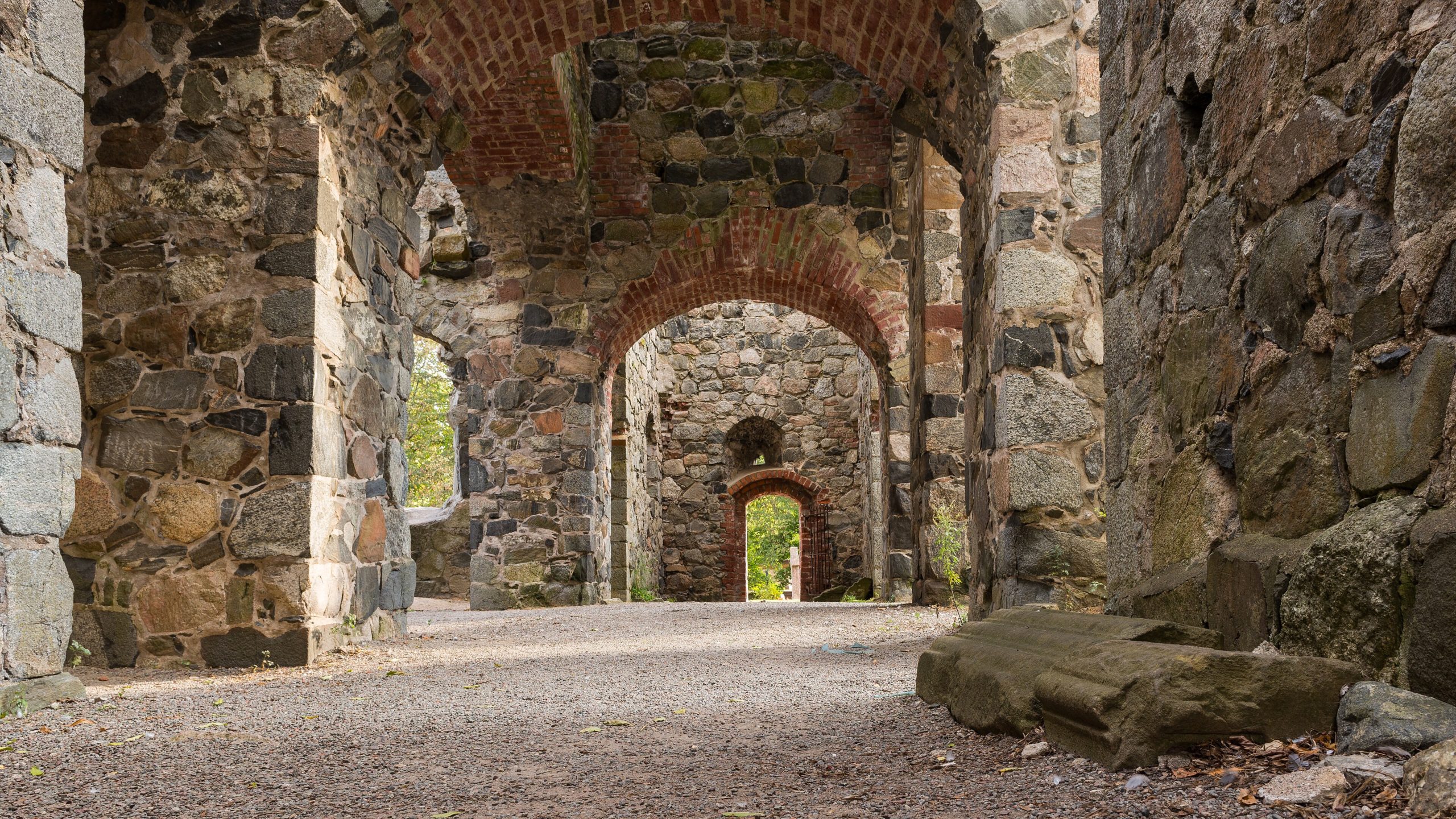
The featured image, uploaded by Arild Vågen, is a photograph of the Ruins of the St Olof Church at Sigtuna. This file is licensed under the Creative Commons Attribution-Share Alike 3.0 Unported license, courtesy of Wikimedia Commons.