Perhaps the greater part of Hope Patten’s lasting legacy is that his Anglo-Catholic faith and determination were able to open the door to the restoration of the Marian shrine at Walsingham. That open door allowed the Catholics back in, so that the shrine, whose restoration was begun in Anglicanism, ended where it started: in the bosom of the Catholic Church.
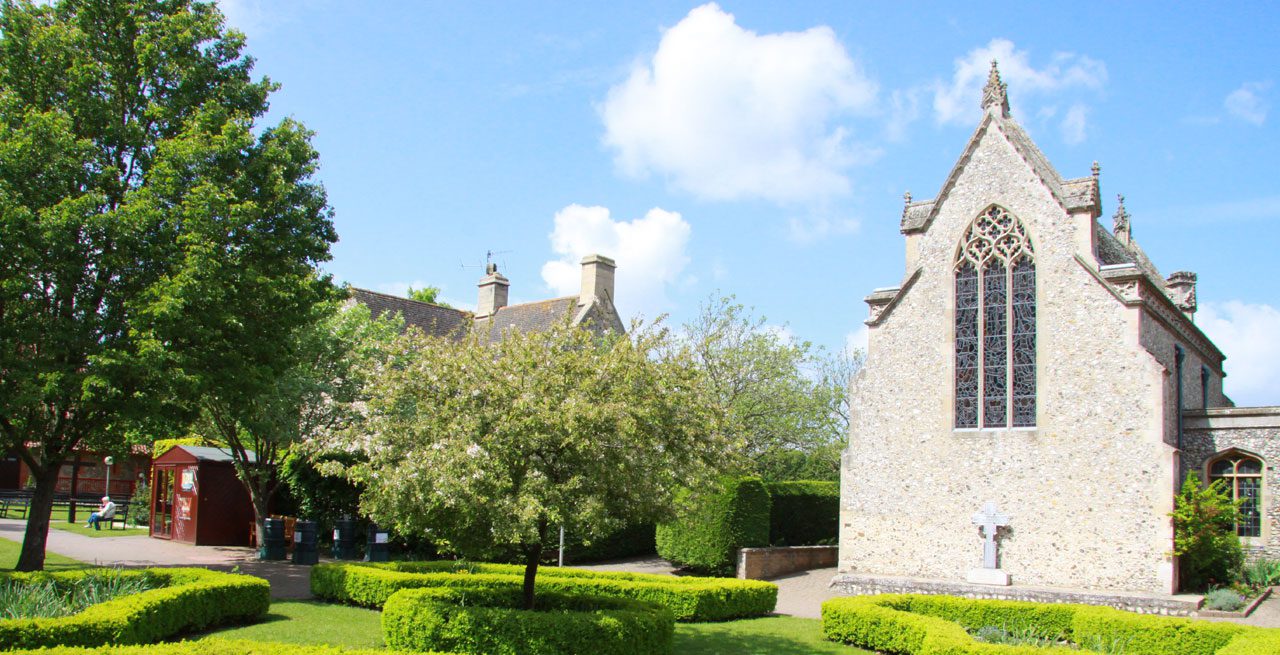
The Slipper Chapel at the Walsingham Minor Basilica
As a former priest in the Church of England I have a soft spot for the lovable, eccentric, and sometimes roguish Anglican clergymen.
These are Anglicans like the famous Father Ignatius, who set out to restore medieval monasticism in the Welsh mountains, or Aelred Carlyle, who also attempted Anglican monasticism on an island off the coast of Wales. Even in my day in the Church of England (from 1979 – 1995) the Anglo-Catholic woods were full unique characters—all delightfully and disturbingly eccentric in various ways.
A crunchy passage from Bishops at Large, Peter Anson’s classic about renegade Anglican bishops, can well apply not only to the men in miters, but also to a whole range of clergymen who were lesser in rank, but no less interesting in character.
In Anson’s introduction, Henry St John O.P writes about them:
In all this there is a queer mixture of the irrepressible, the ridiculous and the pathetic; naive goodness and sincere idealism, unconscious vanity and, at times, conscious roguery: its promoters frequently unstable to a degree, eccentric in some cases to the point of craziness, moving in a dream world of unreality. A marked characteristic of this dream world is a folie de grandeur of high sounding titles and more than extravagant pretensions; these generally in inverse ratio to the number of their adherents and the size of the conventicles in which they worship and still worship with elaborate ritual and ceremonial.
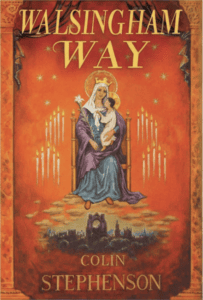
The Reverend Alfred Hope Patten is a famous member of the gallery, and a recent addition to my library, entitled Walsingham Way, tells his story. Penned by Hope Patten’s friend and successor Colin Stephenson, Walsingham Way relates the history of the English Marian shrine and the Anglo-Catholic clergyman who raised it from the ashes.
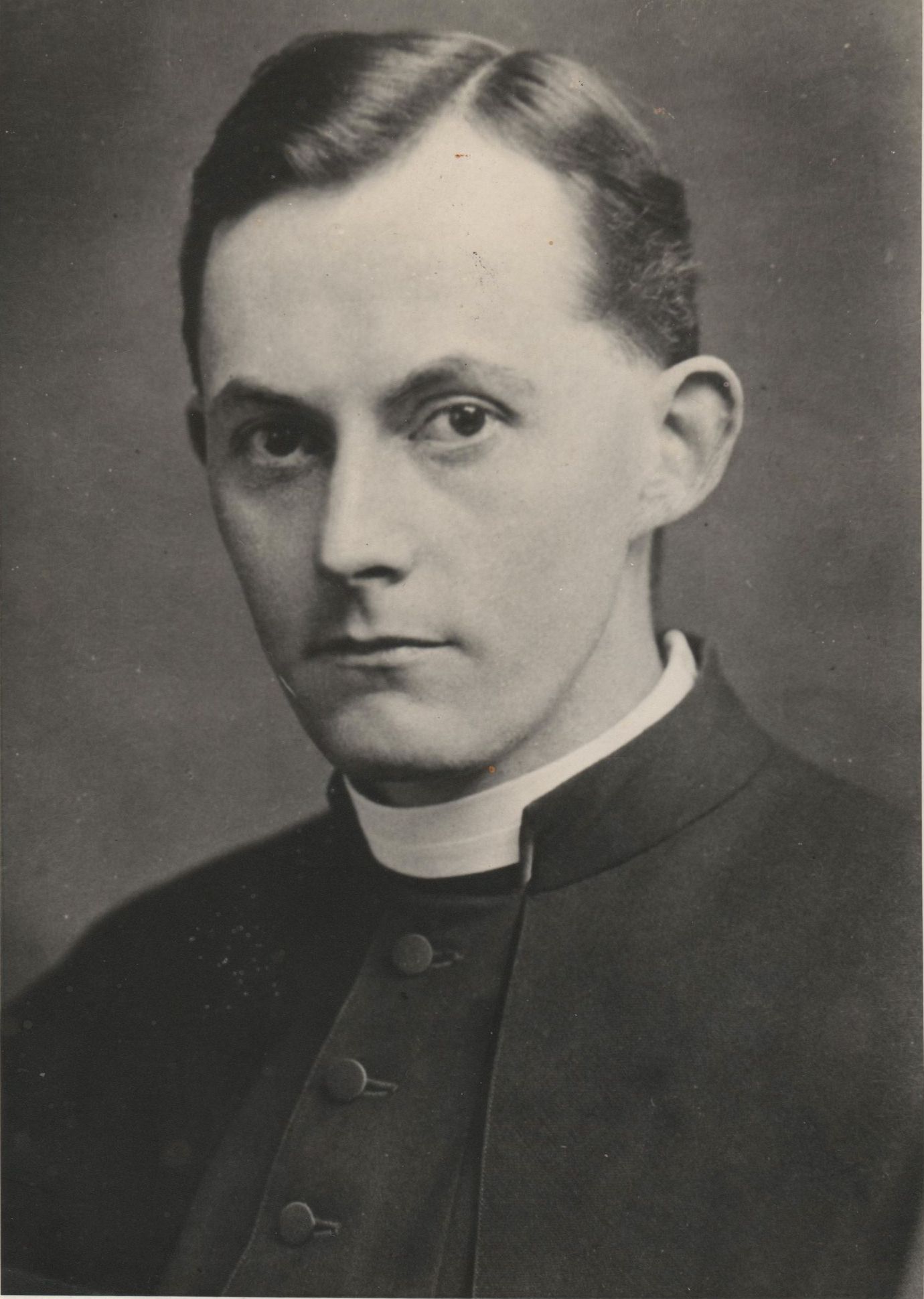
Alfred Hope Patten
Alfred Hope Patten was born on 17 November 1885 in Sidmouth, Devon. Unsuccessful at school, he never acquired the usual education for a boy of his class and age, but still managed to find his way to receiving Anglican orders. As a teenager he became enchanted with Anglo-Catholic religion and developed a strong interest in medieval Christianity and the religious life. He dabbled in monasticism, visiting Father Ignatius’ monastery at Llanthony, as well as Aelred Carlyles’ nascent community then based in Painsthorpe.
After serving in London as a curate, in 1921 Hope Patten arrived as Vicar of Little Walsingham—determined to restore the Marian shrine that had been destroyed at the Reformation. It would be his life’s work. By July 1922 he had installed a statue of Our Lady of Walsingham and began organizing Marian devotions and pilgrimages.
Opposition from the Bishop of Norwich led Hope Patten to relocate the image, which prompted the construction of a replica Holy House—like the one in Loreto—in the village. A shrine building opened in 1931, and an enlarged Shrine Church was completed in 1938. The shrine was thus established as a major pilgrimage site. Hope Patten served as both vicar and shrine administrator until his death.
Stephenson tells the story of Walsingham from its founding in the twelfth century, after a local noblewoman was visited by the Virgin Mary, through to the shrine’s destruction by Henry VIII. He then goes on to tell Hope Patten’s story, detailing Patten’s successes and failures: the extensive property acquisitions and building projects, the failed attempts to establish religious communities, the establishment and ultimate failure of an orphanage and choir school, and the long term success of the shrine itself.
Both the successes and failures can be attributed to Hope Patten himself. On the one hand he was charismatic, devoted parish priest—a man whose enthusiasm, vision and charm was matched with a boundless capacity for hard work. But the other side of the single-minded determination that ensured success was a leadership style that brooked no opposition and earned him the nickname “Pope Patten.”
When he didn’t get his own way, he would collapse with various psychosomatic illnesses and go on an extended European vacations to recover. He would attract colleagues to his dream world who were better educated, better connected, better funded, and more experienced, but would ultimately alienate them by his autocratic style.
The ancient Marian shrine at Walsingham was huge, with an Augustinian priory and a huge Franciscan friary and thousands of pilgrims from across Europe—peasants and princes alike. Hope Patten stands out from his fellow Anglo-Catholic ecclesiastical pretenders in that he actually accomplished something. He restored the shrine and the pilgrimages ,and if it was only a shadow of its medieval glory, still the seed was planted, and it has grown beyond Hope Patten’s eccentric Anglican dream.
In the 1930s, the Catholics also restored a shrine at Walsingham by restoring the Slipper Chapel—a small, Gothic chapel one mile from the village, where pilgrims stopped to remove their shoes before walking the final mile to the shrine barefoot. Today adjacent to the Slipper Chapel there stands a large Catholic Church, and pilgrimages to both the Anglican and Catholic shrines continue to draw large numbers.
Furthermore, due to Hope Patten’s efforts, images of Our Lady of Walsingham and Walsingham prayer groups were established in Anglican churches across England. In two trips to the USA, Hope Patten shared his vision, and Our Lady of Walsingham shrines were set up in Episcopal churches and in churches of the Anglican communion around the world. In the early sixties, Hope Patten’s successor met with Pope John XXIII, who expressed interest in the shrine and blessed its work.
Our Lady of Walsingham has become the Marian image not only for Anglicans, but for English Catholics and especially for converts to the Catholic Church from Anglicanism. When the Anglican Ordinariate was established in the UK, they took the name, “The Ordinariate of Our Lady of Walsingham,” and the North American Anglican Ordinariate is headquartered at the Cathedral Church of Our Lady of Walsingham in Houston, Texas, where they have erected a shrine that includes a scaled-down replica of the priory ruins at Walsingham. The main North American shrine of Our Lady of Walsingham is located in Williamsburg Virginia.
To visit Walsingham today is to get a taste of both Hope Patten’s eccentric character. Hope Patten’s shrine church is a curious structure—a low, brick building in a vaguely Italianate style with the holy house at its center, it is crowded with small chapels, “collegiate choir” side aisles, and surrounded by various outdoor shrines and devotional spaces. The decoration is eclectic, and the whole effect exudes that same superficial Catholicism one senses in all Anglo-Catholic worship and churches.
The designers of the Catholic shrine one mile away did not indulge in either Italianate dreams or romantic notions of medieval monasticism. The large church was designed to blend into the Norfolk countryside and is thus modeled on a local barn. While not exactly brutal, it is a practical, modern Catholic “worship space” with one side that opens to the outdoor courtyard to accommodate the large crowds of pilgrims for Mass.
 The Catholic pilgrims today far outnumber the Anglican. As Anglo-Catholicism continues to wither, the Anglican shrine draws perhaps 10,000 pilgrims a year, whereas the Catholic shrine boasts up to 350,000. Most of these are from diverse ethnic Catholic groups: Philippino, Tamil, Syro-Malabar. On peak days the fields surrounding the Catholic shrine are filled with Catholic families camping and enjoying the beautiful English countryside. Another Catholic addition to Walsingham is the English headquarters of EWTN—with their studios in the heart of the village.
Father Hope Patten died in 1958 after celebrating Solemn Evensong and Benediction at his beloved shrine. His achievement stands as a monument to his faith, perseverance, and unique character. In his day, the animosity between Anglicans and Catholics was sharp. Had Catholics attempted to restore the shrine and the pilgrimage tradition, they would, no doubt, have been halted at every attempt by the English/Anglican authorities.
Part of Hope Patten’s lasting legacy—perhaps the greater part—is that his Anglo-Catholic faith and determination were able to open the door to the restoration of the Marian shrine. That open door allowed the Catholics back in, so that the Walsingham shrine, whose restoration was begun in Anglicanism, ended where it started: in the bosom of the Catholic Church.
__________
The Imaginative Conservative applies the principle of appreciation to the discussion of culture and politics—we approach dialogue with magnanimity rather than with mere civility. Will you help us remain a refreshing oasis in the increasingly contentious arena of modern discourse? Please consider donating now.
The featured image, uploaded by LouProz, is a photograph: “The Slipper Chapel at the Walsingham Minor Basilica.” This file is licensed under the Creative Commons Attribution-Share Alike 4.0 International license, courtesy of Wikimedia Commons. The photo of Hope Patten is in the public domain, courtesy of Wikimedia Commons.