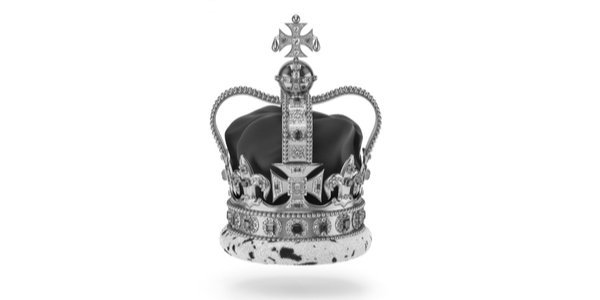
WHEN Dr Samuel Johnson returned from an audience with King George III, James Boswell asked him what he had said. Johnson replied: ‘It is not for me to bandy civilities with my Sovereign.’ Sir Ed Davey, leader of the Liberal Democrats, is arguably not such a great man as Dr Johnson, but he has been unabashed in publicly urging the Prime Minister, Sir Keir Starmer, to advise King Charles to cancel next month’s state visit to the United States, citing Donald Trump’s ‘illegal’ war on Iran.
Owing to the media’s obsessive prurience, we have been overloaded recently with lurid tales of the doings of Mr Andrew Mountbatten-Windsor and the alleged threat that these pose to what the papers and the telly call ‘the monarchy’. What to make of all this noise? First, a certain amount of clearing up has to be done. The monarchy is not a soap opera for society correspondents and gossip columnists to gawp at. The monarchy is emphatically not the Royal Family. The monarchy is simply and only the occupant of the throne: the King.
If we believe the mass media, the monarchy is no longer a divinely ordained institution but simply another part of the banal culture of celebs. Well, there have always been those who hate the institution of monarchy and will seek every opportunity to bring it to an end. The present tragi-comedy is providing them with their inglorious opportunity.
Since the Puritans and the republicans of the 17th century Commonwealth, there have always been scoffers and busy mockers, those who despise our monarchy. There is a burning politics of envy which was begun by Walter Bagehot and has been perpetrated upon the public ever since, right down to today’s left-wing press and (for the sake of politeness, shall we say) sections of the broadcast media. Their envy is based on a colossal deceit. They regard the monarch as useless, as indeed Bagehot did – but he put it more politely to underscore his scorn. Bagehot claimed a certain importance for the monarchy, but it was only what he called ‘the dignified aspect of the constitution’.
As the writer C H Sisson commented: ‘So Trooping the Colour must be regarded as a leg show of guardsmen, the crown as a bauble, and the Coronation itself as something for the illustrated papers. The Queen was dignified in Bagehot’s phraseology – which meant she was not much good. She was for fools to goggle at.’
And this is precisely the deceit – to claim that the King is only a constitutional ornament to add a little colour and romance while the real business of government goes on in the counting house whose affairs are meticulously reported in Bagehot’s own publicity sheet, the Economist and the BBC’s Financial World Tonight. But Bagehot was lying, as those who follow his denunciations of the monarchy today are lying. Of course, the King does not meddle in the policies of whatever cabinet of ministers he is obliged to rule over at any particular time. But then the cabinet minister is not hands-on in the running of his office either. His job is to secure the integrity of his department. That is why ministers resign – or used to, anyhow – when their departments make big mistakes. The King secures the integrity of the nation in similar fashion to that of the minister securing the integrity of his department.
When we salute or pray for King and country, we are saluting and praying for one and the same thing. The King embodies the nation that is beyond the latest round of trade figures, the fluctuations in the value of the pound and the comings and goings of prime ministers and political parties which are in any case bound to be divisive: gangs of opinion, supporting this sectional interest or that one.
And the laws of the land are the King’s laws, just as the language we speak is the King’s English. Ah, but I have been only scratching the surface in this great matter. Let me try to dig a little deeper. If you look at the very first line of the order for the Coronation, this is what it says:
‘In the morning upon the day of the Coronation early, care is to be taken that the Ampulla be filled with Oil for the anointing, and, together with the Spoon, be laid ready upon the Altar in the Abbey Church.’
So let us be clear: this is about sacral kingship. The Coronation rite refers back to the anointing of kings in the Old Testament, to Samuel, Saul and David; to when Zadok the priest and Nathan the prophet anointed Solomon as King. And fittingly Handel’s marvellous anthem by that name is sung at every Coronation in the abbey. This is a holy event.
As the Archbishop says: ‘Bless and sanctify thy chosen servant Charles.’
The Archbishop also says: ‘Receive the ring of kingly dignity and the seal of Catholic faith.’
The historic English Settlement means that the King is Supreme Governor of both Church and State. He is obliged to declare himself a Christian monarch and to promise to defend the Church of England. This is why the suggestion that the monarch should be described as ‘Defender of Faiths’ is mere moonshine and a sort of clowning. What? Is he to defend so many faiths: Christianity, Islam, Hinduism? Where do we stop? Christian Science, Spiritualism, L Ron Hubbard and the Church of Scientology? The monarch, in his person, stands for the reality of truth. And this truth is a particular truth: the truth of the Christian Creeds.
The sacred monarchy means that the monarch serves and suffers for the whole realm and in the whole realm: for he is the whole realm. King and country. One and the same. These are awesome and holy things. Or as Shakespeare put it in Troilus and Cressida: ‘There is a mystery in the soul of state which hath an operation more divine than our mere chroniclers dare meddle with.’
God save the King and scatter his enemies! For it is not a bunch of celebs who embody our nation. That is a role only the monarch can fulfil.