WHO buys personalised number plates? Perhaps you do.
People like to buy them for birthdays or for new cars. Sometimes there are quite sensible purposes: for example in business you might want to disguise the age of your car so that potential clients think you are more successful than you really are. You might also get one as an investment, a hedge against stock market collapse.
Now it seems taxpayers are subsidising them, and I’m going to hold to that view unless someone can show me otherwise.
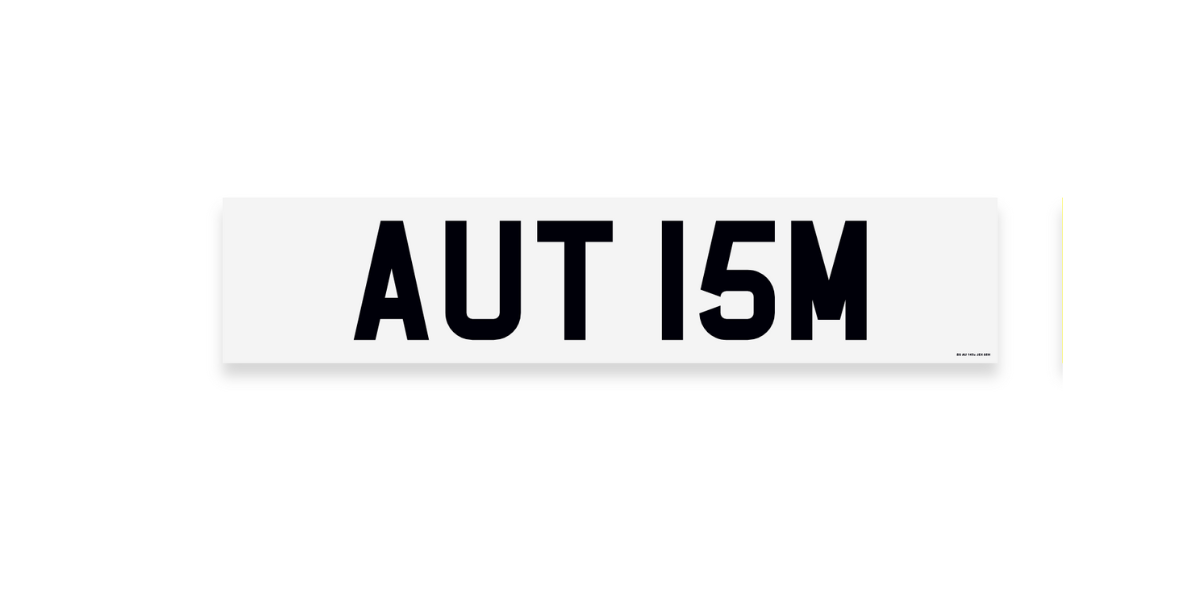
Last week the Driver and Vehicle Licensing Agency staged one of its regular auctions of numbers, and one of those that sold was AUT 15M.
Who would buy such a number plate? It strikes me as a triumphant celebration of wealth and the means by which it was acquired, a bit like a recently retired policeman calling his new yacht Overtime.
I could be wrong. The company that reported the sale said: ‘AUT 15M is a very clear representation of autism. We hope the plate will be used to promote awareness of neurodiversity. Such a perfect representation could be a powerful tool for a good cause.’
There are people around who find ways to make money from the benefits system. The briefest search of the internet yesterday threw up a company offering help to people who hope to claim Personal Independence Payments, which are handed to those who have trouble with daily living and mobility.
You can get more than £190 a week, tax free, regardless of any income or savings, and on top of other benefits. Other benefits may be increased if you are passed for a PIP.
The guide for claimants I read – other guides are available – said that there are just short of 200,000 people who get PIPs because they are autistic, and added that the success rate for those who make claims is 68 per cent.
It offers useful tests so that claimants can check whether they have got their forms right, and it gives helpful tips to answer questions about what autism means to you, including difficulty remembering to take medication, suffering anxiety, or having meltdowns when faced with the problems of being outdoors. Claimants are recommended to buy a guide so they are fully prepared for their assessment and ready for any unfair tactics the nasty Department of Work and Pensions might use to try to block them.
There is also a mobility test, which covers how you manage journeys and how you get around. If you get the top award, you can get on to the Motability scheme. This, and I think it’s fair to describe it as notorious, service offers a new car, complete with insurance, servicing and breakdown cover in exchange for your mobility PIP. Claimants with autism are very much allowed to drive, by the way.
A guide to making a claim will cost you just under £20, for which you get guides to claiming other benefits too. You can get online training as well for £40, and a full professional service to help you guide others yourself for a little under £100.
There are other ways the taxpayer can help with autism. There are, according to the Department for Education, 180,000 children under 16 in England with Special Educational Needs and Disabilities who get free transport to school. A high proportion have been registered as autistic. The cost to taxpayers for transport for SEND children appears to be about £500million a year.
You could argue that the benefits for people who claim to be autistic may be over-generous. You could point to the price someone paid at the DVLA auction for AUT 15M, which was £37,172.
Note that none of this is intended to suggest that there are not many genuine and distressing cases of autism. But when you see official figures that people are claiming £9,500 a year for conditions such as acne and bedwetting, it is easy to be sceptical about their motives.