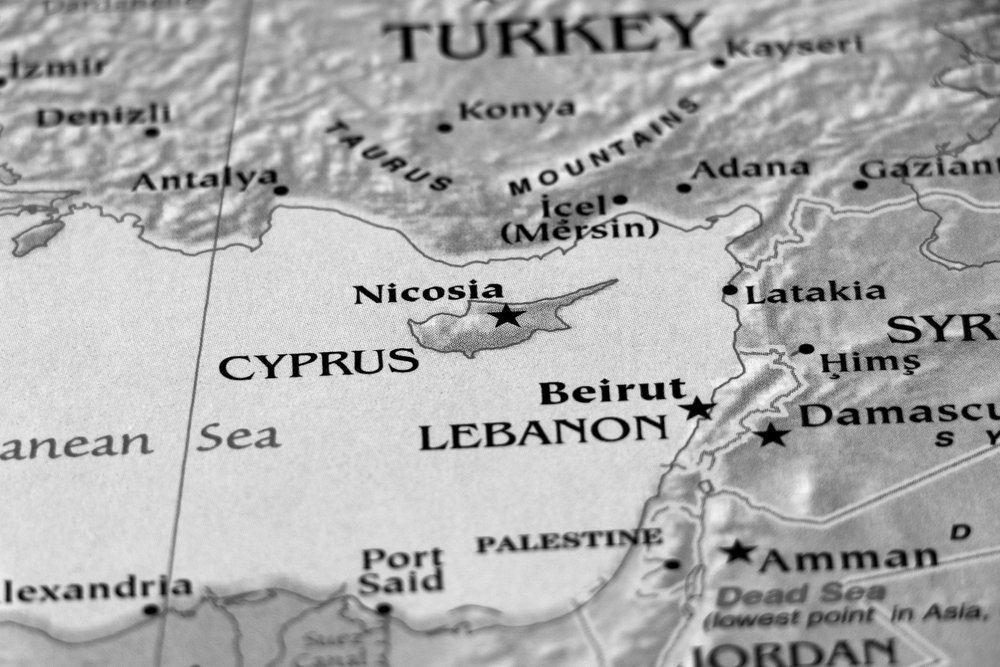
AS THE Type 45 destroyer Dragon churns its way to Cyprus through a sea of scorn and recrimination, it has become perhaps the most scathing symbol of Britain’s naval decline. The air defence warship was despatched from Portsmouth after an Iranian-made drone launched from Lebanon hit the RAF base in Akrotiri on March 1.
Unfortunately, under the ultimate auspices of Sir Keir ‘Captain Calamity’ Starmer, it did not set sail until March 10. It then reportedly spent three days ‘bobbing about’ in the Channel before finally heading for the Mediterranean. Meanwhile, by speedily responding to protect Cyprus, an EU member, other European nations showed starkly how Britannia no longer rules the waves. France impressively deployed an aircraft carrier and a frigate, Spain sent a frigate, Greece despatched two frigates, plus four F-16 Viper multi-role fighters, while Italy and the Netherlands joined the flotilla. Dragon was left plodding along in their wake, a sorry sight for the country that once boasted the mightiest fleet in the world and used it to project its power across the globe.
Back in the Victorian heyday of our maritime dominance, no one messed with British trade or British people without risking condign punishment from the Senior Service. It gave rise to the term gunboat diplomacy – using the threat of our ships to impose our will on opponents without necessarily resorting to all-out conflict.
Perhaps the most famous example came in 1850 in what became known as the Don Pacifico Affair. It centred on Don David Pacifico, a British subject said to have been born in Gibraltar who lived in Athens. Pacifico, a 63-year-old former diplomat, was Jewish. In April 1847, the city government decided to ban the traditional Easter custom of burning an effigy of Judas Iscariot, apparently to avoid offending Jewish-French banker James Mayer de Rothschild, who was visiting Athens to discuss a possible loan. Thinking Pacifico was behind the ban, an angry mob stormed his home, terrifying his family and causing widespread damage.
Sir Edmund Lyons, British Minister Plenipotentiary to Greece, sought compensation for Pacifico from the Greek government. None was forthcoming and the controversy dragged on. Finally, in December 1849, the British Foreign Secretary, Lord Palmerston, decided on gunboat diplomacy – by imposing a naval blockade on Greece.
He ordered Vice-Admiral Sir William Parker, who commanded a fleet which had been operating in the Dardanelles, to carry out the operation. On January 15, 1850, eight huge British ships of the line, several frigates and other warships stood off Piraeus, the main port of Athens.
The fleet’s stranglehold was total. Nothing could move in or out. Parker’s flagship, Queen, was a 110-gun first-rater. One hundred of its guns were 32-pounders, which were devastating to shipping at close range, but could also hurl a cannonball three miles – putting Athens under threat of bombardment.
The small Greek navy was detained and by March more than 1,000 merchant ships had been halted, crippling the country’s seaborne commerce. After a two-month standoff, during which the British fleet was reinforced, King Otto of Greece capitulated and agreed to compensate Pacifico. He received 120,000 drachmas and £500 (roughly £80,000-£85,000 today) – although some accounts say the sum was lower – and later moved to London, where he died in 1854.
Palmerston’s robust action was condemned by the French and Russian governments, who – along with Britain – were guarantors of Greece’s independence. The House of Lords also admonished him. But in the Commons, he was supported after he delivered a famous five-hour speech encapsulating why it had been Britain’s duty to come to Pacifico’s aid. He said: ‘As the Roman, in days of old, held himself free from indignity when he could say Civis Romanus sum, so also a British subject, in whatever land he may be, shall feel confident that the watchful eye and the strong arm of England will protect him from injustice and wrong.’
In ancient Rome, saying Civis Romanus sum (I am a Roman citizen) invoked the legal rights which citizens were entitled to and guaranteed immunity from arbitrary punishment.
I realise this episode took place at a different time in a different world and bears little comparison to today’s situation. But, if nothing else, it shows how those in charge of the nation’s affairs can demonstrate firmness and grip, resolute in defending the country’s interests. How different from the bone-headed, dithering, U-turning, lawyering nonentity currently at the helm of the ship of state. President Trump rightly said that Starmer is no Churchill. He’s also no Palmerston.