The writer is in Hungary.
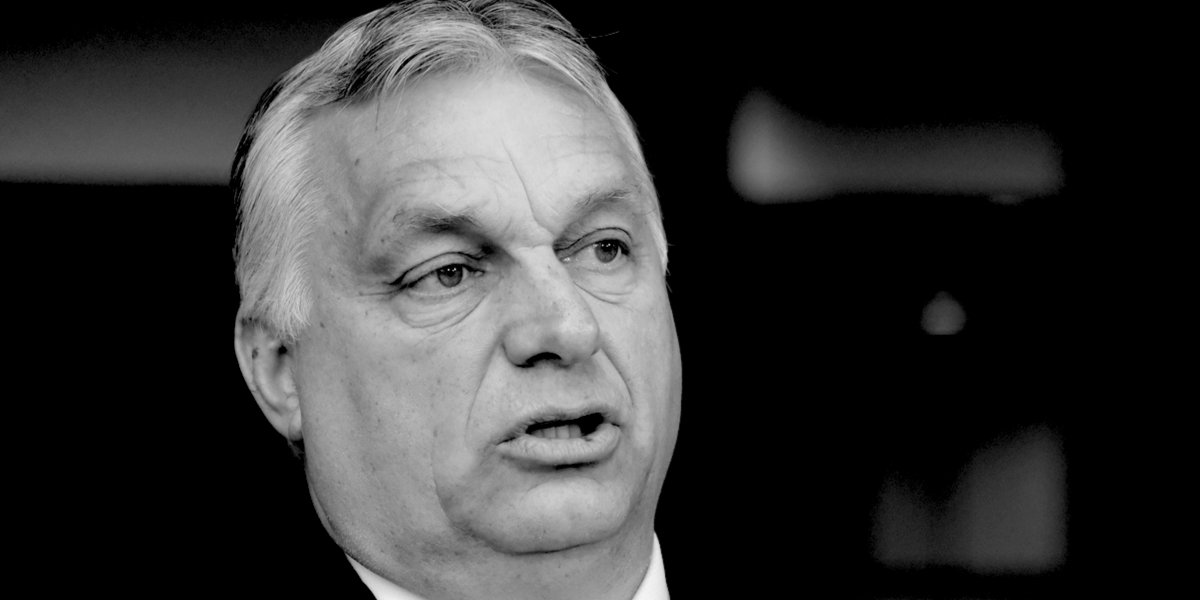
TODAY’S general election in Hungary sees Viktor Orbán, Prime Minister for 16 years, seeking a fifth term in office. The MSM across Europe can’t wait for his demise. In the UK, from the BBC to the Spectator, Orban comes second only to Donald Trump as the big bad bogey of the West. From a Budapest perspective the feeding frenzy regarding the elections is insane. Facebook inundates me with anti-Hungarian propaganda from all manner of unreliable EU parties, none of whom, importantly, has any connection to Hungary. Is this (finally) the turning point, they ask, revelling in the fact that a new opponent has forced Viktor Orbán into the first genuinely competitive race in 16 years.
It rankles, however, that British journalists are so easily satisfied with such glib appraisals of the Hungarian situation, as I commented in TCW last week. This week’s offerings were not much better. If they decide to write about us, surely ‘if a thing’s worth doing, it’s worth doing well’. William Atkinson’s Spectator article wasn’t. In fact it is a dog’s breakfast. He might want readers to conclude that all tales of Hungarian progress are merely propaganda and can be dismissed as piffle, but it’s a gross misrepresentation of the last 16 years.
Hungarian demographic policy, like that of the West, causes consternation, but for a different reason. Instead of importing migrants to shore up their numbers, the Hungarian government decided to encourage women to have children. They totally rejected the German view that one person equals one person, irrespective of where they come from. As far as Hungarians are concerned, importing Muslims from foreign lands to replace Hungarian children not being born just does not cut it. They’ve seen the mess which Western Europe has created for itself and concluded that if that’s what their societies want, so be it. It’s another question entirely if this is, indeed, what your people really wanted, but Hungarian manners dictate that we hold our tongues. Concordantly, it is not for others, least of all the EU, to dictate a sovereign nation’s policy, as laid down in the EU Treaties that certain policies fall within the exclusive competence of the sovereign parliaments. Border control is one of these areas.
With a startling demographic decline, the Hungarian government embarked on a campaign to win the hearts and minds of Hungarian women. As Orbán has repeatedly stated, it is the women who make decisions on babies. And the Hungarian demographic figures have as a result improved. Contrary to mainstream negativity, Hungary has shown one of the highest increases in fertility rates within the EU over the past decade.
They may not yet be at replacement level, but the fact that Hungary under Orbán has determined to deal with an ignored problem which besets the rest of the West should reflect well on him. He has sought to ensure that those who choose to have a family are no worse off financially in the tax system than those who choose not to.
Hungarian women who have two or more children are now exempt from personal income tax for life. Is that a bad thing? Surely not. At the same time Hungarian family tax credit has been doubled. Is that a bad thing? Again, the sane answer must be: surely not.
In the face of very slow economic growth (0.7 per cent), Orbán’s administrations have accomplished an awful lot without incurring massive debt. Taking HUF 15billion (the Hungarian forint) (£35million) in the form of special taxes from banks, big business and energy companies in the last 15 years has funded this reform. The government argues these companies need to contribute to the society which so enriches them. This tax provides inter alia for Hungarian family benefits (now in excess of 5 per cent of GDP), price caps on fuel, female retirement after 40 years of work, a 3 per cent fixed interest mortgage for first-time home buyers, an 11 per cent increase in the minimum wage, and more.
Atkinson lazily refers to Péter Magyar, president of the Tisza Party and the main opposition leader, being known as ‘baby Orbán’ by officials in Brussels. Yes, and therein lies the problem with the West. He was, once.
Atkinson’s information hasn’t aged well. The sycophant who once demanded he be placed in the front line of every gathering where Orbán spoke and staunchly defended every one of the Prime Minister’s decisions, now apparently despises them all with equal passion.
Magyar is not the man Brussels knows, and he’s certainly not the man the British media think they know, unaware of the problem which has dogged Magyar from the early days; fundamentally that he is just not suitable for public office as detailed in my previous article. Magyar has powerful friends and media in his corner.
If you were to ask those who know Orbán, the correct comparison would be Margaret Thatcher. Orbán, like Thatcher, has rebuilt Hungarian society. He’s turned it from a welfare to a workfare society, and was the first politician to succeed in integrating the Roma into the white economy. Benefits for the workshy have been reduced to such a level that work is the only option. A million more people are in employment now than were in 2010.
As to the bog-standard accusation that Orbán favours the Russians by not detaching from Russian energy suppliers, all anyone needs to do is look at a map and consider history. Oil pipelines run not from north to south, but from east to west. Hungary, controlled by one empire, the Soviet Union, for 45 years, has no alternative. With no sea access, how can Hungary be expected to obtain energy? The triumphant allies post-WWI saw to it that the country was denied access to historical raw materials. The Soviets decided where the pipes would run, and now another empire, the EU, is deciding that we commit suicide for the sake of virtue signalling.
In Hungary, too, young people are unable to see beyond the man who they have decided is responsible for all the bad decisions they have made in their lives. This same man has provided them with the reintroduction of the 13th monthly pension, the establishment of the 14th monthly pension, the increase in the nation’s gold reserves from 3 to 103 tonnes, as well as the lifetime tax allowances for mothers . . . the list goes on. But some people are determined that everything is bad, people who would quite happily cut off their noses to spite their faces. Asked what they think Tisza will do, the answer is the same: I don’t care, as long as Orbán’s gone.
None of this has registered in any UK mainstream coverage I have seen. I accept that the man on the Clapham omnibus is looking for neither a history lesson, nor a deep delve into the psyche of a nation he potentially couldn’t find on a map. But, all the same, up-to-date information is available via the internet, and the anti-Orbán narrative should be seen for what it is, just as Trump Derangement Syndrome should be but isn’t.
Orbán, as far as the MSM is concerned, comes first and logic and dispassionate reporting last. If this predetermined and heavily invested-in narrative wins the day, it will be a tragedy for Hungary.