Image Credit: Canva
The Tennessee Conservative [By David Seal] –
Tennessee citizens are on the verge of losing standing in court to challenge unconstitutional laws, possibly some constitutional protections that our founders enshrined in our state and federal constitutions.
Imagine if you will, a law being passed by the Tennessee General Assembly that limits your right of free speech, or a law that violates your right to freely express your religion, or another unconstitutional law that limits the number of bullets you can have in a magazine to protect your home and family.
Imagine another unconstitutional emergency order, based on an unconstitutional 2000 statute, that gave the governor so-called “emergency powers” resulting in the Covid-19 response that closed churches and determined which businesses were essential or non-essential.
Any logical constitution-loving person would believe that if such laws were to be passed by the legislature, citizens could seek relief in court to nullify such laws on constitutional grounds.
Think again.

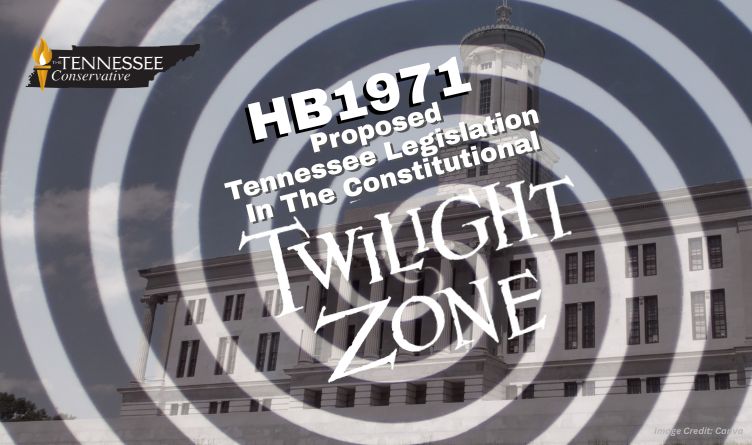
If HB1971 / SB1958 is enacted, you, the citizens of Tennessee will no longer have standing to seek relief in court to challenge laws that are believed to be unconstitutional.
Here is the specific language in the bill that eliminates your standing to sue the state.
“(a) Notwithstanding another law to the contrary, a cause of action exists under this section for any affected person who seeks declaratory or injunctive relief in any action brought regarding the legality or constitutionality of a governmental action of only a political subdivision of this state. A cause of action does not exist under this section: (1) To seek damages; or (2) To challenge the validity or constitutionality of any state statute. (b) This section does not authorize a cause of action against, or waive the sovereign immunity and privileges of, the state, state entities, or state officials.”
Please note that the proposed language specifically authorizes “declaratory or injunctive relief” against “political subdivisions of this state” (local governments), but not the state itself for the imposing of unconstitutional laws.
That language is the legislature placing your local government in the crosshairs of lawsuits and limiting your ability to seek relief in court against the state. Many claim that this this provision violates Article I § 17 of the Tennessee Constitution, which states “That all courts shall be open; and every man, for an injury done him in his lands, goods, person or reputation, shall have remedy by due course of law, and right and justice administered without sale, denial, or delay. Suits may be brought against the State in such manner and in such courts as the Legislature may by law direct.”
Certain people believe the legislature would never make an unconstitutional law. When lawmakers take office, they swear an oath to uphold the state and federal constitutions.
Decades ago, that oath did not keep legislators from making an unconstitutional law that banned new citizens of the state of Tennessee from obtaining a liquor store license. The law was so blatantly unconstitutional that the United States Supreme Court struck down the statute in 2019.
It was a protectionist Tennessee law that was so unconstitutional that a private business association had to take the lead in appealing the case to the U.S. Supreme Court. The Tennessee Alcohol Beverage Commission had not enforced the law for several years prior to the supreme court decision.
At the time of the decision in 2019, the attorney that represented the family that was damaged by the Tennessee protectionist statute commented as follows.
Michael Bindas, a senior attorney with the Institute for Justice, said, “Today’s ruling makes plain that all Americans have a right to earn an honest living and that government cannot deny someone that right simply because of where they live or used to live. No state may discriminate against out-of-staters or newcomers to protect established, in-state interests from competition.”
Author’s Note: For a full report on the case and background story from my 2019 op-ed in the Jefferson County Post, a link is provided here. Protectionist Tennessee Law Struck Down by U.S. Supreme Court | The Jefferson County Post
Tennessee legislators had been reminded nine ways to Sunday that their long residency requirement for a liquor store license was unconstitutional. It took years of fighting, and enormous litigation expense, to get the bad law off the books.
Here is a snippet from the Jefferson County Post Editorial. Please note the linked opinions of the Tennessee Attorney General on the constitutionality of the protectionist law.
“State lawmakers in Tennessee had reliable notice that a constitutional gremlin was hiding in the code section that protected in-state liquor retailers from new competition. On two occasions the Tennessee Attorney General (AG) opined that the residency duration was unconstitutional, one opinion in 2012, the second in 2014.”
In the face of certain unconstitutionality, the legislature kept the statute until the United States Supreme Court struck it down.
So yes, the legislature can make unconstitutional laws.

The bills will be considered by the House Judiciary Committee and the Senate Judiciary Committee on Monday, March 23, 2026.
Here is the contact information for those two legislative committees if you choose to opine on HB1971 and SB1958.
House Judiciary Committee – HB1971 to be heard March 23
HB1971 removes the right of a cause of action for any affected person who seeks declaratory and injunctive relief in any action brought regarding the legality or constitutionality of a state governmental action.
Rep.andrew.farmer@capitol.tn.gov; rep.elaine.davis@capitol.tn.gov; rep.rebecca.alexander@capitol.tn.gov; rep.fred.atchley@capitol.tn.gov; rep.gino.bulso@capitol.tn.gov; rep.clay.doggett@capitol.tn.gov; rep.rick.eldridge@capitol.tn.gov; rep.johnny.garrett@capitol.tn.gov; Rep.ga.hardaway@capitol.tn.gov; rep.torrey.harris@capitol.tn.gov; rep.gloria.johnson@capitol.tn.gov; rep.kelly.keisling@capitol.tn.gov; rep.william.lamberth@capitol.tn.gov; rep.mary.littleton@capitol.tn.gov; rep.jason.powell@capitol.tn.gov; rep.lowell.russell@capitol.tn.gov; rep.gabby.salinas@capitol.tn.gov; rep.rick.scarbrough@capitol.tn.gov; rep.tom.stinnett@capitol.tn.gov; rep.chris.todd@capitol.tn.gov; rep.joe.towns@capitol.tn.gov; rep.ron.travis@capitol.tn.gov
Senate Judiciary Committee – SB1958 to be heard March 23
SB1958 removes the right of a cause of action for any affected person who seeks declaratory and injunctive relief in any action brought regarding the legality or constitutionality of a state governmental action.
Sen.todd.gardenhire@capitol.tn.gov; Sen.kerry.roberts@capitol.tn.gov; Sen.paul.rose@capitol.tn.gov; Sen.bobby.harshbarger@capitol.tn.gov; Sen.sara.kyle@capitol.tn.gov; Sen.london.lamar@capitol.tn.gov; Sen.john.stevens@capitol.tn.gov; Sen.brent.taylor@capitol.tn.gov; Sen.dawn.white@capitol.tn.gov

About the Author: David Seal is a retired Jefferson County educator, recognized artist, local businessman, 917 Society Volunteer, and past Chairman of the Jefferson County Republican Party. He has also served Jefferson County as a County Commissioner and is a citizen lobbyist for the people on issues such as eminent domain, property rights, education, and broadband accessibility on the state level. David is also a 2024 winner of The Tennessee Conservative Flame Award & has received an accolade from the Institute For Justice for successfully lobbing the TN legislature to protect property rights. David can be reached at david@tennesseeconservativenews.com.