THE Prime Minister’s desire to keep us out of war with Iran, thereby avoiding electoral Armageddon by securing the Muslim vote in the May elections, lies in tatters. The Iranian drone strike on sovereign British territory on Cyprus has now been followed up with a ballistic missile attack on the US/UK base at Diego Garcia. If Iran can hit Diego Garcia, it can hit the UK.
One of the two missiles fired was shot down by an SM-33 missile from a US Navy Arleigh Burke-class anti-air destroyer. The SM-3 missile is a proven design (developed from the SM-2) introduced in 2014 to hit incoming ballistic missiles (and other air targets) outside the earth’s atmosphere if necessary. Its range is some 621 miles. The UK does not have the SM-3. The Type 45 destroyers like HMS Dragon carry the Sea Viper, a European missile with (depending upon the variant) a range of around 75 miles.
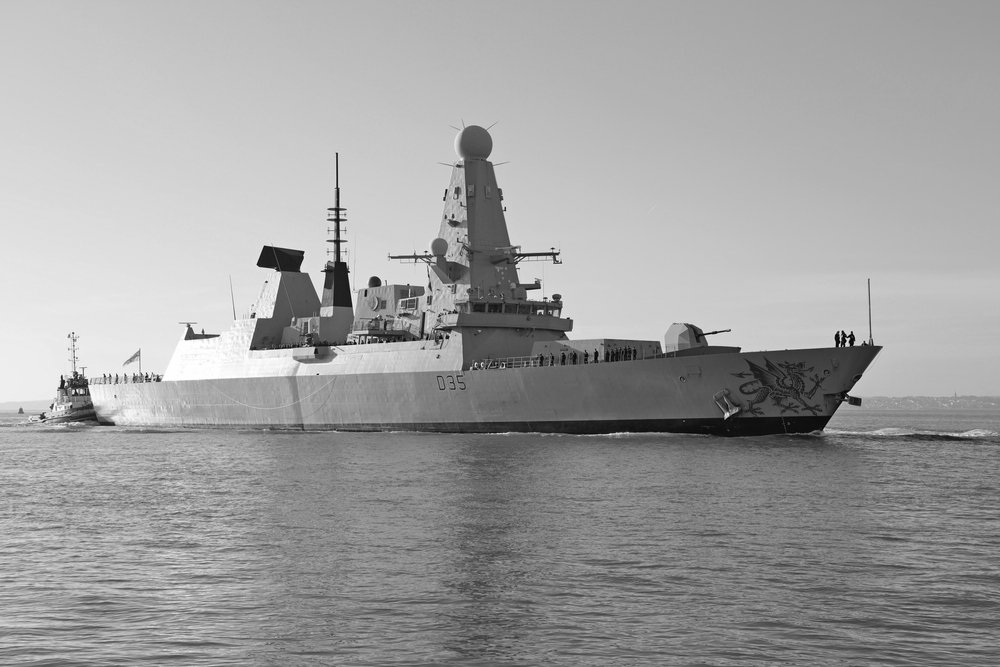
In 2024, a British Sea Viper destroyed a ballistic missile fired by the Houthis into the Red Sea. The type of missile is unknown (or has not been confirmed in open sources) but was almost certainly a version of the Iranian copy of the Soviet-era 310-mile-range Scud missile. The Khorramshahr missiles fired at Diego Garcia have a range of over four times that, which means they travel concomitantly faster. That in turn means interception timelines are compressed and radar and missile ranges become critical. In this regard the latest US Arleigh Burkes are more capable than the Type 45s. As became clear the other week, just one of the six £1billion-plus Type 45s that the long-suffering taxpayer has purchased, Dragon, is operational. It is on its way to Cyprus to protect the island from further Iranian attacks.
The Sovereign Base Area in Cyprus is largely an airfield and a barracks. While there are some service families there, it is not a conurbation. It was a sitting duck of a target due to a lack of air defence. It now has anti-drone protection from RAF Typhoons and F-35s, plus some helicopters toting the cheap Martlet missile.
Martlet missiles cost about £50,000 and are ideal for drone-busting, although as yet they are carried only on helicopters. The air-launched 16-mile range ASRAAMS come in at about £200,000. The 62-mile-plus range AMRAAM costs closer to £1million. Despite the cost, none of these missiles can hit an incoming ballistic missile. Nor can the Army’s new Sky Sabre missiles; although they have a range of some 62 miles they’re designed for targets flying below 30,000 feet.
The UK’s only immediate and short-term ballistic missile defence option is therefore the Sea Vipers on the five unseaworthy Type 45 destroyers. Even they might not be up to the task if the missile is travelling very fast – as long-range ones tend to.
Any sensible prime minister would be instructing his First Sea Lord to spend what it takes to get the Type 45s to sea sharpish. Such a prime minister might also wonder why he cares more about protecting a runway in the Eastern Mediterranean than the electorate in London. Dragon might be about to perform Starmer’s next U-turn.
On the TV the only available government comment came from the Housing Minister, that well-known military expert Steve Reed. He, like his master, indulged in sophistry, stating that there was ‘no specific assessment that the Iranians are targeting the UK – or even could if they wanted to’. Ignoring the fact that Diego Garcia is some 500 miles further from Iran than London, he went on to state that the British armed forces could deal with it. Right now, they can’t. Either Reed doesn’t know what he’s talking about, or he was lying – or both (as seems typical of this Government).
Iran demonstrably has the capability to strike at range. It has now twice struck at British territory, so it has the intent too. That makes Iran a current and credible threat to the UK. While the Government’s electoral imperative is to retain the Muslim vote, its duty is to protect the realm and its people. While it is not this Government’s fault that the armed forces are in such a pitiful state, they’ve done nothing about it for 18 months and still are kicking the Defence Investment Plan (due last autumn) down the road.
A half-decent prime minister (we should be so lucky) would instruct the chancellor to take some of the £2billion she intends to throw at quantum computing and AI and instead spend it in the dockyards. She also needs to purchase as many Sea Viper missiles as possible. They’re partly made in Britain by MBDA.
A bold and decisive prime minister would then inquire with maximum prejudice of the service personnel, civil servants and politicians in the MoD quite how this appalling state of affairs had arisen and what it would take to fix it. Of course, Starmer isn’t very good at asking difficult questions (to the good fortune of Peter Mandelson).
A rational prime minister would inquire of his attorney general if firing ballistic missiles and drones at UK bases was an act of war or if there was some clever interpretation in international law that made it fine and dandy. Either way, he would then contact the Israelis and beg access to their intelligence on Iran, accepting that de-recognising the non-existent Palestinian state might be the price. If it reduces the chance of an Iranian missile dumping a ton or so of high explosive in central London, most voters would think it a sensible trade off. That prime minister would then see what he could do to help the US/Israeli efforts to eliminate Iran’s missiles.
Of course, we have Starmer, so none of that will happen. That’s bad. If or when Starmer is deposed it will get worse. We need a general election and we need it now.
This article appeared in Views From My Cab on March 22, 2026, and is republished by kind permission.