FOR my one hundredth contribution to TCW I need to tell you about older times. They were so remarkably different. I feel you should know just how different, because it matters.
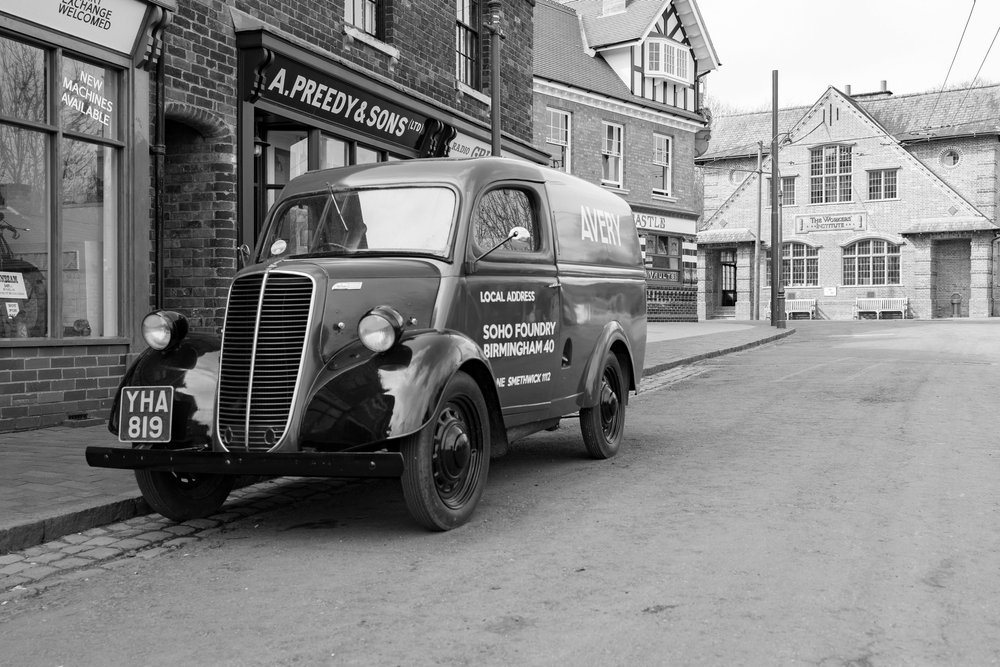
Setting the scene first: I was eight on September 3, 1939, when Chamberlain came on the radio to tell us we were at war. Radio itself was only 17. About a quarter of UK households had a telephone, often on a shared line. No mobile phones, internet, social media or computers of any kind. Television began in 1936 for an hour or two a day only in the London area and was shut down during the war. Adding up columns of figures, writing a formal letter or paying for items in a shop were carried out with mechanical devices (comptometer, typewriter and cash till). There were two million cars then, 42million now. Forty-seven million people then, 70million now.
In the 1930s our milk came by way of horse and cart. You left a jug on the doorstep and the milkman would fill it. In my part of the East Midlands many of the by-roads out in the country went through farmers’ fields. Driving without a passenger meant taking a stick to prop the gates open, then closing them behind you. My mother would go shopping two or three times a week. Food was all bought fresh and used quite often on the same day. There were no freezers and very few houses had one of the very small refrigerators as they were a luxury item.
When I was about four we had to move from a house with a large garden to live over a shop. I read about the Great Depression of the 1930s many years later. There was Children’s Hour on the radio every evening at 5pm. Always riveting. The BBC also broadcast really interesting schools programmes.
Maths lessons at the upper end of primary school concentrated on the manipulation of money. We had four farthings to the penny, 12 pennies made a shilling and 20 shillings were one pound. Therefore deducting £2–17s-8¾d from £5-12s-2¼d was tricky. Try it yourself. (Answer below.) Three of Queen Victoria’s portraits were still appearing on many of the coins: the young head, the Jubilee and the old.
Nobody had allergies, no one suffered from ADHD or anything other than measles, chicken-pox and mumps, and the very few people with severe mental problems were cared for in lunatic asylums. The war came to everybody. Relatives and friends went away to risk their lives. Bombs were a nightly threat. Yet during the whole of my 12-year school life only one child had anything wrong: he stuttered so badly that he was eventually sent home. No one had special needs of any kind. If you were falling behind in class, worried about exams or didn’t want to go to school you were told not to be silly, work harder and pull yourself together.
Most towns and villages had a railway station, usually linked to the local bus service. Travel was easy in the UK but the very few people who had been abroad were considered quite remarkable. We had two postal deliveries a day and there was one even on Christmas Day. Urgent messages could be written at a Post Office, transmitted immediately over the telegraph wires and delivered at the other end by a lad on a bike. The charge per word was quite high so you learned to keep it short.
During the war everyone had a gas mask and identity card. Private cars were banned and had to be laid up, preferably not resting on their tyres. It was therefore quite safe to play games and cycle on the roads everywhere. But you had to be careful near tramlines: you could trap your front wheel in one and end up rolling in the road. I speak from experience.
January 1940 was bitterly cold with lots of snow; it froze both night and day. Houses mostly had one room with a cheerful coal fire but elsewhere we either wrapped up well or managed with a paraffin heater. My bedroom had ice inside the window every morning so I got dressed very quickly. Where we lived buses and trains ran in spite of the snow. It never occurred to anyone that the schools should close. We made a slide on the playground snow, then the headmaster used a bucket to water it well so that the next day it was long, icy and much more exciting.
Ninety of us became Forms 1a, 1b and 1c when we moved from our various city primary schools to our secondary education. Everyone could read, write and do simple arithmetic. Later on in the fifth form (now Year 11) my set books for the School Certificate were George Eliot’s Silas Marner and King Henry IV Part 1 (Shakespeare).
There was a time when for many weeks we had to move into the air raid shelter every evening until the ‘all clear’ siren went off, usually around 4am. Our city escaped quite lightly as apparently the Heinkels and Junkers bombers passed over us on their way to Coventry and Birmingham. Rationing was severe and strict. Shops such as butchers and grocers took the appropriate coupons from your ration book whenever you bought anything. There were coupons for clothes as well. It was discovered later that during those difficult years rationing had made us fitter and healthier than we had ever been before or since.
I thought you should know about older times because they were so remarkably different.
That sum? The answer is £2-14s-5½d.