FOLLOWING the sensational resignations of BBC Director General Tim Davie and news chief Deborah Turness, the Today programme on Monday was a litmus test of how the Corporation would react. Forty years ago, it might have carried a reasonably balanced account of the huge unresolved impartiality issues now in play.
Not so now.
A 19-page internal dossier by independent editorial adviser Michael Prescott had laid out in forensic detail how sick BBC journalism had become. The centrepiece was the blatant doctoring in an edition of Panorama of a Donald Trump speech to make him look like an inciter of violence. Prescott also catalogued a long list of failures of impartiality in the coverage of areas of massive public concern, such as immigration, transgender ideology, the handling of Gaza and much more.
From News-watch’s origins 25 years ago, it has worked on the basis that the only way of establishing whether the BBC meets its impartiality requirement is by thorough and systematic analysis of programme transcripts. What follows is based on such an exercise.
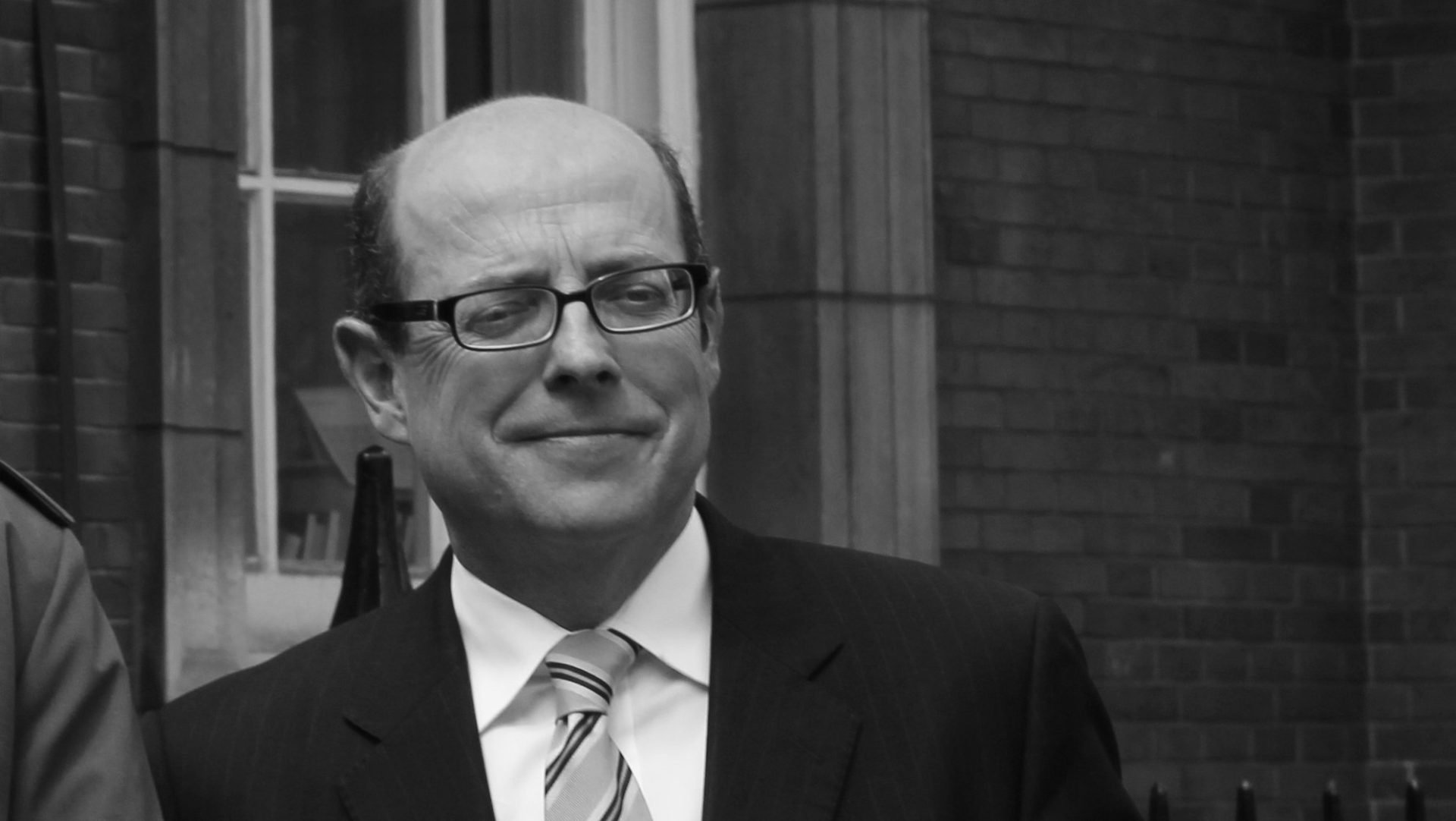
This should have been a morning when the BBC confronted the specific damaging indictment as well as the question of its broader institutional bias. A balanced journalistic approach would have brought into focus searching questions about how and why the speech was doctored and about the quality and accuracy of content generally. Instead, Today delivered a three-hour broadcast of defiance and denial designed to show that the BBC, ‘the most trusted news organisation in the world’, was under a conspiratorial populist right-wing attack. Lead presenter Nick Robinson abandoned impartiality and appointed himself as the mouthpiece of this defiance in the first salvo of a declaration of war against the Corporation’s critics. He was clearly infuriated that the BBC’s ‘moral superiority’ and probity had been challenged.
Exhibit A is that Robinson delivered two long, almost-identical monologues, one at 6.33am, the other at 8.10. Both were strident editorials light years away from objective journalism. After being ‘up all night talking to staff’, he felt able to claim there had been ‘a coup inside the BBC’.
Exhibit B is that he reduced Michael Prescott’s dossier of bias and doctoring to merely ‘a leaked memo from a former adviser’.
Exhibit C is his assertion that BBC journalism is, despite the claims against it, and the fact that senior editorial figures had inexplicably ignored Prescott’s internal evidence to the Editorial Standards and Guidance Committee for months, still ‘the most trusted news organisation in this country’.
Exhibit D is the selection of guests.
Today has often been found guilty of editorialising, but in the hundreds of programmes News-watch has monitored over the years never have any of its presenters been given what amounted to two scripted essays in a single morning. This has all the hallmarks of a uniquely crude editorial decision to convert Monday’s flagship news and current affairs programme into a PR vehicle to do three things. First, to play down a shocking indictment of the BBC – that it committed the grossest imaginable ethical offence as a news provider by doctoring footage of an hour apart to make it look as though Donald Trump incited the January 6th insurrection. Second, to discredit critics. Third, to turn Donald Trump, who had announced he was going to sue the BBC, into the chief source of attack on the BBC – deflecting from the damning revelation itself.
BBC culture editor Katie Razzall was the main additional contributor to the programme, given the role of interpreting events on behalf of listeners. She acknowledged that the Trump Panorama ‘edit’ was ‘wrong’ but claimed it was ‘muddle, not malice’. Something Donald Trump’s lawyers will likely challenge in their threatened defamation action against the BBC. Then on top of justifying what BBC Chairman Samir Shah was later to accept was a mistake, Ms Razzall targeted her comment on those who were expressing huge concern about the BBC journalism, claiming that ‘these mistakes have been weaponised by people who have always wanted to weaken the BBC’.
This was a blatant political point: reversing the blame which, in News-watch’s experience, is a signature move of BBC crisis management.
The programme’s main debate on the topic paired two ex-editors: Charles Moore (the Daily Telegraph) and David Yelland (the Sun). On paper, that looked balanced; in practice it was a stage-managed exercise in bias.
Moore stated his view that ‘the problem is cultural. The BBC’s bias isn’t a plot – it’s a mindset. The newsroom is full of people who think the same way and can’t imagine anyone thinking differently’. Robinson interrupted him, changed the subject and drowned this point in talk of ‘Twitter abuse of BBC journalists’, smothering Moore’s rather gentle observations.
Yelland’s contribution was to deliver a line of Corporation exculpation: ‘This is a coup. The BBC is a national treasure and must be protected from extremists.’ Far from there being a BBC ‘plot’ to discredit Trump, his assertion was of a ‘plot’ against the BBC! Here, in sharp contrast, came no challenge from Robinson and no cross-examination.
A former Radio 4 Controller, Mark Damazer, brought in for interview following Robinson’s second monologue, opined that the allegation of ‘systemic bias is simply wrong’ and that the BBC’s journalism is ‘largely excellent’. He portrayed Tim Davie as a victim of ‘ideological warfare’ and the BBC’s critics as disrespectful of ‘thousands of hard-working journalists’. He also suggested that behind the smears about BBC journalism were Board members who had not been properly scrutinised before being appointed. Overall, this was circular logic at its most blatant: in effect, the BBC can’t be biased because it is beyond reproof.
News-watch‘s initial calculations based on the full transcript of relevant items show that roughly 60 per cent of relevant airtime went to BBC or pro-BBC voices (Razzall, Yelland, Damazer, Sir Craig Oliver, Sir Ed Davey, Lisa Nandy and others). Only 30 per cent was given to critics such as Charles Moore, Dame Caroline Dinenage, Nigel Farage and Kemi Badenoch – and the latter’s segments were the most heavily interrupted. The remaining 10 per cent was classed as neutral.
Though the scandal began with Panorama’s falsified edit of Trump’s speech, the programme spent less than one-fifth of its airtime on the significance of the doctoring itself. There was no playback, no transcript, no forensic reconstruction. Phrases such as ‘doctoring’ or ‘splicing’ were hardly used compared with the more euphemistic ‘editing’. Instead, discussion veered to Board politics, governance ‘paralysis’ and ‘populist attacks’. The ethical and technical wrongdoing was not brought into focus. Coverage of issues such as Israel/Gaza, trans rights activism and BBC Arabic’s output – other elements from Prescott’s dossier – were mentioned in passing but only in abstract terms: ‘accusations from both sides’, ‘difficult territory’, ‘lessons to be learned’.
Clips from Lisa Nandy, the Culture Secretary, and Sir Ed Davey, leader of the Liberal Democrats, reinforced the overall editorial framing of the programme. Both defended the BBC as ‘a cornerstone of democracy’ and warned against ‘right-wing populism’. The selection of programme guests seemed designed to reinforce the impression that the BBC’s political content was balanced.
By contrast, the Today programme’s handling of the Davie-Turness resignations and the Prescott revelations proves yet again that the BBC’s bias is systemic. It is baked into its editorial reflexes: select, sanitise and self-justify. Every BBC trick of tone and sequencing that News-watch has documented and exposed for 25 years – from EU coverage to climate and Gaza – reappeared here in miniature. The only novelty was that this time the subject was the BBC itself.
This broadcast illustrates yet again that BBC self-regulation has failed. For as long as it remains judge and jury over its own impartiality, the Corporation will go on interviewing itself, absolving itself, and congratulating itself for being ‘most trusted’, an index itself conflated with most ‘used’. Monday morning could have been the BBC’s moment of admission, humility and a commitment to editorial reform. Instead, it became its latest act of angry denial, of institutional self-righteousness and justification. Charles Moore called the bias cultural; David Yelland called the BBC’s critics (presumably including Prescott) conspirators. Ironically the only ‘conspirators’ in view are those at the BBC – the political activists on its staff, the management who covered them up and the defenders of the cover-up. Including Nick Robinson himself, who declared Britain’s faith in the BBC unshaken, pointed his finger for the resignations at traitorous Management Board members and moved briskly to the weather.
A programme which confirmed in spades the disease Prescott identified.
Editor’s note Yesterday’s Daily T podcast with Camilla Tominey and Tim Stanley reported that a Daily T investigation has uncovered another, earlier example of the BBC doctoring footage of Trump’s January 6th speech. Not only that, but it was called out live on air by a Newsnight contributor – and nothing was done. It is well worth watching for the forensic analysis that Today, so patently failed to conduct.