TWO or three years before my father died, around 2009 or 2010, we went on what might be described as a small pilgrimage. We drove through the flat, featureless fields of the Dengie peninsula in Essex, then walked to the oldest surviving church in England. The chapel of St Peter-on-the-Wall at Bradwell-on-Sea was established around 654 AD by Saint Cedd, an Anglo-Saxon monk and Bishop from the Kingdom of Northumberland.
The chapel is very small, rectangular, built from plain stones taken from an abandoned Roman fort. The interior is stark. It reflects the landscape in which it is set. The skies are shades of grey, or chased with clouds, and if light falls it is in spears and columns, as if a grander architecture built from light towered over every human effort. Monks chose the spot for its emptiness and isolation, for the flat canvas of field, sky and shore which seem so suited to religious contemplation. There’s a Christian commune there too, in the nearest property to the ancient church.
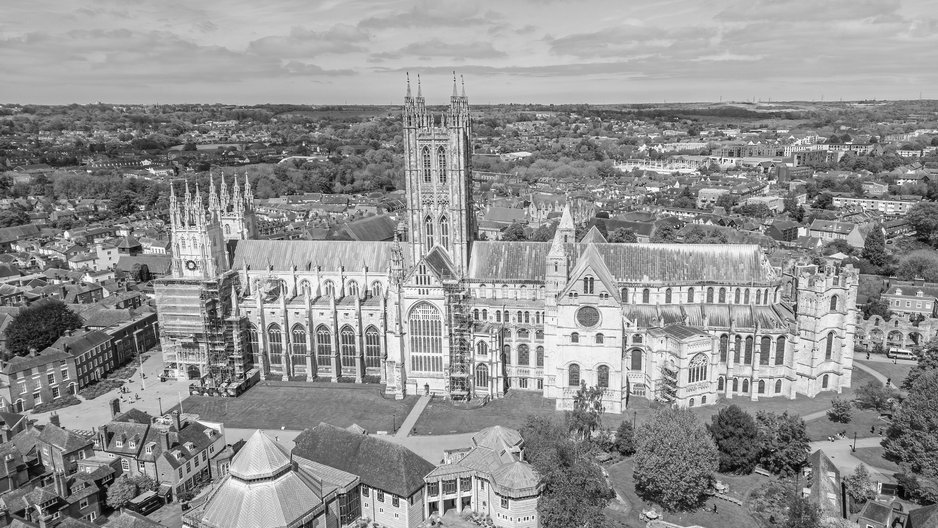
If I think of one place when I think of the Church of England, it is not any of the great Cathedrals, not even the recently desecrated Canterbury, it is that little chapel by the shore, stubbornly persisting through 14 centuries, and built of stones shaped by even earlier history than that. To me this place encompasses the two great threads the Church of England inherited from the Anglo-Celtic Church of its earliest missionaries, and then from the Roman Catholic Church which superseded that. It inherited that mix of the Christian and the Anglo-Saxon, of the deep weight of history and culture formed when those two forces met and merged.
Today, though, the English Church is broken. The Anglican Communion, which encompassed all the places across the world touched by English exploration, discovery, trade and power, where English Christian missionaries often led the way, has witnessed a devastating schism. At the start of this month Dame Sarah Mullally was appointed the first female Archbishop of Canterbury. As is tradition, the appointment was approved by the Prime Minister and the King, but the nomination came from the Church.
Whether Anglican Christians worldwide approved doesn’t seem to have been considered. Based on multiple past fissures between the part of the Church active in the United Kingdom and the (much larger) Anglican communities globally which had each time been papered over, it may be that the hierarchy in England assumed that the same would happen again.
If so, they were wrong.
The Global Fellowship of Confessing Anglicans (also known as Gafcon) represent the Anglican faith in Africa. Their response was to declare publicly that they would no longer send delegates to Church meetings in the United Kingdom, no longer consider the Archbishop of Canterbury as first among equals or a seat of authority to which they deferred, and no longer consider themselves in the same communion as the Bishops and clergy of the Church of England within England. Perhaps even more tellingly, they asserted that they were the true Anglican communion, more loyal to the instructions of the Bible and Anglican interpretation of those than priests in England. There’s a subtle but powerful distinction there – they were saying not that they had broken away from an Anglican vision of Biblical instruction and Christian identity but that the Church in England had done so.
African Anglicans now assert that they are the true Anglicans, and that the organisation within the UK is not. And in terms of the number of people who follow their message, they are right to assert this.
In losing the African churches and the global, more conservative branch of Anglicanism, the Church of England has lost 80 per cent of Anglicans on the planet.
Imagine a company that lost 80 per cent of its customers. Or a political party that lost 80 per cent of its voters. Or a nation state that lost 80 per cent of its territory. These would in each case be recognised as unmitigated disasters.
Now imagine this following a previous disaster, which was the end of Justin Welby’s period as Archbishop over a scandal based on not being firm enough and honest enough about paedophile cases in the clergy. One would think the Church might be looking for a non-controversial appointment intended to restore moral trust immediately and defuse criticism.
They did not do this. Knowing the much more conservative and traditionalist stance held by the majority of Anglicans, they chose not to listen to those people, and did something it knew to be passionately opposed by them.
There is an intense irony here that gets to the heart of the self-inflicted problems of the Church of England today. Sarah Mullally has been very clear on the kind of Church she believes in – she’s a supporter of LGBTQ+ rights and activism, she has strongly backed asylum and migration, she is a self-declared feminist, and she is both politically and it seems religiously progressive. As Bishop of London, she boasted about representing a diverse and multicultural city, and put her experience in handling diversity as one of the key qualifications and evidence of positive experience she could bring to being the Archbishop of Canterbury.
This was an intensely reality-averse selling-point. London’s slightly lower trend on the relentless decline of Christian faith and attendance compared with the UK as a whole is based not on Mullally’s competence and persuasion. It is based on traditionalist, conservative-minded members of the African Anglican communion in London being more likely to go into a church.
And these people hate woke attitudes and politics.
The central contradiction is that those who boast about diversity in a woke way are the least able to deal with it in a serious way. Their ideology, which is primarily about a modern set of political beliefs they dress in Christian rhetoric rather than about actual Christian belief, cannot accept or accommodate conservative views. The Church of England, obsessed with Diversity, kept telling black Anglicans at home and abroad to shut up and obey. A Church of England prone to woke lectures on racism and past colonialism adopted a more dismissive attitude to African Anglicans or socially conservative black Christians than the average 19th century colonial administrator possessed.
The attitude of white woke clergy to ethnic minorities is patronising, paternalistic and colonialist, all while pretending to be compassionate, elevating and enlightened. The defining Christian religious offer of universal love from Christ for all humanity is twisted into a weird CRT-Christian fusion which says to black Christians ‘we will regard you as generally sacred but not listen to your opinions’ and which says to white Christians ‘we will relentlessly demonise and devalue you and regard you as morally good only if you are politically progressive’.
What is it that the Church of England now offers the English? Sermons on their wickedness, not for the sins of pride, lust and envy but for the sin of being English and aware of it. During Brexit 100 Church of England bishops signed a public letter condemning Brexit as ‘unworthy of our nation’. The Church of England made multiple anti-Brexit interventions. During the last Conservative government a Tory MP took note of voting of Bishops in the House of Lords and found that in 96 per cent of cases they spoke or voted against the government.
The message has been consistent and clear. The Church of England is not concerned with religion, it’s concerned with politics, and specifically with always advocating for leftist politics and progressive politics.
The Church of England did not speak loudly and morally on Islamic rape gangs targeting Christian children for sexual abuse. It did not speak loudly and morally on Christian South African farmers being murdered. It did not speak loudly and morally on Islamic attacks on Christians throughout Africa, such as the more than 100,000 black Christians killed by groups such as Boko Haram in Nigeria and other African nations. It has had nothing to say about Christians being arrested in England for the ‘crime’ of silent prayer. It’s had nothing to say about Christian street preachers being arrested for quoting the Bible, for offending homosexuals, or for offending Muslims.
I imagine that Saint Cedd is as furious and disgusted with the Church of England as African Anglicans, or English ones, are. It has betrayed its religious mission and replaced it with a political one that very few people share.