PRESIDENT Trump already has military confrontations with Iran, Venezuela, Cuba, Russia and China. Does he also want one with the rest of Nato over Greenland?
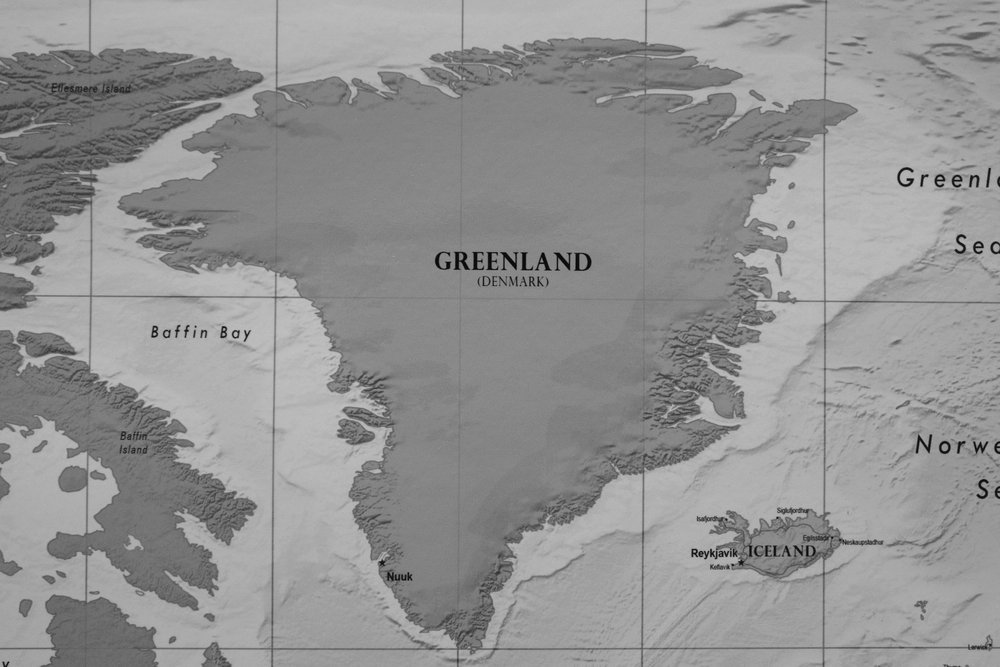
Greenland is the world’s largest island, (just) contiguous with Canada, and geographically part of North America. It was colonised by Denmark in the tenth century but the Norse settlements, which farmed sheep and cattle, died out during the mini-ice age of the medieval period, not long before the rediscovery of America by Columbus.
The majority of the population is now Inuit with only about 10 per cent being Nordic. Following a 1979 referendum, Denmark granted Greenland home rule and in 2008, self-government increased further. Denmark retains control of citizenship, security, finance and foreign affairs. Greenland joined the EU with Denmark but has since left. As a self-governing part of Denmark, it remains a member of Nato.
Greenland sits astride an area of great strategic importance. First, the Arctic ice is retreating as the result of an entirely natural process of cyclical warming – nothing to do with so-called man-made ‘climate change’. This will end when the world enters the next ice age, which is long overdue.
As the Arctic ice retreats, ships can sail through the north-east and north-west passages, sought for so long by explorers. This means not only that transit times can be reduced but also that the Russian ‘shadow fleet’ of unregistered oil tankers engaged in moving sanctioned oil can more easily dodge interception, as is happening to Venezuelan oil tankers.
Second, Greenland probably has reserves of oil, coal and gas concealed beneath the ice cap, but exploration has been slow and difficult, for obvious reasons. Estimates put Greenland fourth in terms of likely reserves in the Arctic region.
Third, in Greenland’s territorial waters in the Arctic Ocean there are huge reserves of fish, shrimp, whales and seals – valuable food resources especially for China and Japan.
Finally, there is the matter of fresh water, an increasingly scarce commodity in many parts of the world. The Greenland ice sheet holds about 10 per cent of the world’s fresh water.
It is therefore easy to see why both the Russians and the Americans see Greenland as a valuable asset. Donald Trump made aggressive noises about ‘acquiring’ Greenland during his first presidential term and has now made further remarks, perhaps emboldened by his successes in Iran and Venezuela.
Special envoy Jeff Landry has been appointed to examine how the US could acquire Greenland. The means so far mentioned have included diplomacy, a territorial purchase – the US has done this before in its history, for example Louisiana and Alaska – or a lease agreement.
The problem here is that the Greenlanders and the Danes are having none of it. Danish Prime Minister Lars Lokke Rasmussen told the BBC: ‘As long as we have a kingdom consisting of Denmark, the Faroe Islands and Greenland, we cannot accept actions that undermine our territorial integrity.’ Rasmussen is on solid legal ground, as the UN Charter specifically states that frontiers must not be changed by force.
If Trump means business, his only recourse would be a military invasion. Under the 1951 Greenland Defense Agreement, the US already has a foothold at the Space Base of Piuffik, or Thule. This followed the use of Greenland as a staging post for aircraft during the Second World War. During the Cold War, there were 6,500 US personnel there, but at present there are only 150. It is possible that an extension of this agreement might satisfy Trump if the Danes and Greenlanders are inclined to agree to it. If they do not, and if the US chose to do so, it could thereafter seize and hold those parts of Greenland that matter.
What would be the consequences? The US is already committed militarily to Venezuela and probably Cuba; to the defence of Israel; to over-watching Taiwan; and, of course, to settling the war in Ukraine. To do the last, the US will need the co-operation of European Nato.
To attack Greenland, and therefore Denmark, Trump would attack a Nato ally. The invocation of Article 5, under which an attack on one member is an attack on all, would put the US in direct conflict with Europe and the UK. Of course, European Nato cannot fight and defeat the US, but it would be the end of Nato.
Nato allies have fought each other before – the Greeks and Turks did so over Cyprus in 1974 – but for the alliance’s most powerful member to take on the rest is surely unthinkable.
One can see that disabling Iran, Venezuela and Cuba are all part of a programme of dismantling Russia’s clients overseas and perhaps creating the basis for a deal over Ukraine. However to pick a fight with the rest of the alliance means that the US air bases in Britain, such as Mildenhall and Lakenheath as well as the intelligence-gathering site at Harrogate, and those on mainland Europe, all its land force bases across Europe, from Belgium to Poland and from North Germany to Italy, would be gone. Its extensive logistic stocks in Western Europe also gone. Any idea of American leadership or legitimacy in the free world, as well as leverage on European countries as partners, would be gone too. And what of the effect on trade?
Trump of course has no respect at all for most European leaders, but this a matter of policy, not personality – they may insult him and expect the US to underwrite their globalist, socialist, intolerant rule but the fact is that they are all weak politically and economically.
Trump knows this and cares not a jot for their views. He also enjoys making pronouncements that shock, reminding his weaker brethren that the US has capabilities that no one else has, and that he has the will to use them.
In the end this may therefore be the opening bid in what the US hopes will end in a compromise, extending US oversight well into the Arctic for the foreseeable future.