A COUPLE of weeks ago, a friend sent me a short video on Instagram from Qoves, a company specialising in ‘biotechnology research’ or, to a lay person such as myself, facial aesthetics.
The video informs the viewer that they have no idea just how attractive they could be — this knowledge (for a £112 sign-up fee) is the unique preserve of the company. By analysing your face, they can recommend style and lifestyle changes tailored to enhance your physical attractiveness. So far, so good.
Yet, if you think a choice of necklines and a new shade of lipstick will be on the cards, think again. By the end of the video, a list flashes up on screen with recommendations ranging from reverting to your natural hair colour to more expensive treatments, such as brow microblading, redlight therapy, and radiofrequency treatment. Don’t be embarrassed if you had to Google some of these — I did too.
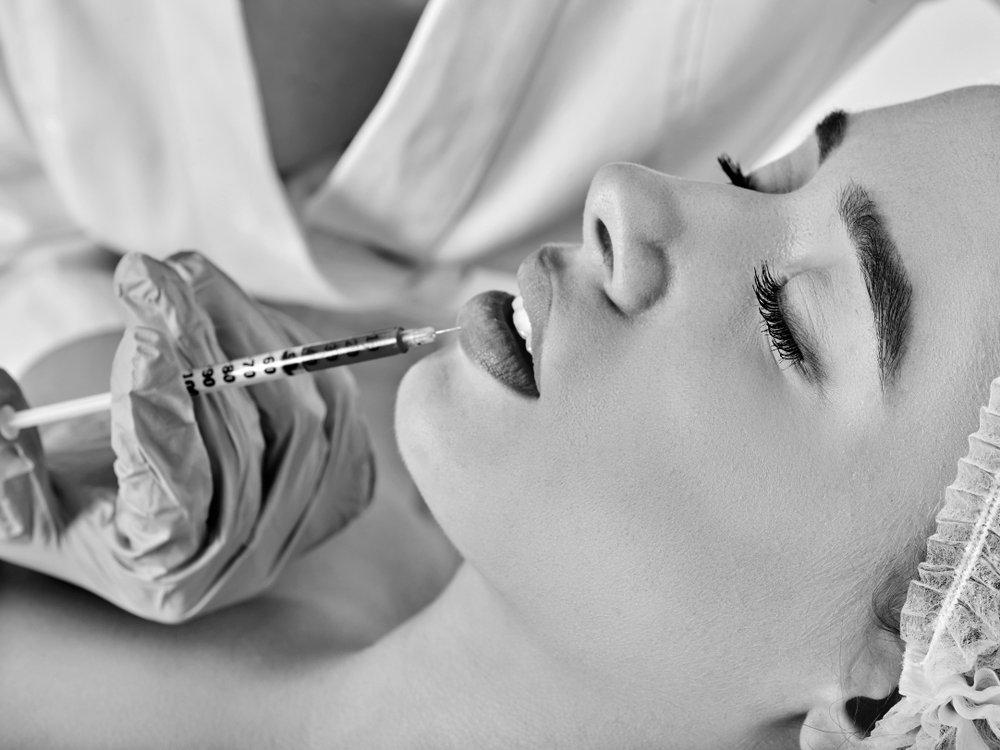
While lengthy and costly, these proposals present no apparent contradiction to Qoves’s website promises to help its customers ‘glow-up without surgery’. However, a closer inspection of this list reveals ‘0.5ml of lip filler’, so it appears this advice does, in fact, involve invasive procedures. Also detailed are ‘Before’ and ‘After’ images of its customers — faces that once had their own distinct visage but have since acquired ‘Instagram face’.
Instagram face is widely recognised as a phenomenon where many women — influenced by the image-oriented app — have achieved a near-identical appearance through the use of plastic surgery, fillers, filters, or a combination of the three. This look is often likened to a 2000s Bratz doll: think oversized lips, foxy eyes, narrow jawlines, prominent cheekbones, small noses.
It’s easy to blame frivolous female vanity for the spread of this social contagion, but as Qoves’ website tabulates, the real-life incentives are there. Physical attractiveness impacts all aspects of one’s life and means one is likely to be perceived as funnier, more intelligent, trustworthy and ethical. Apparently, these beautiful specimens also earn higher salaries, attain better grades, build wider social networks and are even less likely to be arrested.
These statistics essentially regurgitate the ‘Halo Effect’ in psychology. Devised in the early 20th century, the term identified a real-world type of cognitive bias whereby people unfairly attribute positive non-physical characteristics to good-looking people.
In our modern egalitarian age, it appears men are no longer immune to the social pressure of looking good. Qoves’s ‘After’ photographs all show its male customers donning a similar Ken doll-esque countenance, characterised by broad jawlines, pronounced cheekbones, and thick eyebrows.
This male equivalent is likewise achieved through the use of filters, fillers, and implants. Alongside this, online influencers have popularised the concept of ‘looksmaxxing’, an umbrella term for optimisation methods aimed at enhancing one’s physical attractiveness.
One technique is ‘mewing’ (pressing one’s tongue against the roof of the mouth in an effort to reshape the jawline). Another recommendation is to use TRT (testosterone replacement therapy) in the hope of increasing muscle mass and facial symmetry. Even exercising has been pathologised in the form of ‘gymmaxxing’. Rather than a form of self-care, it sculpts the body through a strict regimen of strength training and dieting.
This obsessive aesthetic culture is perhaps typified by 20-year-old online influencer Braden Peters, who goes by the moniker ‘Clavicular’. Peters is so committed to looksmaxxing that he has developed the practice of reshaping his jaw by repeatedly hitting it with a hammer, and microdosing on methamphetamine to keep his weight in check.
In this Frankensteinian age, physical optimisation has become so closely tied to social reward that many are impelled to reject their natural appearance and manufacture it instead. When we can seemingly mould ourselves into any shape we wish, is there any room for a counter-aesthetic, or has the needle moved too far?
Well, the media that condemned us to this fate may also rescue us. Cue a dose of nostalgia: Love Story: John F. Kennedy Jr. & Carolyn Bessette, now streaming on Hulu/Disney+.
Ever since the series chronicling the 1990s power couple’s relationship was released, social media have been awash with fan-generated images and ‘edits’ (short video clips) from the show. What really stands out is that many of these have focused on the unique beauty of, not the conventional heartthrob, JFK Jr, but his wife Carolyn.
In the series, she is played by American actress Sarah Pidgeon. She’s no dead ringer for Carolyn Bessette Kennedy, but she’s certainly the right ‘type’ with her long, tousled blonde hair and tall, lithe body. But more importantly, as social media is fixating on, she has long facial planes, moderate-sized lips, and an aquiline nose. In other words, no artifice in sight.
This adulation seemingly flies in the face of social media’s hyper-feminised prescriptions, including the coveted ‘button nose’. It even subverts Qoves’s own analysis of larger noses making a face appear more masculine and therefore, on women, less attractive. It seems that Carolyn’s distinguished features, paired with her chic personal style, have once again created the perfect storm — the same that won the fascination of the public and People magazine’s Sexiest Man Alive three decades ago. In the popular zeitgeist, it seems that history is indeed repeating itself.
So, will this newfound appreciation for natural beauty be a blip in time, or can we hope for permanency? I know that all these CBK reposts have got me wondering whether I should tone down the eyeliner and forgo foundation. But could an increasing fatigue with constructed beauty produce even more radical results? After all, fashion and cosmetic trends are cyclical, and online interest in Brazilian Butt Lifts, so popular during the late 2010s, has decreased. Might plastic surgeons report a downturn in nose jobs, lip fillers, Botox, and the like in a year’s time? Goodness, I hope so.