‘We are still the offspring of the Romantic movement. We are still the victims of the fallacies of hope’
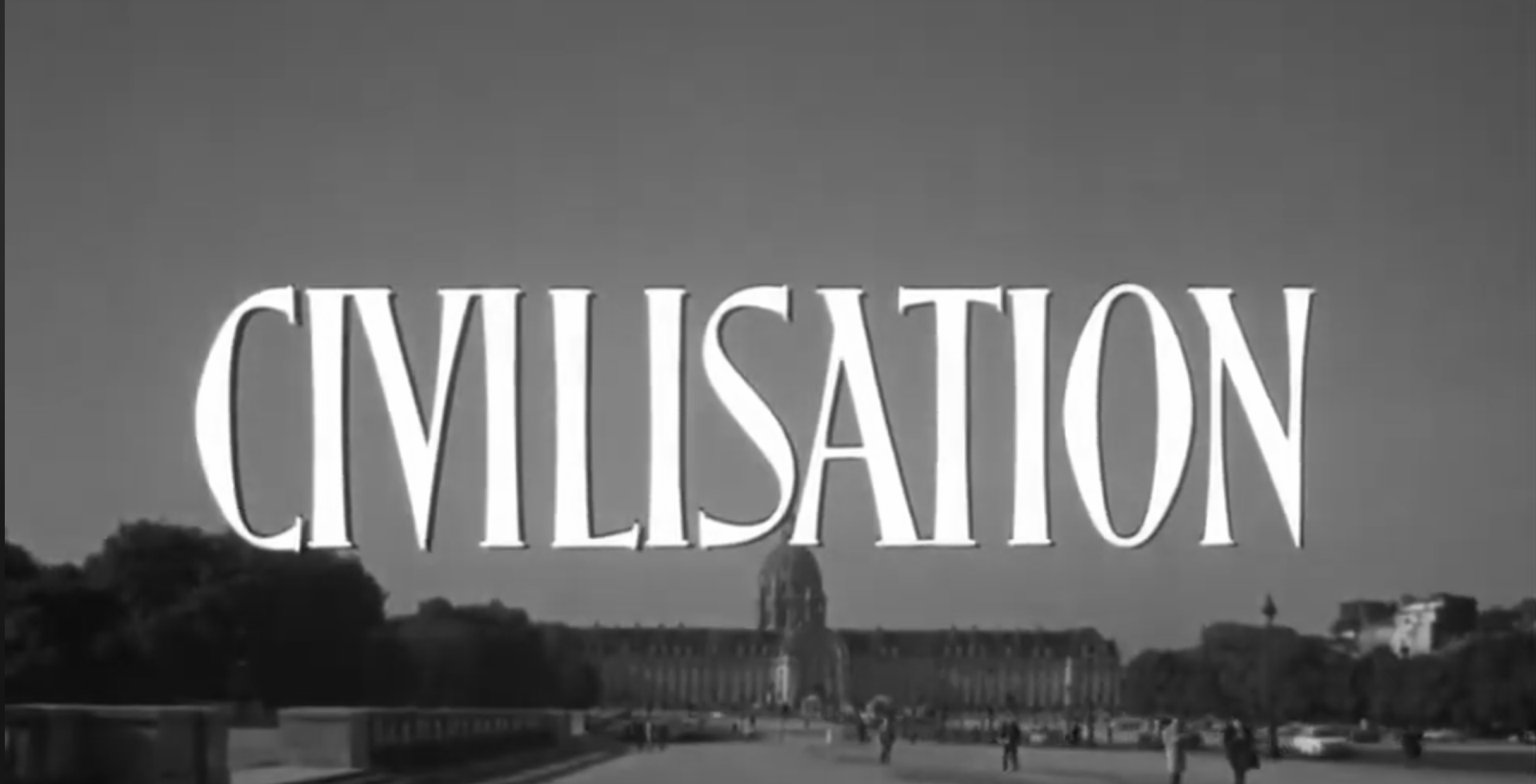
IN ‘The Fallacies of Hope’ we come to the penultimate programme of Kenneth Clark’s extraordinary documentary series – extraordinary because he achieves what he aspires to, as he says in his accompanying book, his conviction that ‘a combination of words and music, colour and movement can extend human experience in a way that words alone cannot do’.
All through the series it was because of the accompanying music (of the era) played, the images and physical exploration (of the art and architecture) he chose, that what he was able to say about the whole subject matter had a force and vividness which could never have been achieved by the printed page alone. This was indeed a triumph of the television medium. Television itself as an art and communication form at its best.
Yet it is in this episode of romanticism’s journey to hell, in which despite the rousing sound of the Marseillaise, the prisoners’ chorus from Fidelio, and the marvellous photography of Rodin’s Burghers of Calais and David’s The Death of Marat (David was the painter of republican virtue), that Clark’s words (his understanding and analysis) have the most resonance and relevance, not just for his ‘today’ of the 20th century but even more so for our ‘today’ of the 21st.
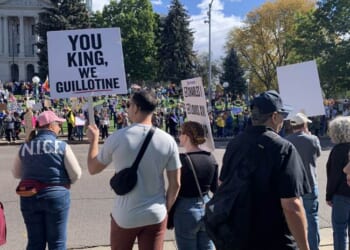
The words that stood out to me with most force are in relation the leaders of the French revolution: ‘For a few years her leaders suffered from the most terrible of all delusions. They believed themselves to be virtuous.’ Words simply too reminiscent or prescient of the present for comfort – of today’s woke, virtue signalling, globalist control-freak revolutionaries who set themselves up as the progressives, but who neither value our past nor have learnt from it.
You can find the full text of the commentary transcript of this programme and all the others here. But I attach the most relevant extract below the video.
If you have missed the preceding episodes and my introductions you can click on the numbers for the earlier parts: 1, 2, 3, 4, 5, 6, 7, 8, 9, 10 and 11.
'A more formidable undertaking was to replace Christianity by a religion
of nature. It sometimes went rather too far: for example, it was proposed to
pull down Chartres Cathedral and build in its place a temple of wisdom.
There was a good deal of profanation and blasphemy, and a vast amount of
destruction: Cluny, St Denis, many of the sacred places of civilisation were
partially destroyed and their contents looted. On the other hand, there
is something rather touching about the religion of nature as we see it
in a print of baptism according to the new rite, taking place in a
de-Christianised church. People who hold forth about the modern world
often say that what we need is a new religion. It may be true, but it isn't
easy to establish. Even Robespierre, who was an enthusiast for a new
religion and had powerful means of persuasion at his command, couldn't
bring it off.And on the name Robespierre one remembers how horribly all this
idealism came to grief. Most of the great episodes in the history of civilisation
have had some unpleasant consequences. But none have kicked back sooner
and harder than the revolutionary fervour of 1792; because in September
there took place the first of those massacres by which, alas, the revolution
is chiefly remembered. No one has ever explained, in historical terms, the
September Massacres, and perhaps in the end the old-fashioned explanation
is correct, that it was a kind of communal sadism. It was a pogrom - a phe-
nomenon with which we have since become familiar. And it was given fresh
impetus by another well-known emotion - mass panic. In July 1792 the
Committee of Public Safety had officially proclaimed 'La patrie en danger —
the country in peril' ; which was followed by the usual corollary: Ils nous
ont trahis - 'there are traitors among us'. We know what that means. How
many innocent German governesses and art historians suffered in our last
two wars, if not by execution, then by extradition and drowning on the way
to Canada. In 1792 France was in danger and there really were traitors,
starting with the King and Queen, who had encouraged the intervention of
outside powers. France was fighting for her life against the forces of ancient
corruption; and for a few years her leaders suffered from the most terrible
of all delusions. They believed themselves to be virtuous. Robespierre's
friend St Just said: 'In a republic which can only be based on virtue, any
pity shown towards crime is a flagrant proof of treason.'But reluctantly one must admit that a great many of the subsequent
horrors were simply due to anarchy. It's a most attractive political doctrine,
but I'm afraid it's too optimistic. The men of 1795 tried desperately to
control anarchy by violence, and in the end were destroyed by the evil
means they had brought into existence. With what mixed feelings one looks
at David's picture of Marat murdered in his bath. David painted it with
deep emotion. The picture was intended to immortalise the memory of a
great patriot, worthy of the tradition of Brutus. Few propaganda pictures
make such an impact as a work of art. Yet Marat cannot escape responsibility
for the September Massacres, and thus for the first cloud to overcast
Wordsworth's dawn and darken the optimism of the early Romantics into a
pessimism that has lasted to our own day.