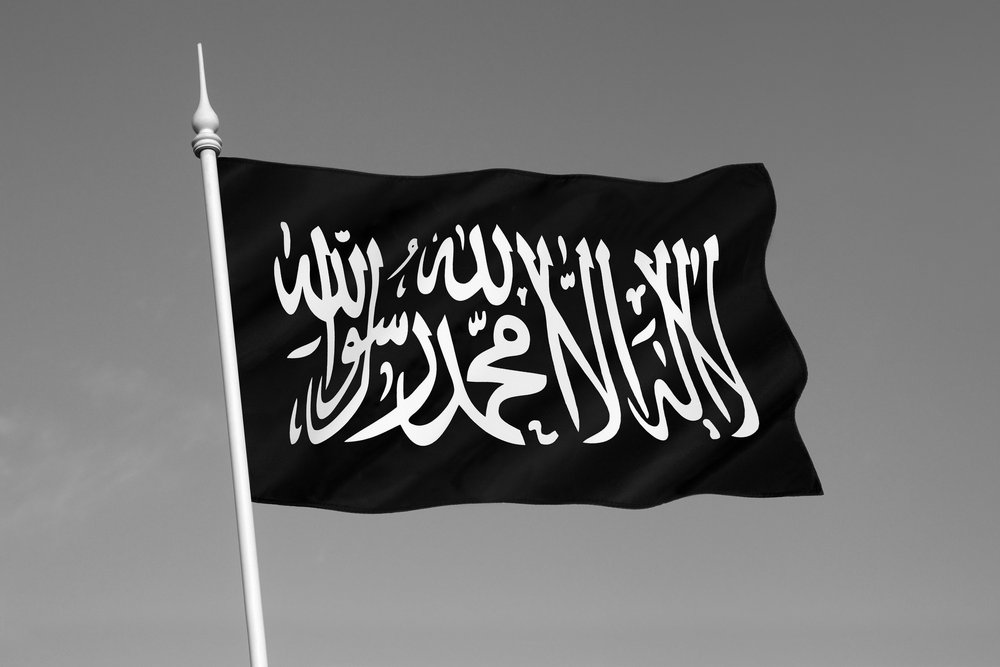
PREVENTING a comeback by the Islamic State in Syria and Iraq was central to US President Donald Trump’s campaign for a second term in 2024 and to his administration’s national security strategy in 2025.
But Trump’s reliance on Syria’s new regime enables one Islamist power to replace another.
In 2019, during his first term, Trump claimed to defeat the terror group yet his administration sustained about 2,000 troops in Syria to support continued operations locally, to secure the prisons holding IS fighters, co-ordinate airstrikes, and maintain bases from which the civilian intelligence agencies could operate (unconfirmed).
But presence means exposure.
On December 13 last year, a gunman attacked a US-Syrian patrol near Palmyra, killing three Americans (two Iowa National Guard soldiers and a civilian interpreter), prompting Trump to authorise airstrikes on Islamic State targets across central Syria (Operation Hawkeye Strike).
On January 17, the US military announced the killing of an Al Qaeda-affiliated leader, Bilal Hasan al-Jasim, who was directly connected to the gunman who by then was identified as being employed by Syrian security forces, not Islamic State.
Herein lies some alarming implications.
While the US is containing Islamic State in Syria, Al Qaeda is stepping into the vacuum. Secondly, the new regime’s forces are penetrated by Al Qaeda.
This illustrates the vacuity of the adage that the enemy of my enemy is my friend. In practice, the enemy of my enemy rarely is or remains my friend.
At best, you get a marriage of convenience that empowers a temporary friend, who, once the common enemy is defeated, turns against you. Worse, the restored enemy is now more focused on you (given that it no longer needs to worry about the common enemy) and more powerful (in part because you armed it).
These are the lessons that Western forces learned the hard way in Iraq (think of Muqtada al-Sadr early in the occupation, and Awakening Councils later in the occupation) and Afghanistan (think of the Khost Protection Force).
Western forces over-relied on the promise of ‘enemy of my enemy is my friend’ and ended up with more diverse and powerful enemies – made more dangerous, perversely, by Western investment.
In risk management terms, Western forces created hazards in the hope of allies but ended up with threats, which brings us back to US and British support for Syria’s ‘interim’ president Ahmed al-Sharaa (formerly Abu Mohammad al-Julani).
He was born in 1982, joined Al Qaeda in Iraq in 2003, and was detained by US forces from 2006 to 2011. Released amid the Syrian uprising, he founded Jabhat al-Nusra as Al Qaeda’s Syrian branch in 2012. He remained tied to Al Qaeda until about 2016 when he rebranded as Jabhat Fateh al-Sham. In January 2017, he merged with other militia to form Hay’at Tahrir al-Sham (HTS). This is the group that led the overthrow of Bashar Assad in December 2024.
HTS translates as Organisation for the Liberation of the Levant. Note that this sounds rather like the Islamic State of Iraq and the Levant, (Isil, perhaps better known by its other acronym, Isis). It’s unsurprising because it’s the same geopolitics and same ideology, albeit with different competitors for the ultimate prize.
The commonality between Islamic State and HTS should be remembered whenever somebody alludes to the enemy of my enemy as my friend. The adage is simplistic, misleading, devoid of conditionality and caveat, and myopic.
Too often, observers hear of Islamists fighting each other and assume that one must have turned anti-Islamist. No, they’re competing for leadership of Islamism. And amid all the competition between Islamists, their common enemy remains the West. Islamists cannot tolerate secularism, liberalism, democracy or other religions.
Right now, HTS and other regime ‘security forces’ are slaughtering Syria’s Shia, Druze, Alawites and Kurds, including the US-armed Kurdish Syrian Democratic Forces Army, which did more than HTS to defeat Islamic State in Syria, and to advance liberalism. For Islamists, these minorities are not proper Muslims, they are apostates.
Neither are Christians tolerated. Syria has plenty of them. They haven’t been rounded up yet, in deference to Western warnings. But Western indifference to the fates of other minorities in Syria is surely encouraging Syria’s Islamists to plot a move when the West is too distracted or jaded to notice. That’s how the ‘kidnapping, persecution, and killing of Christians has become a daily routine’ in Nigeria.
HTS is, at best, a hazard to the West. At present, it is not an enemy. It’s an ally in so far as it co-operates with Western forces. But it co-operates with people who are threats, including the gunman who killed three Americans in December.
And once HTS it has defeated its proximate rivals (including Islamic State), it will surely turn on the West again.
Just look at its disposition. HTS launched itself as a localised force fighting the Assad regime with intent to establish a more liberal and democratic regime. But post-Assad Syria is not liberal or democratic. Its president is ‘interim’ with no schedule to give up power. The new regime is not secular. It is not even civilian.
HTS is part of the new regime’s security forces and civilian administration. At best, this is paramilitary rule. The various militia have not been disbanded for reintegration into civilian life or a sovereign military.
Further, HTS is not exclusively local. Like Isil, HTS calls itself by an Arabic word (al-Sham) for the Eastern Mediterranean seaboard from Turkey through Palestine. And HTS co-operates across the Middle East.
Qatar and Turkey support HTS because they would rather have an Islamist government than a secular one. (Assad’s regime, for all its faults, was secular.) Saudi Arabia backs HTS because it is Sunni (Assad came from the Shia Alawite minority) and thence anti-Iran.
The West shares some of these simplistic choices. The British government, to its credit, has warned the new regime that it must be inclusive, but was early to give up its leverage. In April 2025, the UK lifted economic sanctions against Syria.
Meanwhile, the US government’s attitude is dominated by Trump’s instincts to avoid foreign deployments. By the end of 2019, he promised to withdraw US forces from Syria, but was persuaded not to abandon the Kurds or US intelligence bases.
Since returning to office in 2025, Trump has repeated his promise to end US military involvement in Syria.
In November, Britain and the US voted on the UN Security Council to lift sanctions on al-Sharaa and his ministers. They subsequently de-listed HTS as a terrorist organisation and recognised al-Sharaa as Syria’s premier. In the same month, Trump received al-Sharaa at the White House, and praised him as a capable leader for stabilising Syria and countering Islamic State, despite his ‘rough past’.
While no US or UK official has invoked the adage ‘enemy of my enemy’ publicly, it has been invoked privately.
In 2020, James F Jeffrey, a career diplomat who was then the US Special Representative for Syria, successfully advocated for US support of a Turkish-brokered ceasefire in Idlib, as ‘a case of the enemy of my enemy is my friend’.
Jeffrey argued to then Secretary of State Mike Pompeo that preventing Assad from recapturing Idlib was critical, even if it meant the survival of HTS. He emphasised that HTS was not pursuing international terrorism, but rather national control, in opposition to Assad. His position was necessary to the ceasefire that halted Syrian and Russian bombardment.
Since then, HTS has governed Idlib province under strict sharia law.
During the HTS leader’s visit to the White House, one distinguished professor of history at the University of Michigan wrote: ‘I guess it really is true in the Middle East that the enemy of my enemy is my friend [referring to both Trump’s comments and Israel’s aid to HTS].’
Other academics, from Israel to Azerbaijan, used the same adage to characterise US policy.
By contrast, the Australian Lowy Institute commented that ‘the lesson that the enemy of my enemy is my friend rarely works out for the West when dealing with the Middle East’.
Treating HTS as a friend does help the war on IS, but HTS is at best a temporary friend in a sea of enemies. HTS lacks the motivation and capability to contain all the West’s adversaries in Syria. Even if HTS wipes out Islamic State, we’d still be left with Islamist rule.
While HTS is persecuting ethnic and religious minorities, other enemies could return. This suggests that a full Western withdrawal would be short-lived and counter-productive.
For instance, without Western support, and under pressure from HTS, the Kurds might lose control of some 50,000 Islamic State fighters likely to exact vengeance in the West and perhaps before the mid-term elections in November this year.