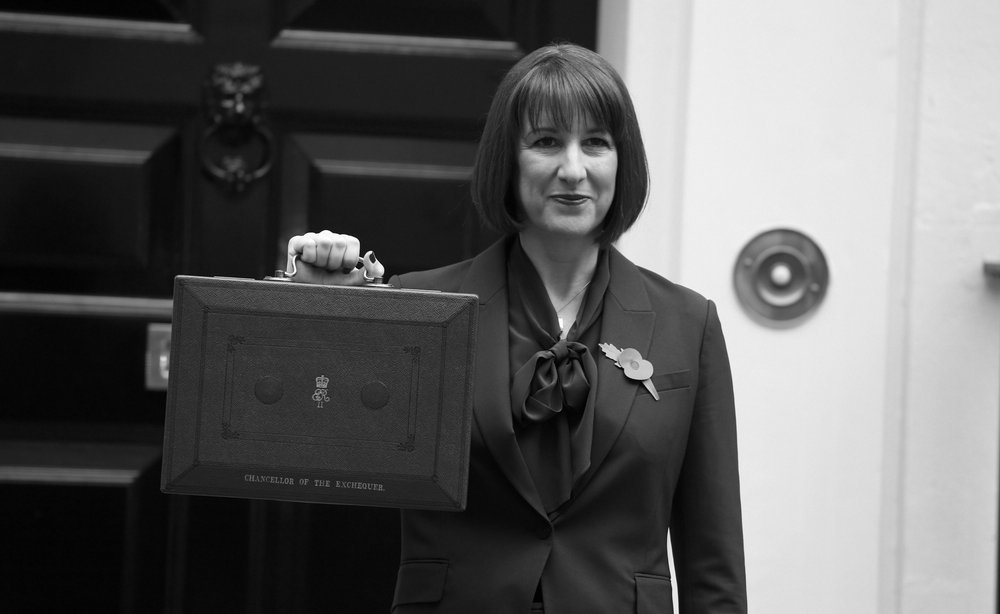
SIR KEIR Starmer is rightly famed for his U-turns (is it 16 now?). The one thing that he has not U-turned on is his determination to deliver growth – which is about the only sensible policy aim he has. Responsibility for this (other than soundbites and references to toolmakers) is delegated to Rachel from Customer Services.
She’s not doing well and last week saw another relaunch. Following the failed experiment of delivering growth by high taxation, which hasn’t worked to the surprise of no one, Red Ange Rayner’s economic contribution of increasing the risk and cost of hiring people hasn’t helped either. But then Rayner has leadership ambitions, which Rachel lacks (or keeps very well hidden). Rachel’s growth quest has now morphed into putting £2billion of government money into AI and quantum computing. Notwithstanding the tech buzzwords capable of deceiving most journalists and financial commentators, there are some large flies in Rachel’s latest ointment.
The most obvious is that the government doesn’t have any money: it’s been running a deficit for decades and this year the OBR forecasts it will be £138billion. Rachel and the UK don’t have £2billion: the national debt is almost £3trillion, over £100,000 per household. That’s a relevant measure, as it’s our households that have to fund the interest payments through taxation; £1 in every £11 raised in tax pays the interest on the debt.
Borrowing to invest in companies can sometimes be lucrative for an investor if they manage to get in and out of the investment before the debt is due. This is broadly the basis of the private-equity model, which worked until interest rates started climbing, as I explained last August. Reeves is speculating with money she does not have in a sector she does not understand. There is no guarantee that quantum computing will deliver UK-wide growth on schedule. Speculating with money you have borrowed is gambling. That’s not the job of the government, it’s the job of venture capitalists who understand the sector, technology and early-stage investing.
Quantum computing is thought to be necessary to underpin the ludicrous amount of computing power needed to support Artificial Intelligence (AI). AI may yet be a bubble; certainly, despite massive valuations, no AI company has reported a profit. While AI may deliver a brave new world of robotics and superintelligence, it may also deliver the wholesale destruction of wealth that comes with every bubble when it bursts.
The computers in the halls of the data centres required to run AI need electrons to do the math. Those electrons come from the power grid. In the UK the electrons are among the most expensive in the world. There aren’t enough of them either; data centres consumed 2.5 per cent of the UK’s electricity last year and the demand is expected to quadruple to 10 per cent by 2030. The additional AI demand alone would account for all of Sizewell C’s generation when it comes onstream. That’s unlikely to be much before 2040 (construction has barely started). How the UK will bridge the generation gap remains an open question. No more generation, no more AI, unless the government is prepared to sanction domestic power cuts.
The Reeves techno-masterstroke looks like the last punt of a losing gambler hoping to win her way back to solvency with her last chips.
The easy, simple way for Reeves to deliver growth is to end the Net Zero lunacy that has driven UK electricity prices so high. She should also encourage oil and gas production. Both would set a course to cheaper energy and a greater degree of resilience for the country. There have been too many times when the UK’s lights have been kept on only by the interconnectors to France, Belgium and Norway. Energy costs, not least the diesel my truck uses, are in the price of everything. Reducing energy costs would reduce prices which would reduce inflation, possibly getting it close to the Bank of England’s target. Best of all, it would cost the exchequer a big fat zero.
Why doesn’t this government do it? Because, it seems, it’s under the control of Ed Miliband. The man who can’t eat a bacon sandwich seems to have a veto in Cabinet, and our lacklustre Prime Minister daren’t sack him. Starmer, Miliband, Reeves and Rayner are playing Labour Party politics while the economy sinks.
(For balance, the Tories are little better. Theresa May introduced Net Zero as pretty much her last action. For all his alleged intelligence, Boris believed in Net Zero and expanded it. Sunak had other matters on his mind – not least how not to be annihilated in the 2024 General Election. That went about as well as Reeves’s economics).
Instead, the Son of a Toolmaker thinks he can find growth by moving closer to the EU, whose economy is marginally less stagnant than ours. Why restoring the EU regulations that governed the UK’s domestic economy while we were part of the EU is far from clear. If, as seems likely, ‘closer alignment’ (Westminster/Whitehall speak for reversing Brexit) includes entering the Carbon Border Adjustment Mechanism (CBAM) then costs will rise. CBAM levies taxes on imports to the EU on the basis of the CO₂ embedded in their production. It also requires businesses to file quarterly returns on their consumption of such materials. That’s going to increase costs and thus prices. As even Rachel knows, that’s going to cause inflation, which will keep interest rates at their current level (or higher) and that in turn will not deliver growth.
CBAM will be rolled out by sectors, with steelmaking being among those in the first tranche. That’s a shame for the almost nationalised steel industry, which already has a mountain to climb. We’re spending £1.3million a day to support the Scunthorpe blast furnaces. Joining the EU’s CBAM isn’t an easy road to steel profitability (if that is possible).
Nor is Net Zero. Electric arc furnaces use a lot of electricity and may be ‘greener’ than blast furnaces but they can work only on recycled, scrap steel. As the global steel demand is increasing, largely due to the non-Chinese Asian economies, there will never be enough scrap steel to satisfy it; we’ll continue to need blast furnaces. The closure of the Port Talbot blast furnaces in 2024 was not caused by Tata Steel going green; it was a reflection of the cost of operating heavy industry in the UK. That doesn’t bode well for growth.
Of course the government can blame the current oil and (more importantly) gas price spike on the conflict in the Middle East. It’s not yet clear how the government’s policy of recognising the Palestinian state, castigating Israel and sabotaging the US Air Force’s B-2 capability (which is what denying access to Fairford and Diego Garcia did) translates into happy relations with our largest export destination, America. It understandably destroyed the unlikely esteem in which President Trump held Starmer. As the President bears grudges, UK exporters can anticipate a painful kick in the tariffs. That won’t help growth either.
And there we have it. A government elected on ‘change’ and delivering growth has trashed the future economy, our position in the world and our most important alliance. Why? Because it cares more about securing and retaining power than what it does with it. The same was true of Soviet Russia and is true of (still Communist) China. Desperate despots cling to power, as only that can save them from the people. Starmer faces electoral meltdown in May, so he is appealing to his core voters, Muslims and Remaniacs.
That won’t save him but it’s already harming the cohesion and prosperity of the United Kingdom. It’s time for Starmer and his ghastly government to go.
This article appeared in Views From My Cab on March 20, 2026, and is republished by kind permission.