IN A previous TCW article I discussed the irony that secular liberal-left politicians increase the legal burden on ordinary people, while failing to live up to their own standards. Why have the liberals become so legalistic, you may wonder? This was discussed in the context of Paul’s teaching in Romans, where he explained the gospel of Christ through the lens of the Garden of Eden and the Fall of man. Christian teaching holds that mankind should not live by reliance upon law alone, but by divine grace in the power of the Holy Spirit. Law on its own cannot make people right before God. In this article I will note that Islam too is legalistic, involving a return to an Old Testament approach to law. The further irony is that very conservative Islamic leaders have made an alliance with the secular liberal-left, which has led to the introduction of official guidance around anti-Muslim hostility; presumably it is an alliance of convenience.
Some of the earliest written evidence of Islam comes from the Christian Syrian monk, John of Damascus, born Yūḥana ibn Manṣūr ibn Sarjūn. The Muslims conquered Damascus in AD 635 and forced the Christians there into subservience during the time of his grandfather. John later discussed the teachings of Islam (in De Haeresibus), referring to it as the heresy of the Ishmaelites; the heresy being that of the followers of Arius who denied the deity of Christ. Muhammed, John noted, had studied the Bible, but then consulted an Arian monk. Of course, Muslim scholars consider John’s writing to be excessively polemical, although it only reflects his personal experience.
While some Christian apologists assert that Muslims worship another deity, Allah, John considered Islam to be a Judeo-Christian heresy. Indeed, Arab Christians continue to use the term Allah, this practice extending back to before the time of Muhammed. Although some may find John’s criticism of Islam to be harsh, his writing at least provides a point of contact for dialogue between Christians and Muslims.
Islam has a rather ambiguous attitude towards Christianity. The Quran in places tells Christians to follow the Torah and Gospels (Al-Ma’idah 5:47, 5:68), even Muhammed in a time of doubt was told to consult ‘those [Christians] who have been reading the Scripture before you’ (At-tawbah 10:94). But the Quran also denies Jesus’s deity and crucifixion, and in places threatens Christians (Yunus 9:29). Later commentaries on the Quran, the Hadith, claim that the Christian Scriptures were corrupted, and yet Muhammed seems to have confirmed the texts at times.
The other aspect of John’s statement is that it effectively identifies Islam with Arab nationalism, coloured by a sense of grievance. Ishmael was Abraham’s son born of Hagar, and according to the Bible (Genesis 16 & 21) was forced into the wilderness along with his mother for persecuting Abraham’s son Isaac; hence Arabs became known as Sarras kenoi (meaning destitute of Sara) or Saracens. Ishmael, it was said, would become a numerous nation, but living in hostility towards his brothers (Genesis 16:12). Armed with the sword and a rival book (the Quran), the unified Arabs took advantage of the collapse of the Roman Empire, and the unpreparedness of Byzantine Christians, to advance across many lands. They swept across the Middle East, North Africa, and into Spain, Asia Minor and the Balkans. Scholars are still trying to understand the motivation and reasons for their successful military campaigns. For the conquered Christians, at best they were forced to pay the dhimmi tax for security, and denied the freedom to evangelise Muslims. The Arian heresy on its own cannot explain this desire for conquest and colonial expansionism; the Jehovah’s Witnesses for example, who also hold Arian views, merely stand on street corners or knock on doors.
The invading Saracens carried with them the denial of Christ’s sacrifice, and placed Muhammed in front of Jesus as a greater prophet. Islam is still marked by a fervent devotion to their prophet, and nationalism is directed towards defending and establishing a global Islamic state (the Ummah meaning nation). In this way, Muslims seek to extend their culture, which is infused with Arabic characteristics, around the world. While Islam is often said to be a religion of peace, it has at times evidentially been one of violent struggle (Jihad) against neighbouring cultures.
Islam has a legalistic approach to law, desiring the establishment of Sharia in those nations that it dominates. Sharia is considered to be a straight path to righteousness. But Christians view it as a return to the legalism of the Old Testament law where the punishment for transgression could be heavy: an-eye-for-an-eye, a-tooth-for-a-tooth. Sharia law however lacks some of the detail of the law of Moses. For example, the Islamic year is only 12 lunar months long (354/5 days) with no stipulation for occasional intercalary months which were outlined in the Mosaic law to align important harvest festivals with the solar year. This is why Ramadan is not fixed in the solar year.
Islamic legalism in effect denies the grace which flows from the shed blood of the Son of God, a sacrifice that Christians hold very dearly. The response to the cross should be one of thanksgiving and praise ‘with joy unspeakable’ (1 Peter 1:8). Because of this sacrifice, Christians may approach God as father. But while Muslims have 99 titles for God, they deny this paternal relationship.
For Christians, if one were to deny Christ’s divinity and sacrifice, then there could be no forgiveness of sins, only the fear of judgement and regression to Old Testament principles. As Paul noted in his first letter to the Corinthians (15: 17,19) ‘if Christ is not risen, your faith is futile; you are still in your sins!’ and we would be ‘of all men the most miserable’. From a Christian perspective, Islam may be perceived to immiserate those people and nations that it controls.
Many Muslims struggle with a sense of guilt and shame because of this legalism, leading to a feeling of spiritual insecurity and unforgiven sins. The Amaliah website describes it as ‘slithering guilt that moves through the body’, and can lead to self-loathing and self-hatred. One response is to engage in good works to please Allah. For a few, good works may include Jihad. But as Christians understand, legalism on its own cannot make people righteous.
Christian teaching holds that forgiveness is a free gift of God, which is received by faith, and then a believer is called to live rightly with the power of the Holy Spirit. Some think this is too easy, and it is true that Christians sometimes take advantage of this grace. It is also true that some Muslims live morally better lives than some Christians. Muslims generally do not abort their children, women dress modestly, and provide for their families. But transgressors can face harsh treatment in some Islamic societies for failure to comply. For example, an Iranian woman, Mahsa Amini, was allegedly beaten, and later died, following refusal to cover her head in public, and honour killings are not unknown. Women especially can feel oppressed.
In a recent article titled ‘It’s time to talk about Sharia courts’, Stephen Sidney reported that in 2025 nearly 3,000 honour-based abuse offences were reported to police, but only 3 per cent were prosecuted, partly because victims withdrew their statements under pressure from the community. Most issues of family justice in Muslim communities are handled by Sharia courts, where a woman’s testimony is sometimes considered worth half that of a man in financial matters. Around 85 Sharia courts were operating in the UK in 2019, keeping legal matters away from British courts where women have greater rights. As with the grooming gang scandal, the Labour government, with its claimed love for human rights, is turning a blind eye to issues of justice for women in Muslim communities. Christian convert Ayaan Hirsi Ali described her own experience under an Islamic regime, stating:
‘I spent the first part of my life living under oppression. I know what it means to be silenced, to have your freedom stolen, to watch a civilisation reject the very values that make human flourishing possible.’
She has launched a Restoring the West Manifesto, writing that the Christian tradition has given Western civilisation a grounding that enables human flourishing. She states that it leads to ‘individual liberty, equality before the law, freedom of conscience and expression, and the dignity of every human being’. The benefit of Christian civilisation she thinks worth defending against the rise of religious legalism and authoritarianism. Christians are indeed called to uphold matters of equal justice (Matthew 23:23).
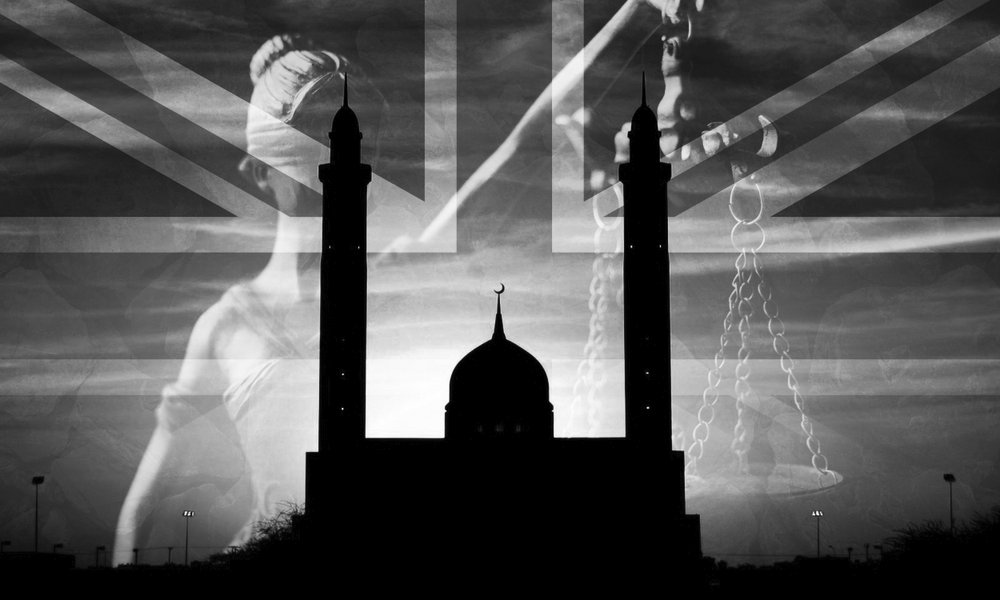
Islam presents a challenge to Western nations and Christian culture, especially as it gains political influence, and undermines the rights of some British people. The imposition of a definition of anti-Muslim hostility by the Labour Government gives Islam a protected status not shared by other faiths. This reinforces a sense of two-tier justice. It will make Christians, and people in general, more fearful of dialogue, and potentially cause greater resentment in the wider society, thus making the desire to bring communities together even harder.
For Christians there is a call to share prayerfully and lovingly and explain the gospel, including to Muslims. This requires respectful dialogue, but not under a cloud of fear. The effect of this for Western people should be a return to Christian faith, which involves love, forgiveness and grace. It is as the people of a nation humble themselves and pray, and seek God, that there comes divine healing for the land (2 Chronicles 7:14).