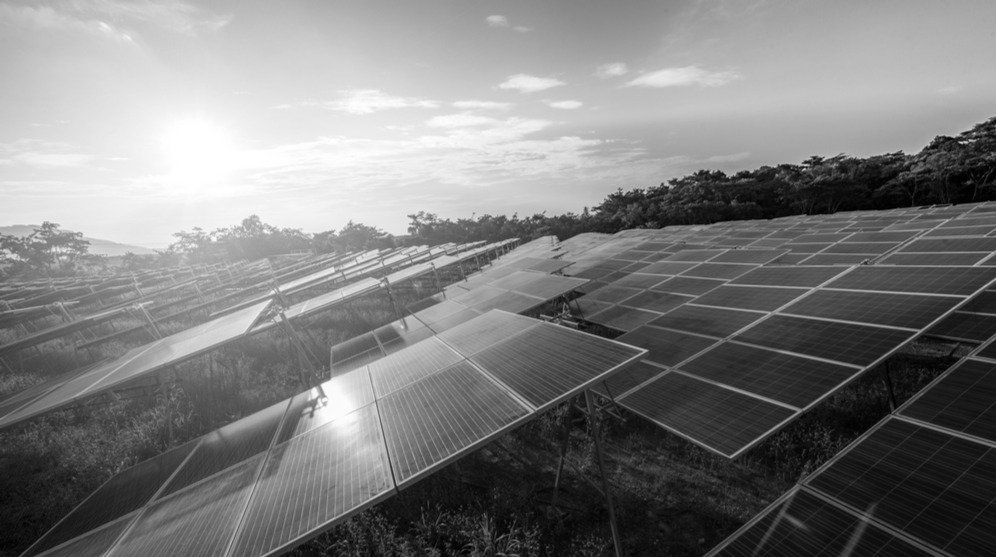
Stop Oversized Solar is a coalition of more than 20 community campaigns collaborating to protect Britain’s countryside. They have been investigating the plans to build ‘mega’ solar complexes on farmland roughly the size of Greater London. One of the issues coming to light is the critical role of expensive battery energy storage systems in commercial solar farms. Uncapped battery storage profits will offer solar developers a generous ‘back-door’ subsidy.
When solar power output collapses in winter the photovoltaic panels spanning hundreds of thousands of acres of farmland will be largely idle, while co-located battery bank compounds will be making the real money for commercial operators. The electricity these battery systems will store and trade across the year will come from any source on the grid – including gas. It is difficult to see how these hybrid super-sites can genuinely be presented as ‘clean’ energy operations. This is Stop Oversized Solar’s current press release.
***
A REPORT by leading renewable energy policy expert Professor Tony Day reveals that the UK’s rapid expansion of large-scale solar farms could drive electricity prices even higher once the hidden costs and market incentives around battery storage are taken into account.
The report is published as ministers prepare to announce the next round of solar subsidies under Allocation Round 7 (AR7) of the Contracts for Difference (CfD) scheme.
This new analysis using real-world market data exposes a critical issue. Solar power looks cheap ‘on paper’. But solar is a highly intermittent source of power, and in the UK climate it struggles with an extreme seasonal supply/demand mismatch – over-producing when it’s least needed, under-delivering when it matters most. So nearly every commercial solar developer will rely on large, costly lithium-ion battery storage systems to make projects more profitable. Grid-scale lithium-ion battery energy storage systems (BESS) are known to be inherently unstable, with the key risk being thermal runaway, leading to explosions and hard-to-control fires.
Batteries will not primarily be used to deliver cheap power to consumers, but instead to store generated power, or power bought cheaply from the grid, and sell it to the grid when prices spike, as well as to earn lucrative grid services income.
As solar generation drops into the background across autumn and winter months, the battery asset component of these solar/battery hybrid sites will be the main source of income. Power bought in from the grid off-peak for selling back at a higher price by commercial solar/battery operators will come from any source including gas, nuclear or wind, whatever is on the network at the time and at a cheap price.
Energy arbitrage and other battery income sits outside the CfD scheme, so it is not limited by caps on solar sales income. Profits are unchecked, effectively handing investors a lucrative ‘back-door’ subsidy.
As a result, electricity sold by solar/battery hybrid complexes could cost more than 75 per cent above the basic solar price. At current pricing, that would inflate commercial solar to £130 per megawatt hour, significantly higher than the past year’s average grid price of £78 per megawatt hour, and making grid-scale solar more expensive than offshore wind. Yet ministers consistently claim that grid-scale solar is one of the cheapest forms of power.
Professor Tony Day, report author and Visiting Professor at London South Bank University, cautions: ‘Solar looks cheap only if you ignore what it takes to make it usable. Once it’s scaled up in these colossal grid-scale solar parks and compounds full of lithium-ion battery units are added, the economics flip. The real money isn’t in cheap electricity – it’s in holding power back and selling it when prices are highest.’
Demonstrating the value to investors of battery vs solar, the Shepway Energy Park project in Kent has a nameplate solar capacity of 200MW but its planned battery compound capacity is much bigger, at 400MW/800MWh. The solar panels would be in the background while the import/export batteries make the money.
A separate report by the study’s author highlights the scale of land required to meet government targets, with hundreds of thousands of acres of farmland targeted for solar infrastructure. A typical grid-scale solar scheme targets 2,000 acres of farmland and would have a 400MW power capacity. Some proposals are far bigger, with the largest currently planned at more than 7,000 acres.
The vast planned solar power fleet – set to cover agricultural land around the size of Greater London by 2035 – would offer just 2-3 per cent of national electricity in winter, when demand is highest. Even with 75GW of installed capacity on around 375,000 acres of farmland, grid-scale solar would contribute as little as 13 per cent of annual national electricity demand by 2035.
Professor Day adds: ‘We’re being promised cheap, clean power. What this market actually rewards is scarcity and volatility. Consumers could face higher bills, more countryside will be lost, and grid-scale solar power will still barely move the dial when we need it most.’
The report concludes that in the current market structure, batteries could turn commercial solar into a higher-cost, land-hungry way of managing prices, not the consumer-friendly solution the public are expecting.
For more details visit the UK Solar Alliance website.