YESTERDAY, after two weeks and three weekends of war with Iran, UK Prime Minister Keir Starmer revealed his response to the closure of the Strait of Hormuz, which, he admits, is essential for Britain’s energy security and for controlling inflation.
Grip your seats in readiness for the fury of Starmer’s long-awaited decisiveness, viz a price cap, a windfall tax, an extension on the cut in fuel duty (until September), a ‘cheap fuel finder’, and an even vaguer international plan.
Before I get to the international plan, I can quickly dismiss his domestic specifications. They are hardly changes from prior policy. They have little effect on prices.
Thanks to Net Zero madness, Britain already has the most expensive energy in the world. Britain would need years to turn this madness around, after demolishing fossil-fuelled electricity plants, cutting permits to extract fossil fuels (in which Britain is well endowed) and raising taxes on energy production and consumption, in order to subsidise renewables (which are less reliable and more expensive).
With less domestic supply and higher taxes, Britain is most exposed to global inflation. Since US and Israeli strikes on Iran began on February 28, oil prices jumped from $71 per barrel to a peak of $120 last week (when Iran’s retaliation focused on maritime transport in the Strait). So the most effective way Britain could improve supply is to contribute to military operations to re-open the Strait.
But Starmer eschews any kinetic military action in the Strait. His international plan is diplomatic and humanitarian. Even calling it a plan is disingenuous. He calls it a ‘collective plan,’ but doesn’t specify what that means. Really, he doesn’t have a plan. Rather, he is ‘working with allies on a viable plan’.
By allies, Starmer doesn’t mean Nato. He insists that any mission should not operate under Nato command. This makes easier for non-Nato members to join. However, non-Nato members do not have the capabilities that Nato honed for the Greenland-Iceland-United Kingdom Gap (actually two gaps). Incidentally, Britain leads Nato’s responsibilities in the GIUK gaps, which should make Britain most mindful of the advantages of leading a Nato mission to the Strait!
By eschewing Nato command, Starmer is pandering to France and his EU-phile/US-sceptic base in hope of a EU-led mission. But most European countries already ruled out military operations to reopen the Strait. Within the first days of the war, France sent a carrier group to defend the Eastern Mediterranean and aired the possibility of pushing on to the Strait, but does not want to appear aligned with American’s late call for help there. Germany and Italy hold the next most capable navies, but have ruled out any operations in the Strait. Greece and Turkey are preoccupied with defending their own liabilities and countering each other. Nato’s other European members are too busy watching Russia.
By allies, Starmer does not mean the North Americans. On Saturday, Donald Trump called on allies, including specifically Britain, to help to open the Strait militarily. On Sunday, he and Starmer spoke by telephone. Canada’s premier (Mark Carney) visited. Everybody agreed that the Strait should be reopened, but not how. On Monday, Trump complained to journalists of Starmer’s attitude.
Starmer thus missed an opportunity to rebuild the special relationship, after refusing US permission to use British bases for offensive operations (at no cost to Britain), and refusing to prepare the defensive capabilities that would have helped the US to focus on offensive operations. Starmer claimed legal grounds to refuse offensive operations, but these grounds don’t explain Britain’s defensive unreadiness.
True, Starmer repeatedly warns against entanglement in another Iraq War, but this is a false analogy (Iraq was a ground war; Iraq was not weaponising nuclear materials; Iraq was not bombarding its neighbours).
Starmer could still fulfil his commitment to defensive operations by defending allied ships from Iranian attacks.
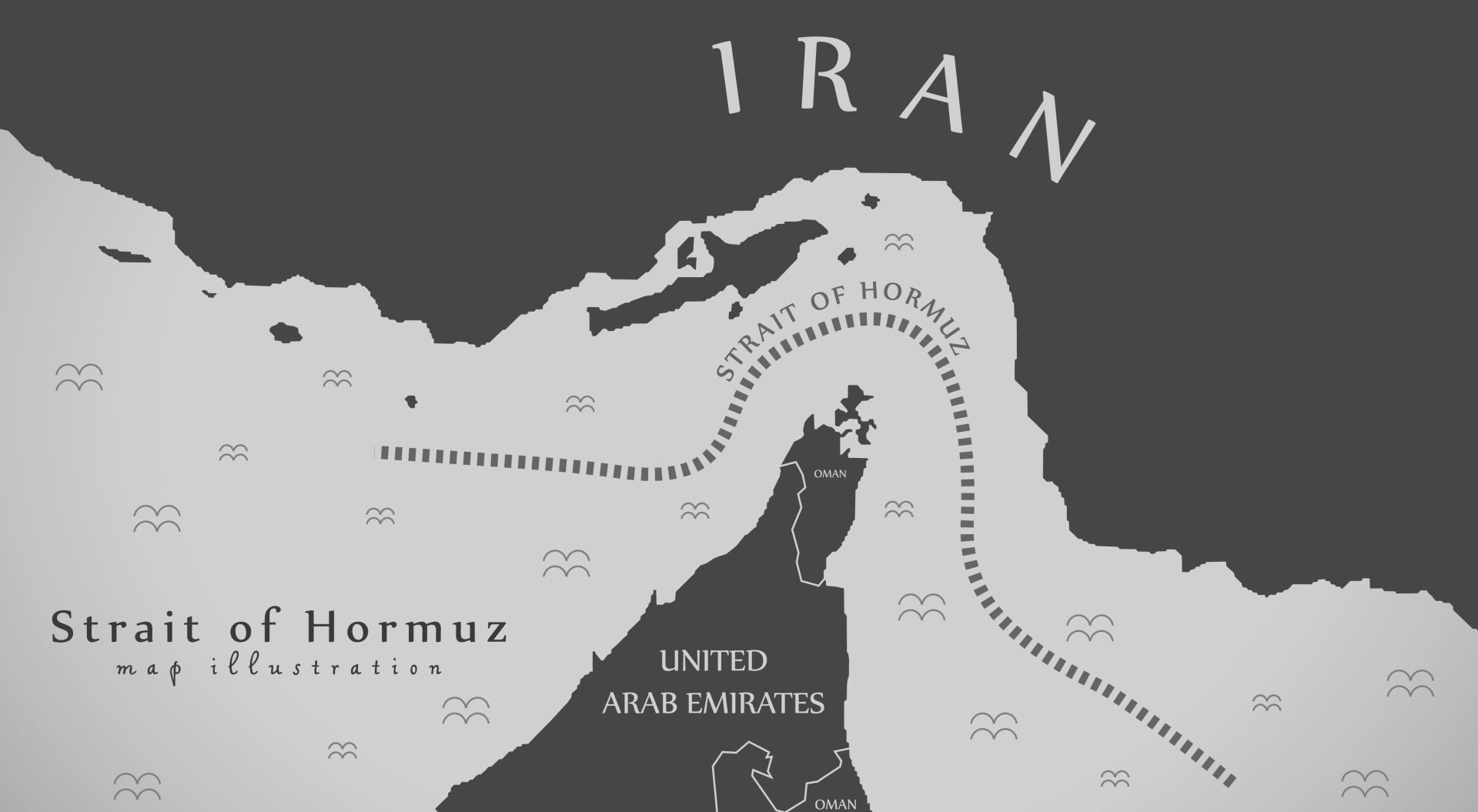
At just 21 miles wide at its narrowest, the whole Strait of Hormuz is within range of Iranian drones, missiles, aircraft, and boats.
The Strait is a choke point between the Persian Gulf and the Gulf of Oman. It is the conduit for approximately 20 per cent of the world’s supply of both oil – around 20million barrels per day, worth nearly $600billion per year – and liquefied natural gas (LNG). Its other flows include helium, sulphate and urea, with impact on agriculture and heavy industry. Iran, Saudi Arabia, Kuwait, Iraq, the United Arab Emirates and Qatar all depend on the Strait for most of their exports.
Within days of the United States attacking Iran, all maritime insurers revised their premiums, which persuaded almost all ships in transit to anchor or seek alternative routes (such as the export of Saudi products from Red Sea terminals). The Strait’s traffic reduced by at least 70 per cent.
This all happened when the threats were Iranian missiles and drones flying over the Persian Gulf towards land targets in Israel and Arab neighbours, rather than towards ships.
In the second week of the war, Mojtaba Khamenei issued his first statement as Iran’s Supreme Leader (following the death of his father on day 1), including threats to all shipping in the Strait. Iranian Foreign Minister Abbas Araghchi claimed that the Strait remains open to ‘non-enemy’ vessels and that several nations have approached for negotiations on safe passage, but Iranian forces have little capacity to distinguish friend from foe, so almost all shippers sensibly consider the Strait dangerous.
Iran could not close the Strait from the air, given the rapid destruction of its air force, which is practically impossible to operate and hide simultaneously.
Iran has lost all warships carrying missiles or drones of a size to sink tankers (most spectacularly, the drone carrier sunk by a US submarine in the Indian Ocean during the first week).
Small boats laid mines, but boats are easy for US planes to destroy, although the mines themselves are more difficult to neutralise.
The big change came with strikes on transport vessels from land-based missiles, which peaked last Wednesday. By then, at least 16 vessels, including oil tankers, had been attacked since the conflict began.
Transport ships need escorts equipped to shoot down Iranian aerial vehicles, sweep the waters of Iranian mines, and to intercept any fast attack boats.
Even when Starmer is forced to reconsider military options, the British military remains denuded and unprepared. Most British warships are in dock awaiting maintenance or repairs. The Royal Air Force is short of pilots. The Army is at its smallest for more than 200 years.
Cyprus was struck by Iranian drones, without any British reinforcements on Cyprus or even in the Mediterranean. A handful of British planes defend the airspaces of Arab allies, without any reinforcements.
Only one anti-aircraft destroyer was even close to ready for operations, and HMS Dragon did not leave Britain until the second week, and still isn’t ready to defend Cyprus. Neither of Britain’s aircraft carriers will be sent, although the government entertained the possibility last week of diverting HMS Prince of Wales from its upcoming mission to the Arctic.
Yet the British government has not ordered any mobilisation of its reserves or any acceleration of the duty cycles within its active component. Even Dragon’s mobilisation continued on a 9-to-5 schedule agreed with the union representing dock-workers at Portsmouth.
On Sunday, Energy Secretary Ed Miliband (he who vetoed the Cabinet’s consideration of any British military involvement on the day the US and Israeli strikes began) reassured Sky News that the government is ‘intensively’ exploring options.
Yet the only military option Miliband could specify is the mine-hunting drones already stationed in the region as part of the Royal Navy’s Mine and Threat Exploitation Group. And he admitted to these only because somebody had already leaked the option to the Sunday Times.
Drones are meant to work as systems within systems, co-ordinated and sustained from manned warships. But the government has ruled out sending warships beyond Cyprus. On their own, drones are easily misled and easily lost.
Britain has no minesweeper in the region, not even in the Mediterranean. For 50 years, a British minesweeper has been kept on rotation in the Middle East as part of peacetime reassurance against bad actors in Somalia, Sudan, Oman and Yemen (supplied by Iran, incidentally). Just before the war, the government recalled its minesweeper from the region for maintenance, without preparing any replacement.
Get the theme here?
Britain was unprepared for even defensive operations pursuant to a war it knew was coming.
It is even less prepared to reopen the Strait.
Starmer’s statement on Monday is incapacity spun as a plan.