DESPITE having loved classical music since boyhood, I have never been much drawn to the music of the late Sir Michael Tippett. I suspect the fault lies in me, not in the composer the BBC Music Magazine ranked at number seven in a list of the 25 greatest British composers of all time, ahead of Gustav Holst and Thomas Tallis and even the German-born but anglicised Handel. I much prefer the music of his contemporaries William Walton and Benjamin Britten, not to mention the prolific and accessible Malcolm Arnold and the incomparable Ralph Vaughan Williams, with Britten being, in my opinion, the greatest musical genius to emerge from the British Isles.
Until recently, I knew very little about Tippett, except that, like Britten, he was an avowed pacifist who served time in Wormwood Scrubs as a conscientious objector during World War II; and, also like Britten, was a homosexual, but much more openly so, unashamedly presenting as camp in later life, unlike the reticent and almost puritanical Britten.
Probably Tippett’s most celebrated composition is his secular oratorio A Child of Our Time, inspired by the assassination in Paris of a German diplomat, Ernst vom Rath, by a young Polish-Jewish refugee, Herschel Grynszpan, on October 7, 1938. When news reached Germany on November 9 that vom Rath had died of his wounds, Goebbels and other Nazi henchmen used his death as an excuse to attack Jews throughout Germany and Austria, killing and arresting them, destroying Jewish businesses and setting fire to synagogues. Europe had seen nothing like it since the Middle Ages, and it is no wonder that Tippett was deeply moved and disturbed by what history now knows as Kristallnacht, ‘The Night of the Broken Glass’, which many historians view as the beginning of the Holocaust. It is believed that Grynszpan later died in a concentration camp.
Like many leftward-leaning artists during the 1930s – as indeed, they are today – Tippett was attracted to Marxism and was briefly a member of the Communist Party of Great Britain (CPGB). However, made uneasy by Stalinist repression during the Great Purge and attempted liquidation of Kulaks, and Stalin’s emphasis on ‘Socialism in One Country’, he left the CPGB and aligned himself with the internationalism of Leon Trotsky and the idea of worldwide revolution and its view that violence was an acceptable price to pay for the establishment of global socialism.
He wrote at the time, certain in his belief as was typical for a Trotskyist of the day, that it was better to overturn the British Empire than the German dictatorship: ‘My one hope is that the British Empire will go under and Hitler win . . . I hate the Empire as I hate nothing else. It is the key pin of world capitalism and it’s our job to bring it to the ground.’ Odd words from a pacifist.
Tippett became an establishment figure after the war, being appointed a Commander of the Order of the British Empire (CBE) in 1958 and receiving a knighthood in 1966. Presumably, his opinion of Britain’s Empire had, as they say, ‘matured’ over the years.
But lest anyone think I have it in for a man whose talents bordered on genius, a composer Isaiah Berlin called ‘a major asset to our age’, and the Chicago Daily News compared to Stravinsky and Beethoven, think again.
The intent of this article is not to disparage a man whose name will be remembered and honoured long after I am dead and forgotten. But I just can’t, however much I try, overlook those words about wanting Hitler to win the approaching war in order to destroy the British Empire. When I first read them in Oliver Soden’s entertaining and meticulously researched 2019 biography of Tippett, I thought immediately of what is taking place in America today.
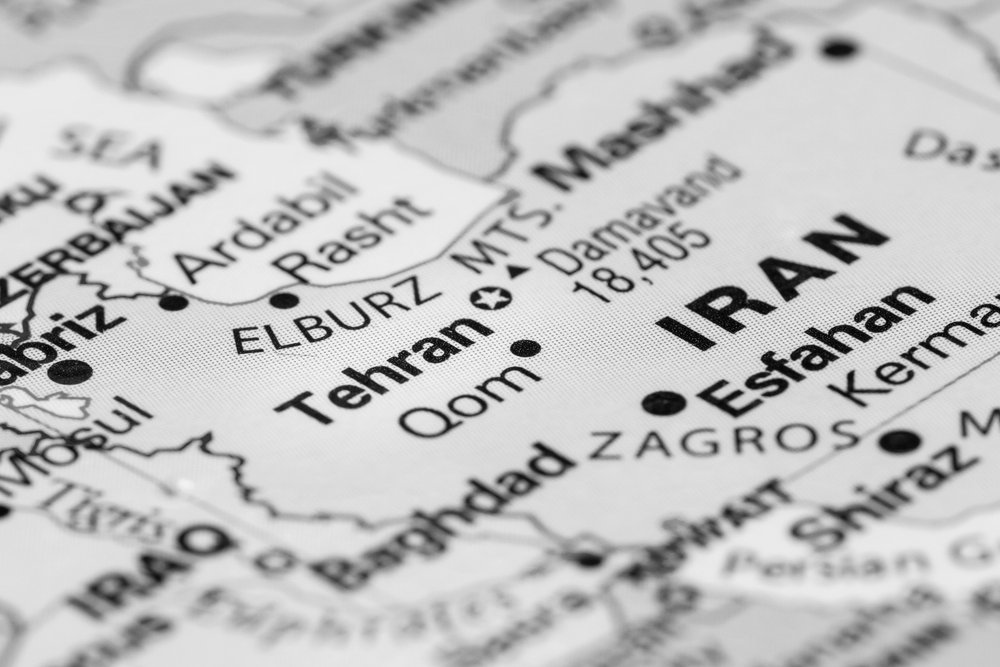
Let me explain as best I can: I now live in a nation, to which I have pledged allegiance, in which millions upon millions of my fellow Americans are hoping that the United States loses the war being fought against Iran, a nation that hangs young men and burqa-clad women from cranes in public after show trials and as recently as last month murdered tens of thousands of its own people who were peacefully protesting against one of the most murderous and oppressive regimes in human history. While those rooting for Iran are not only to be found in America, there is something vaguely obscene when Americans cheer for an enemy that would destroy them in a heartbeat were they to acquire the wherewithal to do so. Excuse the inelegant expression, but this is surely an egregious example of ‘pissing in your own well’.
Only last weekend, pro-Hamas, pro-Hezbollah protesters in downtown Philadelphia were calling for an Iranian victory, one masked provocateur exclaiming to a bellowing crowd: ‘For every US soldier that returns home in a casket, we cheer,’ before calling for Hamas rockets to explode among American homes.
None of this is meant to imply that those who criticise the war with Iran, or think it a dangerous folly that could lead to World War III, hate America and wants her to lose. No less a figure than Mark Steyn, the brilliant and very courageous Canadian journalist and broadcaster who lives in New Hampshire and probably loves America more than many Americans, has expressed grave misgivings about the war. I too have concerns, but desperately want my side, America, to win. But to cheer on the enemy of your nation is beyond perverse and evidence that a kind of suicidal psychosis is eating away the brains of some of America’s most affluent and influential people – people lapping up the privileges of being born in a nation they apparently detest.
Which brings me back to Michael Tippett, national treasure and eventual darling of Britain’s liberal establishment.
Life is too short to research how his politics might have transmogrified over the years. Maybe he voted for Mrs Thatcher, although I doubt it. My interest in him derives solely from the fact that his hatred for the country that had sired him and eventually honoured and celebrated him seems awfully modern. I’m reminded of it every time I listen to the BBC World Service and National Public Radio and hear the barely suppressed glee in the voices of those reporting the latest American and Israeli setbacks in the war against Iran. Or when reading the so-called newspapers of record such as the New York Times and Washington Post.
It goes without saying that such voices are motivated almost entirely by their pathological hatred for the man who initiated the war, though it could be argued that Iran and its proxies have been fighting America and killing Americans for 47 years. Surely even the most vehement anti-Trumpers, such as James Carville enduring the last stages of one of the most acute cases of Trump Derangement Syndrome I have ever seen, have to concede that Iran seeks the destruction of the West, Israel, its Sunni neighbours in the Gulf, and has no scruples about killing its own people in mass numbers. But as far as America’s progressive political and cultural classes are concerned, all roads must now lead to Trump. If the rule of the homicidal Ayatollahs continues in some form, and they are able to claim a victory, Trump will look bad, and that’s all that matters. ‘Orange man bad’. Enough said.
If he succeeds, however, and a democratic government is established in Tehran dedicated to living peacefully with its neighbours and no longer salivates at the prospect of nuking Tel Aviv, very few will thank him while others try to stifle a long sigh of relief.