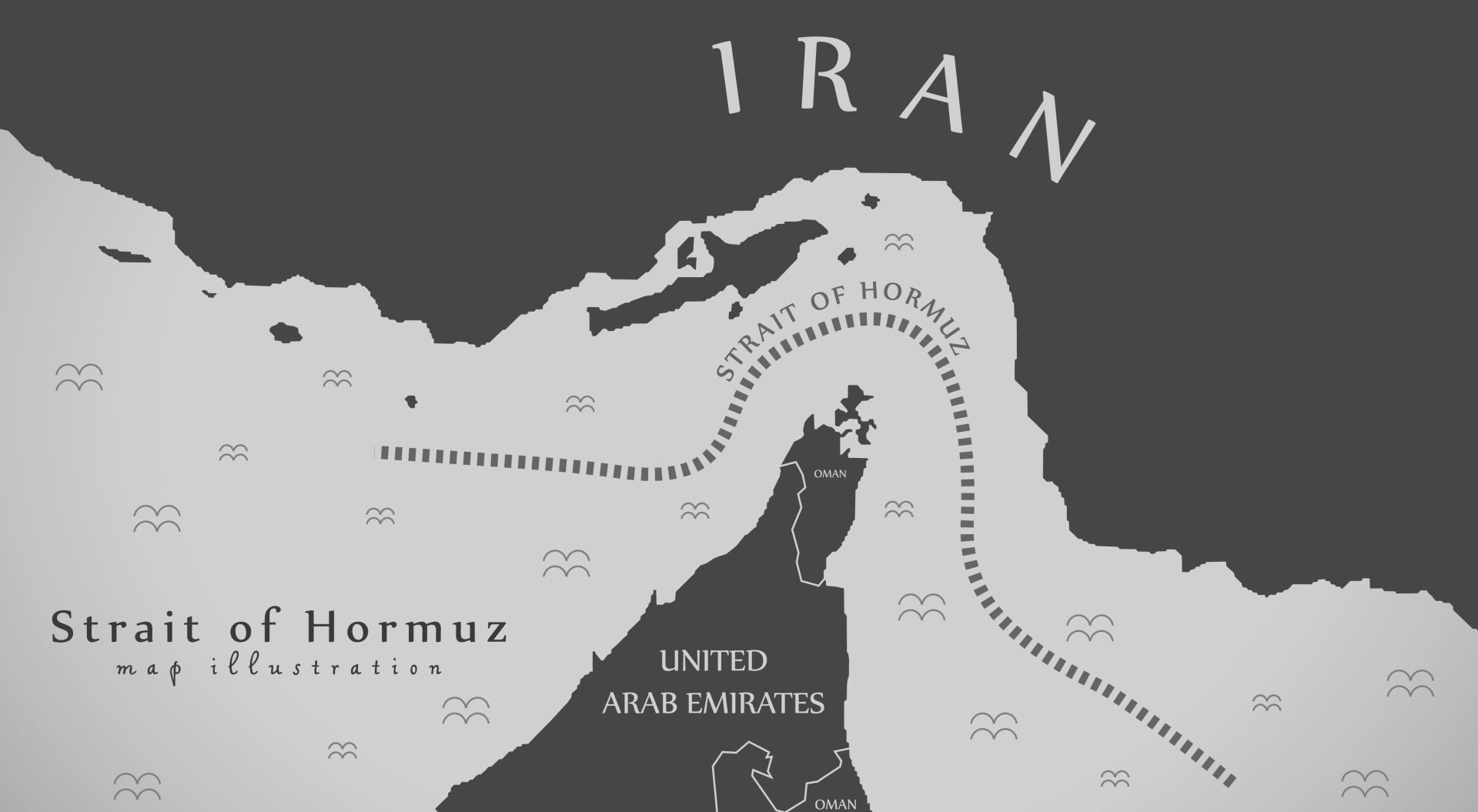
LESS than 24 hours after President Trump announced a mutual ceasefire with Iran it broke down. The Strait of Hormuz was closed again by Iran on April 8-9, giving opponents of the political administrations in the US and Israel a field day spinning the ceasefire as falling short of expectations.
Ben Rhodes, a former foreign policy staffer in the Obama administration, tweeted: ‘In the best case scenario, Trump struck a deal to reopen a Strait that was open before the pointless war he started, with the IRGC demonstrating its control over the Strait and potentially extracting fees plus sanctions relief.’
Israeli opposition leader Yair Lapid added: ‘There has never been such a political disaster in all of our history. Israel wasn’t even at the table when decisions were made concerning the core of our national security. The military carried out everything that was asked of it, the public demonstrated amazing resilience, but Netanyahu failed politically, failed strategically, and didn’t meet a single one of the goals that he himself set.’
Columnist Aaron MacLean, although sympathetic to Trump, notes that: ‘If the ceasefire doesn’t lead down the path toward diplomacy, or surrender, or Trump simply losing heart and moving on, we will be back in the standoff that gripped the world on Tuesday.’
But there were always reasons to doubt its feasibility. On Monday, the Iranian Foreign Ministry tweeted that it ‘officially rejects’ the US 15-point proposal as ‘unrealistic’. Worse, ‘Iran firmly refuses any negotiations conducted under the shadow of illegal sanctions, military threats, or coercion’.
Trump’s post the next day said the ceasefire is ‘subject to the Islamic Republic of Iran agreeing to the COMPLETE, IMMEDIATE, and SAFE OPENING of the Strait of Hormuz’.
The most obvious point missed by Trump’s smug critics was that a ceasefire was something the Iranian regime might have had neither the intent or capacity to achieve. Its regime is devastated and confused.
Ali Khamenei, the Supreme Leader, was assassinated on February 28, within the first 24 hours of the current series of US-Israeli strikes. His successor (Mojtaba) was not appointed until the second week, and hasn’t been seen in public, either because he was incapacitated in a separate air strike or because the IRGC (Iranian Revolutionary Guard Corps) has taken control. (He is unconscious, says a leaked diplomatic memo, although such a leak might be disinformation.) Various other principals have been killed in air strikes, most recently Iran’s intelligence chief on Sunday. American political scientist Charles Lipson reported that ‘American negotiators cannot be certain who is really in charge in Tehran.’
And whoever rules the roost in Tehran, they might not be able to restrain the IRGC. Iranian missiles and drones continued to attack Israeli and Arab states after the deal was announced.
US intelligence estimates that about a third of Iran’s missiles are destroyed, a third damaged or buried, and a third ready. Its navy has suffered similar rates of loss. Iran’s launch sites and launch rate have decreased. The capabilities it retains are to attack neighbouring countries and ships in the Strait.
Foreign Minister Abbas Araghchi posted a statement on behalf of Iran’s Supreme National Security Council that appeared to agree to a ceasefire but added caveats on the Strait.
‘If attacks against Iran are halted, our Powerful Armed Forces will cease their defensive operations. For a period of two weeks, safe passage through the Strait of Hormuz will be possible through coordination with Iran’s armed forces and with due consideration to technical limitations.’
In other words, Iran’s foreign minister couldn’t guarantee safe passage through the Strait.
The second point missed was that Iran would use the ceasefire to retrench and reorganise for war. Foreign correspondent Amy Kellogg reported the real-time reaction of a friend in Iran, who said that regime loyalists ‘will spend the next two weeks making missiles. More to shoot at the Gulf and everywhere else . . . They are already out in the streets celebrating’.
Iran has hardly built a reputation for trust. It has ignored deadlines for an end to hostilities multiple times in this war alone. Its policy has been death to America, Israel, and Britain (usually in that order), since the Islamist revolution 47 years ago. Why trust it now?
Thirdly, Iran and the US offered wildly different versions of their proposals, which hardly suggested optimism for an agreement within two weeks, over a ceasefire initiated by Pakistan and backed by China. Trump’s announcement came three hours after Pakistani Prime Minister Shehbaz Sharif’s X post that diplomatic efforts toward a US-Iran agreement were ‘progressing steadily, strongly, and powerfully’.
This final-hours diplomacy came four days after Egypt, Pakistan and Turkey sent a proposal to the US and Iranian governments for Iran to cease attacks in the Strait of Hormuz in return for a ceasefire lasting 45 days.
Iranian state media rejected that proposal, nominally with the ridiculous expectation that the ceasefire itself must be permanent.
Tehran’s own ten-point proposal included a permanent ceasefire inthe ‘region’ (presumably to protect Iran’s proxies too), a lifting of all sanctions, a ‘protocol for safe passage through the Strait’, (presumably empowering Iran to levy tribute in what are currently international channels), support for Iran’s reconstruction and lifting of sanctions.
This, Trump said on Monday, was ‘not good enough’. Yet his post of Tuesday evening declared it to be ‘a workable basis on which to negotiate. Almost all of the various points of past contention have been agreed to between the United States and Iran, but a two-week period will allow the Agreement to be finalised and consummated’.
Iranian outlets (including Press TV, Tasnim News Agency, IRNA, Mehr News Agency, and state TV) claimed the US had accepted or committed ‘in principle‘ to Iran’s proposal, including: a permanent ceasefire across the region, the withdrawal of US forces from the region, guarantees that the United States or Israel will not attack Iran again, Iran’s control of the Strait, Iran’s continuing enrichment of uranium (although not to weapon grade), the termination of all UN Security Council and International Atomic Energy Agency (IAEA) Board of Governors resolutions against Iran, the lifting of all primary and secondary sanctions on Iran, and reparations for the damage to Iran.
Western media was quick to report that Iran expects to charge each vessel transiting the Strait up to $2million, which it would split with Oman.
Iran had never agreed to the most important parts of the earlier US 15-point proposal, nor to giving up its remaining weapons-grade nuclear material (440 kg of it, according to the IAEA), permit IAEA inspections, change its regime or cut off its proxies.
Meanwhile, Israel stated that the ceasefire proposals ‘did not include Lebanon’, contradicting earlier claims from Pakistan.
By Wednesday, US Vice President J.D. Vance was saying that some in Tehran were ‘lying’ about the proposals, and that the ceasefire is ‘fragile’ by US Secretary of War Pete Hegseth in a press conference). Iran had already publicly ruled out most of what the US wants, partly to mobilise restive Iranians against foreigners supposedly intent on their destruction. Nuclear materials being the most intractable issue, apropos which Hegseth said: ‘On the uranium, we’re watching it. We know what they have, and they will give it up, and we’ll get it, and we’ll take it if we have to’.
Meanwhile, Trump posted: ‘The United States will work closely with Iran, which we have determined has gone through what will be a very productive Regime Change! There will be no enrichment of Uranium, and the United States will, working with Iran, dig up and remove all of the deeply buried (B-2 Bombers) Nuclear Dust.’
Iran has signalled no such cooperation.
AT the end of 2024 Mohammad Javad Zarif, formerly Iran’s Vice President (2024-2025) and Foreign Minister (2013-2021), proposed that Iran’s enrichment and administration of the Strait be regionalized, undermining the IAEA, Western guarantees, and international law. He’s also stated that ‘Iran’s nuclear or missile programs are simply too entrenched and too dispersed to be bombed away.’
Whether Trump and Hegseth ever expected this ceasefire to work is therefore moot.