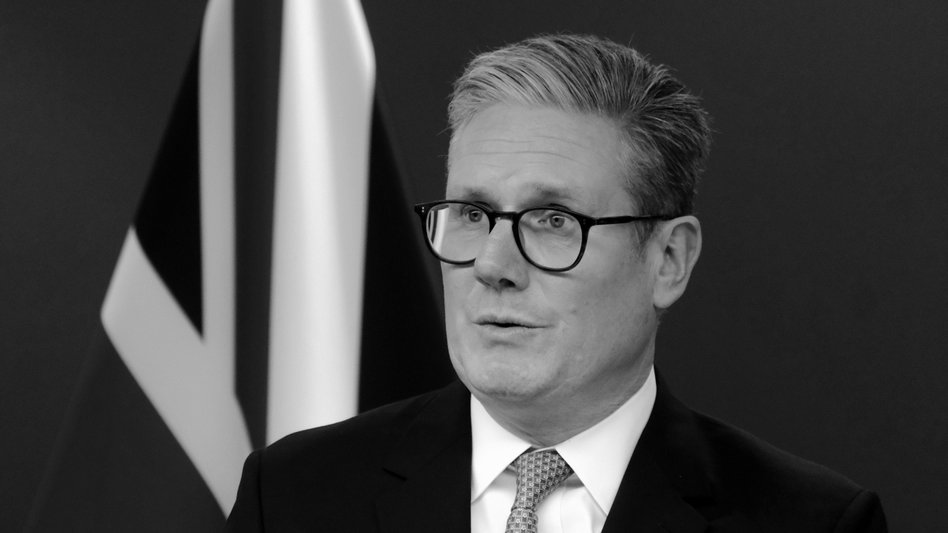
SIR Keir Starmer began his most important annual speech on foreign policy by celebrating the City of London’s first ‘Lady Mayor’ and ‘the first female Archbishop of Canterbury.’ Virtue signalling comes before policy.
At the Guildhall banquet on Monday evening, Starmer went on to admit ‘profound instability, conflict, and change’. He warned of the ‘challenge posed by a chaotic world – a world which is more dangerous and unstable than at any point for a generation’.
But he spent most of the text railing against his predecessors’ supposed exaggerations of China’s threats and Brexit’s opportunities, and promising free trade agreements that he’s already over-sold.
He did not mention his administration’s failed attempts to negotiate peace in Ukraine and the Middle East, the American-Israeli war on Iran, Iranian covert actions inside Britain, revived Islamist terrorism, French failure to curb migration to Britain, the Muslim Brotherhood’s and Iran’s agitation of anti-Semitic, Islamist and pro-Palestine protests insider Britain, or American criticism of Britain’s authoritarianism.
This avoidance is convenient to Starmer’s risible claim that his ‘irreducible’ core values are ‘democracy, freedom, the rule of law, the right to a fair chance, the right to enjoy our lives in stability and peace’. From this distorted, ideological, reductionist view of the world, Starmer gets to his vacuous and disingenuous foreign policy – one that is simultaneously ‘internationalist’, competitive, ‘transactional,’ self-interested, self-reliant and ‘patriotic’!
First, he spoke of ‘our international work to navigate these times, to lead and secure our national interests’. Later he had another go, promising a ‘wider international approach’ and ‘strong, purposeful engagement on the world stage’. Later still, he promised ‘renewed strength and purpose, true to our national story, and true to the internationalist heritage of the political tradition that I represent’.
And after that, he claimed to have ‘delivered the biggest shift in British foreign policy since Brexit, a decisive move to face outward again, to rebuild our power, both hard and soft, which had been so damaged and neglected, to reassert our national interest on the world stage . . .’
He characterised his foreign policy as ‘a new internationalism, which adapts to a world where there is fiercer competition’.
That clumsy wording betrays a contradiction that the speech writers never resolved. You can’t be both internationalist and competitive. Internationalism favours co-operation over competition, pooled sovereignty over national sovereignty, absolute gains over relative gains, conformity over adaptation.
In case Starmerites think I’m reading too much into a single sentence within a woefully vague speech, consider Starmer’s next promise: ‘A more transactional approach to pretty well everything – from trade, tech and raw materials, to migration and security’. In June, Starmer clarified what he means by ‘transactional’: mutual concessions, quid pro quo, and granting nothing without something in return.
The very next promise betrays the contradiction between ‘internationalist’ semantics and ‘transactional’ practices: ‘An internationalism that recognises the critical importance of defence and recognises that this is an age where we cannot look only to international institutions to uphold our values and interests. We must do it ourselves – through deals and alliances.’
The speech is ridiculously disingenuous: talking internationalism to deceive the left, promising self-reliance to deceive the right.
Gratuitously, he blamed Brexit for destroying the internationalist ‘consensus’. Never mind that the EU is increasingly regional, not international; protectionist, not open; weak, not strong; marginalised, not engaged; and ponderous, not purposeful.
Most gratuitously, Starmer pretended a binary choice between his ‘wider international approach’ and ‘turning inward’.
As examples of ‘wider international approach’, he pretended to have delivered free trade deals from India to the EU to America. In fact, these deals are more symbolic than the semantics pretend. Starmer has already exaggerated their benefits for Britain. For instance, the US-UK tech partnership is an open-ended memorandum of intent, taking public credit for private investments, most of which had been made before the inter-governmental ‘deal’.
As examples of ‘turning inward’, he linked Brexit to ‘an attitude of total impunity that says: insult our neighbours; sever our alliances; choose between the EU and the US; sever links with China’.
Show me the Brexiteer who promised that if Britain were to leave the EU it would gain ‘total impunity’. From what, anyway? Starmer never explains.
Starmer’s speech sounds like the rant of a bolshy teenager whose only engagement with the world is on TikTok and Western university campuses.
To confirm the speech’s naïve contradictions, the speech ends: ‘in these times, internationalism is patriotism.’