IN HIS book Mere Christianity, C S Lewis challenged readers to consider whether Jesus was a lunatic, a liar or, as he claimed, the Son of God. Those were the only possible options by which his claims could be tested. There is clearly nothing divine about the UK Health Security Agency (UKHSA). Therefore, the challenge is to work out whether they are lunatics or liars.
Late last year I added my name to online letters of complaint about the government advice to wear face masks during the manufactured flu crisis to the Department of Health and Social Care (DHSC) and the UKHSA. Both organisations responded this month with almost identical boilerplate replies.
The response from the UKHSA was unsigned, but the DHSC reply came from ‘Luke’ of ‘Ministerial Correspondence and Public Enquiries’. Both responses included links to the UK.GOV guidance for people with respiratory illnesses and a UKHSA blog on the same theme. Both responses pointed out that there had been no change in the relevant advice. The UKHSA even wanted to ‘reassure’ me on this point, suggesting that the point being made in the original complaint had not been read or understood.
The UKHSA’s response to public concern about face masks, covid vaccines, and testing is a masterclass in modern public health communication. There is no mandate, we are told. No compulsion. Just a gentle nudge to ‘consider’ doing several things that, we are assured, are both effective and safe.
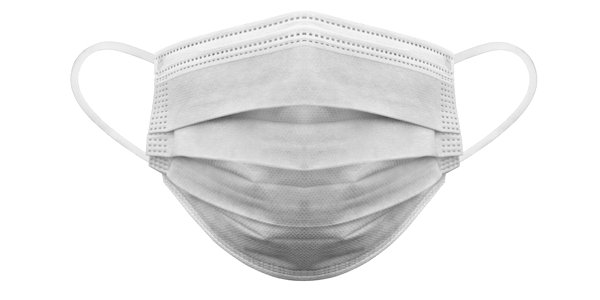
UKHSA tells us that ‘face coverings and face masks can help reduce the chance of you spreading infection to others . . . and may also protect you from becoming infected’. Masks are reintroduced because respiratory illnesses rise in winter, and NHS trusts ‘occasionally put additional precautions in place’. The question is not whether masks can block droplets in theory, but whether recommending or requiring them in general settings produces a reduction in transmission in practice.
We are also told that ‘vaccinations are very effective at preventing serious illness’ and that ‘vaccines remain our best defence’. The truth is that vaccines for covid and flu are virtually useless and, in the case of covid vaccines, worse than useless.
We are assured that ‘All vaccines go through a regulatory approval process’ and ‘millions of women . . . have had the flu vaccine during pregnancy’. This is not evidence of safety; it is evidence of uptake. Safety requires transparent accounting of adverse events, clear communication of uncertainty, and honest discussion of risk-benefit trade-offs by age and health status. Reassurance is no substitute for evidence.
Then the old mantra, ‘It is very likely that you have COVID-19 even if you do not have any symptoms’ and you should behave accordingly. Likely according to what? Which test? At what prevalence? With what false-positive rate? These questions are not pedantry; they are the difference between sensible guidance and ritualised response. The guidance assumes the reliability of tests while declining to discuss their limitations, particularly when used in low-prevalence, largely asymptomatic populations.
Throughout the documents runs a familiar pattern: behavioural advice presented while evidence remains absent. Open a window, wear a mask, get vaccinated, stay home, test if you can. Each measure is presented as reasonable in isolation; together they form a comprehensive regime justified not by demonstrated outcomes, but by the principle that drives so much of public health; ‘something must be done’, even if it does not work.
What is most striking is how little the UKHSA has learned from the past five years. There is no recognition that mask mandates failed to correlate with better outcomes, or that repeated vaccination of low-risk groups delivered diminishing returns while accumulating adverse effects.
If the case for masks, vaccines, and tests is as strong as UKHSA insists, it should be possible to make it plainly: with numbers, uncertainties and limits. We are provided with advice that asks us merely to comply. I cannot make up my mind whether the UKHSA are liars or lunatics. Is it possible that they are both?