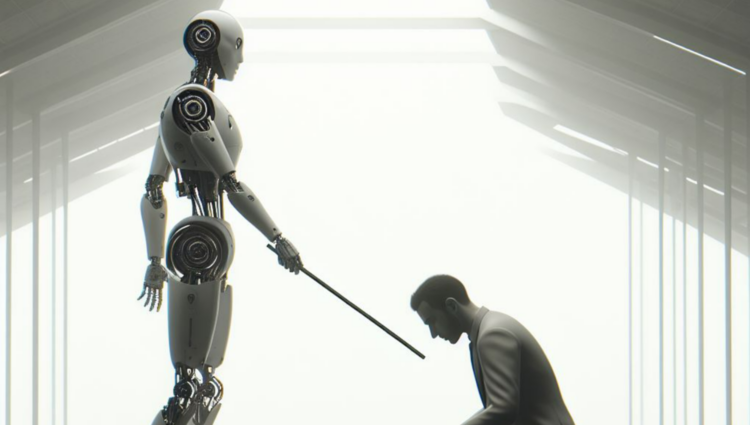
The machine we face today is an all-encompassing technological, cultural, and economic system oppressing us—driven by profit and a misguided ambition. In the name of public health and progress we have allowed ourselves to be enslaved to the machine.
 You will have a window in your head.
Not even your future will be a mystery
any more. Your mind will be punched in a card
and shut away in a little drawer.
When they want you to buy something
they will call you. When they want you
to die for profit they will let you know.
So, friends, every day do something
that won’t compute. Love the Lord.
Love the world.
—Manifesto: The Mad Farmer Liberation Front – Wendell Berry
If you were to walk down a busy street, ride a train, or sit in a restaurant and examine the people around you, it is likely that most of them have their head angled down towards the glowing device in their palm. Just the presence of a phone on a table top is a distraction. It could buzz at any moment to alert you of this or that. Although you’re not obliged to check it immediately, you’ve already lost focus on the task at hand, and an anxiety sets in that can only be satisfied by turning the phone over and seeing just what the buzz meant.
People have become blind to the sheer absurdity of our dependence and insistence on smartphones being a part of our daily lives. And this is not just an issue in Western cultures. Cheap Chinese smart phones can be found in African countries where people still go without basic first-world necessities. During the opening ceremony of the Winter Olympics, athletes were holding their country’s flag in one hand and recording with their smart phone in the other. Smartphones are making us worse at being real humans—doing things like looking one another in the eye or holding a conversation with a stranger. Our oratory skills have diminished with “likes” or “ums” becoming common additions to spoken sentences. I am terrible at spelling, but I use a computer to write, so it doesn’t matter because of spell-check. We have even come up with a shorthand to describe our phone-inflicted handicaps, with the internet acronym “TLDR” standing for “Too Long Didn’t Read.”
It has become almost impossible to live off-line. I am a recent college graduate participating in a post-graduate fellowship. All twelve of us are actively searching for jobs, all on the computer—our fate dictated by a digital application or a LinkedIn connection. Companies like Ticketmaster are moving towards mobile-only ticketing methods, making it impossible to attend a Ticketmaster event without a smart phone. The world is becoming increasingly harder to navigate without a smartphone in your pocket.
My response? My personal manifesto is as follows: “This machine kills brain cells!”
I put this little sentence on a label and stuck it to the back of my phone. It is my own little rebellion, a reminder that the machine doesn’t control me. The phrase came to me as an ironic thought. The folk singer Woody Guthrie once painted on his guitar, “This machine kills fascists,” supposing that his instrument could somehow heal what was broken in the world. The idea was that machines can be used for good—and they certainly can. However, I am becoming more and more convinced that my iPhone is not this type of machine.
The way I see it, we are at a crossroads. My generation is numb to the world around us. We are increasingly single, porn- addicted and SSRI-ridden, carrying around the source of our addiction in our pockets. That is not to say that tech addiction has not worked its way into older generations. Retirement has become an opportunity for boomers to waste away in their houses in front of a television or iPad, as the average age of first-time homebuyers steadily increases. To be “low-tech” is a new luxury. There is an irony that is lost on creators making content on “digital minimalism” and then uploading said content to Substack or YouTube. I’ve heard writers share on podcasts about keeping their computers in a particular room to limit screen time. A computer room, however, is not a new invention. There was a time—or so I’m told—before I was born that computers were large enough that everyone who had the privilege of actually owning a computer had a computer room. And if you didn’t have a computer at home, you would have to go to a public library to access the internet.
The development of personal technology was initially an equalizer. Any person, anywhere in the world could access information instantly. But this limitless accessibility has overwhelmed us with information. As society becomes more dependent on technology for basic daily tasks, Elites become the ones who can afford to unplug. Steve Jobs famously didn’t allow his children to use the products he created.
It is important to remember that the smartphone is a relatively new phenomenon. The first iPhone was launched in 2007 when I was three years old. But technology is an old problem. The phrase “the machine” becomes a theme writers begin to explore a post-steam-engine world. But the machine is much older than the steam engine. The machine consists of the tools that we use to build civilizations—physical manifestations of human ingenuity. Think about how cities are built and what they represent. Cities are the center of civilization, where culture is meant to be ordered, creating boundaries to free us. It is in the city where Aristotle finds space for man to flourish, but it is also in a city that Babel is built. The demise of Babel is a fruit of misdirected worship. Does the machine serve us or do we serve it?
The machine we face today is an all-encompassing technological, cultural, and economic system oppressing us—driven by profit and a misguided ambition. In the name of public health and progress we have allowed ourselves to be enslaved to the machine. With eyes towards progress we have failed to see the ways in which the machine erodes our humanity. My thesis is then: Submission to the machine is inherently destructive because it subverts natural law. It might not be immediately obvious that the machine is at odds with natural law.
However, in his 1983 Fundamentals of Ethics, John Finnis argues just that, suggesting that the proper response to the machine is a return to Aristotle. Finnis uses Robert Nozick’s thought experiment called the experience machine. The experience machine supposes a world with two options: to plug in, or not to plug in. If you were to plug into this machine your brain becomes constantly stimulated by any experience you could ever want—any pleasure you could think of completely in your mind while your body sits floating in a tank.
To choose between the red and blue pill is no longer just an allegory. This past Super Bowl featured an advertisement for Oakley sunglasses outfitted with Meta technology, coining the phrase athletic intelligence. No consideration that maybe, just maybe, it is a bit superfluous to have a computer in sports sunglasses. Apple has created its own type of mini-experience machine with the Apple Vision Pro. The claim on their website is that the technology “seamlessly blends digital content with your physical space. So you can work, watch, relive memories, and connect in ways never before possible.” But the digital and physical are not meant to be seamlessly blended.
Finnis clarifies why exactly it is a mistake to plug into the machine writing, “If agreeing with me that to plug into such a lifetime would be a grievously regrettable choice,… you are agreeing that how our lives feel ‘from the inside’ is not the only thing that matters to us.” Indeed, the experience machine produces nothing except pure experience. You could simulate a happy loving relationship and a family without any other person actually being there. Aristotle in his Nicomachean Ethics warns against these experiential pleasures for their own sake: “Pleasure is not the good, that not every pleasure is choiceworthy, and that some are choiceworthy in themselves, differing in species or in their sources [from those that are not].” Just because it is pleasurable doesn’t mean that it is good. If a pleasure is “choiceworthy in [itself],” it is because the source of the pleasure orients one towards the ultimate good. For instance, a friendship in which one wills the good of the other is inherently pleasurable and orients us towards the ultimate good. But something like pornography—while it might bring temporary pleasure—is ultimately not “choiceworthy” because it seeks pleasure for its own sake. To reject this pleasure-seeking machine, Finnis proposes three truths of human experience: (1) activity has its own point; (2) maintenance of one’s identity is a good; and (3) appearances are not a good substitute for reality.
Firstly, if activity has its own point, then the simulated version must be insufficient. Finnis writes: “The experience machine could give you the experience of writing a great novel or overcoming danger in company with a friend; but in fact you would have done nothing, achieved nothing.” There is something substantial about activity for Aristotle that we have lost. This is tangential to a move towards utilitarianism, supposing that the destination is more important than how you got there. Activity supposes more than artificial experiences. Activities form us and affect how we grow in virtue and then contribute to the good of those around us. The experience machine only offers artificial formation of the mind, constructing a faux reality, whereas real formation interacts with the world that is and can affect whole communities.
To Finnis’ second point, Aristotle maintains that “no one chooses to become another person even if that other will have every good when he comes into being.” Manufacturing your life as a series of experiences erodes authentic human experience and turns you into someone else entirely. The experience machine is not concerned with what we are; rather it is concerned with filling time. Consuming more and more experiences until what exactly? What end exactly does pure experience lead to?
Finnish’s third point that appearances are not a good substitute for reality is something I should not have to prove. It seems obvious that there is a difference between actually doing something and simulating the experience of that thing. The main difference is that the experience machine can only create manufactured experiences, it cannot create anything tangible. Only humans can create tangible experiences, and we do this simply by living—actually living, not outsourcing our lives to calculations. Finnis’ perspective places the machine at odds with human flourishing. Experience does not exist merely for our pleasure.
What Finnis couldn’t possibly imagine in 1983 is just how good technology would become at simulating reality. Indeed, AI- generated content can appear real, and AI systems are developing rapidly. The big promise of AI is that it will solve scarcity, particularly when it comes to health care. I contend that using the tools at our disposal to reduce sickness and death is a good—but is it worth the price? I can accept the issue of scarcity before I can accept the erosion of humanity. While this may be a privileged position, I maintain that humans thinking is always better than outsourcing our thinking to computers. The price of unchecked submission to the machine is the end of humanity. AI might save lives in the short-term, but at what cost in the long-term?
Seeking to control AI is almost a futile gesture because we have already given away so much ground. AI thrives in our consumeristic culture. And that’s what the machine offers—unlimited experience, all your choices just as long as you plug in… more, more, more. But AI dose not create, it only simulates. Think about Large Language Models like ChatGPT. They rely entirely on preexisting information—information that humans likely produced. So the chat bot is not actually creating an answer or image, it is simply robbing information from other sources and throwing it together as its own. The academy has a word for that: plagiarism.
An increased dependence on AI and technology for daily life puts us increasingly at odds with creation. In a 2021 First Things article titled “The Cross and the Machine,” Paul Kingsnorth describes the machine as something we’ve constructed to replace God; it is a Babel of our own. Kingsnorth writes:
Every living culture in history, from the smallest tribe to the largest civilization, has been built around a spiritual core: a central claim about the relationship between human culture, nonhuman nature, and divinity. Every culture that lasts, I suspect, understands that living within limits—limits set by natural law, by cultural tradition, by ecological boundaries—is a cultural necessity and a spiritual imperative. There seems to be only one culture in history that has held none of this to be true, and it happens to be the one we’re living in.
We have forgotten our limits; we have forgotten the law. For Kingsnorth, humanity has always been given two choices: “the Cross or the machine.”
What then is the goal? Of the Zuckerbergs and Musks? Their goal is to create eternal life: a world with no Cross… the erasure of pain and suffering at the cost of our very humanity. We now live in a society where we are so free that we choose enslavement. Enslavement to the algorithm, to progress, to the machine. If AI means progress then we will soon progress ourselves right out of our own humanity. We can look around and see the warning signs, the looming destruction. We can tell atlas to shrug all we want under the weight of our rebellion but we can’t baptize the machine.
I am not the type prone to alarmism, but I look at the world and see a bleak horizon. Soon my generation will inherit the earth and its institutions, and what I see are two groups: those who plug in and those who resist. That is not to say that hope is lost and that we cannot stop our current trajectory. In the last year, more than 30 states have banned cellphones in public schools. Young people can make active choices to remove themselves from the internet’s web. To fight the machine is to question the myth of technological progress. To ask ourselves questions like: What should we value, and how do our habits put us at odds with our own nature? The way forward is the way of Wendell: Every day do something that won’t compute.”
__________
The Imaginative Conservative applies the principle of appreciation to the discussion of culture and politics—we approach dialogue with magnanimity rather than with mere civility. Will you help us remain a refreshing oasis in the increasingly contentious arena of modern discourse? Please consider donating now.
The featured image is courtesy of Pixabay.