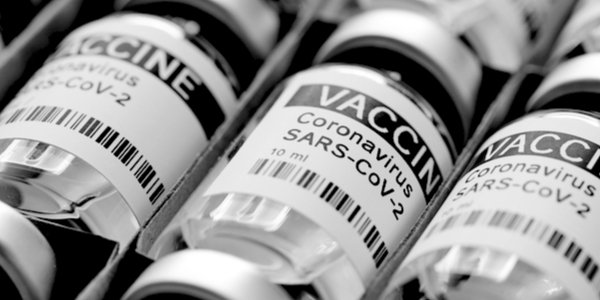
VACCINE injuries are rare, our governments told us. You must have a covid vaccine to protect others, they told us.
There’s an implied bargain here, a social contract between the state and its citizens to the effect that those who are inevitably harmed by the unavoidably unsafe products will be compensated and looked after.
Even if the individual conditions that combine to produce that statistic are rare, collectively harm at this level cannot be said to be rare. Nevertheless, governments around the world have utterly and shamefully reneged on their half of the implied bargain, leaving the injured survivors adrift as inconvenient statistics.
Kayla Pollock, a Canadian woman who was catastrophically injured by the Moderna Spikevax vaccine in 2022, is one of those rare statistics. Having been left a quadriplegic after receiving a covid vaccine her government pressured and coerced people into taking, she’s having to try to secure her future by suing Moderna for C$45million (£24.3million). The lawsuit was filed two years from the day she was injected.
Moderna is trying to have her case stayed on procedural grounds before it reaches a jury. If they lose, they win anyway. Their contract with the Canadian Government doesn’t give them absolute indemnity. Instead it requires the Canadian taxpayer to reimburse the company’s costs if Moderna are successfully sued for harm caused by their product.
Kayla’s a warm, intelligent woman with a resilience forged by her upbringing in the foster care system. Dark humour outwardly takes the edge off her inner distress. ‘I can’t stand up for myself any more,’ she says, ‘but I can speak out.’ Her story is an important and cautionary tale of the dystopian world forming around us.
In her pre-Moderna life, Kayla was an animal trainer who worked with exotic animals and service dogs. She then became a kindergarten assistant, a job she loved. ‘The kids bite more than the animals do,’ she says laughing. She once played competitive soccer and before that fateful shot, she loved nothing better than playing basketball, hockey and soccer with her young son – simple, joyful things she will never again be able to do.
As she is a Type 1 insulin-dependent diabetic, she says the fear messaging in the media in 2020 about the unique risk the coronavirus posed to people like her really hit home, so she took the covid vaccine when it was rolled out. Her first two doses were Pfizer/BioNTech. By the time the boosters were available, she had misgivings about taking a third. Not only had she never been ill, she was tested at the start of every school day and had never had a positive covid test.
She says the school board which employed her was not mandating the boosters, but her father who had early-onset Alzheimer’s lived in a care home where the security guards were refusing entry to anyone who hadn’t been vaccinated. Believing that the third dose would eventually be mandated anyway, she reckoned she might as well get it.
From the time she arrived at the vaccination centre in February 2022 something felt off. ‘I wish I’d listened to my gut that day,’ she says wistfully. ‘The police were at the vaccination centre. I asked someone why, and was told that people were getting upset because only booster doses of the Moderna vaccine were available and people wanted Pfizer.’
After the vaccine her legs gave out on her and she fell to the floor. She says the feeling reminded her of an epidural. She had a second fall later and says she knew it was nothing to do with her blood sugar levels.
Four days after being injected Kayla woke up early in the morning. The day before was the Family Day public holiday and she had spent it hiking with her family. Now she was unable to move and her living nightmare was just beginning.
‘I knew I was paralysed’, she says. ‘I’d had an epidural when my son was delivered by Caesarean so I knew what being paralysed felt like.’
She says she was very calm, but unable to call out. Afraid her partner would leave for work without realising she needed help, she sent her Great Dane to fetch him. The dog, sensing something was wrong, kept coming back to her side without bringing her partner with him. Luckily he’d noticed the dog repeatedly coming part way down the stairs and thinking its behaviour strange, he returned upstairs to see what was wrong with it. Kayla sent him next door to the neighbours – a nurse and a paramedic – seeking help.
They called 911. At the hospital, covid restrictions meant not even the neighbour who was a nurse, who wanted to accompany Kayla to be her advocate, could go into the emergency department with her. Security sent her away. Alone and scared, Kayla was given a covid test and a drug and alcohol screen. After the test results came back, the gaslighting started almost immediately. She mentioned the recent vaccine. The emergency room physician who came in to examine her lifted her limbs and let them fall down. He said she had some reflexes and told her: ‘This is psychiatric.’
‘I knew it wasn’t all in my head. I was hoping it was, but I knew it wasn’t,’ said Kayla. ‘This is a very common story in Canada. Half of the vaccine injured people I know, who’ve been proven vaccine injured, were told it was psychiatric.’
Lying on a bed in the hospital corridor, she began to feel extreme pain. ‘I remember thinking, this hurts so much I want to scream as loud as the pain hurts because it might make me feel better. But I couldn’t.’ Her distressed cries attracted the attention of the nurses. Rather than comforting her, she says ‘the nurses were literally telling me to “shut the f*** up”.’
The ER physician passed the buck by referring her for a psychiatric assessment then prescribed an injection of morphine while she waited. Some hero.
Eventually another doctor arrived. He told her he did think there was something physically wrong with her and said he’d called a radiologist friend at home who was willing to look at her scans immediately if she had an MRI. The scan took two hours. It showed lesions on Kayla’s spinal cord so large she was told she was millimetres away from losing her ability to breathe on her own. A devastating and very real diagnosis followed. Kayla had transverse myelitis. It’s the same neurological condition that led to a pause in the phase 3 trial of the Oxford-AstraZeneca vaccine in September 2020 after one of the trial volunteers developed it.
By the time the neurologist on duty came to see her after the MRI, her boyfriend was with her. He’d told security he was her husband so they let him into the hospital. Taking no chances that she would be gaslit again, she told him to put her finger on the record button of her iPad so that no one could say she hadn’t recorded the neurologist herself. ‘Record everything,’ she told him.
The neurologist was honest. He said they’d ruled out everything except a cancerous tumour on her spinal cord, but said this was unlikely based on her blood work. He agreed the paralysis was likely to have been a vaccine reaction.
She asked if he’d seen this before. ‘Yes, many times,’ he said. Other vaccine-injured people are often told their rare conditions are caused by covid itself, rather than the vaccines. Kayla’s daily negative covid test results prove that in her case, it couldn’t have been. She’s never been anything but certain that the Moderna vaccine caused her paralysis.
Kayla is far from being a lone covid vaccine recipient suffering from transverse myelitis. The US Vaccine Adverse Events Reporting System (VAERS) database, which is known to underestimate the level of vaccine injury, contains 285 reports of recipients of the Pfizer/BioNTech and the Moderna mRNA vaccines developing transverse myelitis. Eighty-five of those reports are from vaccine injured people living in the UK. Kayla has since found a validated safety signal for transverse myelitis in a 2021 Moderna safety report.
She was sent to a rehabilitation facility after the diagnosis where her level of disability was assessed. Rehab sounded great until she got there. She found it a bleak and isolating place – like being in jail, she says. ‘I’ve never been to prison,’ she says, ‘but I found out later that prison rooms are the same size and the brick walls painted the same colour.’
Kayla’s multi-storey home needed thousands of dollars of modifications to make it suitable for a quadriplegic in a power wheelchair, money she didn’t have. Then the rehabilitation centre gave her a discharge date. She queried why she was being sent home since none of the modifications had been made. The cold response was: ‘You’re not making progress.’
A healthcare computer algorithm determines how much funding is available for rehabilitation support for each person’s medical condition. Her funding allocation had been used up. In the end, she was forced to leave the home she loved and move to another town where suitable accessible accommodation was available. She says the home support workers she needs aren’t always reliable. Sadly, the dog had to go as some of the support workers were afraid of it.
The medical profession has no solutions for Kayla, not constructive ones anyway. As one of the ‘rare statistics’, institutionally they’ve come to treat her as a societal burden. During another visit to the emergency room she told a nurse she was feeling suicidal. Contrary to programme guidelines, the hospital gave her forms to fill in for Canada’s Medically Assistance in Dying (MAiD) programme. They can’t fix the harm the pharmaceutical sacred cow has caused. The alternative is so Logan’s Run: come back in 90 days and we’ll kill you. How clinical they make death. It’s not exactly healthcare, is it?
Kayla’s been offered MAiD twice since that first time. A conversation with her seven-year-old son about the family dog being put down ended any temptation of taking up the MAiD offer. He asked her if they gave needles to people like they did to dogs. ‘Sometimes,’ she said. He retorted: ‘But shouldn’t God decide when you die?’ She now speaks out against euthanasia. She wants her son to be old enough to remember her properly.
MAiD’s become all too common in Canada since it was introduced in 2016. It recently emerged that an elderly woman who didn’t want MAiD was killed by doctors because no hospice bed was available for her and her husband refused to take her home, citing ‘caretaker burn-out‘. It’s terrifying how quickly compassion has morphed into convenience. Imagine how frightening it must feel to be entirely dependent on others for care.
In 2022 Kayla applied to the Canadian government’s Vaccine Injury Compensation Scheme which had been outsourced to a company called Oraxo. Her first application ‘went missing’. Four years later, her second still hasn’t been processed. You can draw your own conclusions about the slow walking. After all, a successful compensation case probably wouldn’t help Moderna defend itself against her lawsuit. She says around $59million (£32million) has been paid out by the scheme but most of it went to consultants, not vaccine-injured people. Suing Moderna seems to be a better prospect.
Kayla puts on a brave face, but her bleak reality is that if the company can’t be held accountable, she hasn’t got the means to ensure she gets the care she needs for the rest of her life. To add to her difficulties, she’s suffering further complications from the vaccine. In November last year she lost the sight in one eye. She may soon lose the sight in the other. The care she’s getting is barely adequate.
To the state that’s broken its part of the social contract to those injured by the rushed-out vaccines, the one-in-ten severely injured covid vaccine victims like Kayla are mere statistics – reminders in a database of a world that’s moved on. Hopefully the jury at her trial ensures that Moderna are held accountable for the harm their vaccine has caused. Kayla is one victim who won’t go quietly. Securing her future care and providing for her son depends on it, and the fight hasn’t left her yet.