Unlike the mute stones surrounding Jesus during that great procession of the first Holy Week, let us hail his arrival with shouts. As Jesus approaches our stony hearts, let us cry out, “Hosanna to the Son of David!”
 “I tell you, if these were silent, the very stones would cry out” (Luke 19:40).
As our Lord entered Jerusalem, on the day that would be known forevermore as Palm Sunday, he uttered these words in response to the Pharisees. Fearful at the threat of the Romans’ response to a new King, the Pharisees told Jesus to calm the crowd’s eager and potentially rebellious cries of “Hosanna!” But, of course, if they wouldn’t cry out, the stones would take their place. This new King is God, after all, who has always had an eye towards bringing life out of dead stones.
Lent is a dry season. It is a somber time spent with Christ in the desert. The dead earth plays a part, setting the stage for its great drama. At the very beginning of Lent on Ash Wednesday, we heard the warning, “you are dust, and to dust you shall return.” Sometime around the second week, failures in our Lenten penances reminded us again of our earth-bound state. We became painfully aware of our weak flesh.
On the first Sunday of Lent, we heard about Jesus in the desert. Stones themselves became the object of temptation. Satan had his strategy; “If you are the Son of God, command these stones to become loaves of bread” (Matt 4:3). He knew that if Jesus was God, then he would have the power of God. Satan was there at man’s beginning, and he saw God breathe life into the clay shape of our first parent. “The Lord God formed man of dust from the ground, and breathed into his nostrils the breath of life” (Gen 2:7). God made the mud into a man, so he could turn the stones into bread.
The prophet also knows the power of God. When John the Baptist sought to lay low the Pharisees’ pride, he reminded them of God’s power to give life. “Do not begin to say to yourselves, ‘We have Abraham as our father’; for I tell you, God is able from these stones to raise up children to Abraham” (Luke 3:8). Centuries before, the prophet Ezekiel envisioned the restoration of Israel as the replacement of rocky hearts, hearts unresponsive to the good works of God. The prophet cried out God’s promise—“A new heart I will give you, and a new spirit I will put within you; and I will take out of your flesh the heart of stone and give you a heart of flesh” (Ezek 36:26). Only God has the power to bring dead matter to life. “Then you shall know that I, the Lord, have spoken, and I have done it” (Ezek 37:14).
The transformation from stone to flesh, or from death to life, is what we seek from Holy Week. In the rich liturgies of this week we hear the words of God proclaimed to us. We hear the entire story of salvation, the entire arc of God’s revelation to man. Now is the hour of which Jesus spoke, “when the dead will hear the voice of the Son of God, and those who hear will live” (John 5:25). Our hearts are dead, stony, within our chests. We are weighed down by sin and frightened at the certainty of death. God promises the conquest of death. The hour of the Word of God is the hour of transformation. This is the hour of life.
Unlike the mute stones surrounding Jesus during that great procession of the first Holy Week, let us hail his arrival with shouts. As Jesus approaches our stony hearts, let us cry out, “Hosanna to the Son of David!” As stones of sin, which scrape the feet of Jesus as he ascends Golgotha, we admit our former guilt by echoing the cry, “Crucify him!” But by his grace, as stones brought to life by Life himself, we rejoice to take our place in the walls of the New Jerusalem as we cry out for all time, “Amen! Alleluia!”
✠
Republished with gracious permission from Dominicana (March 2026).
The Imaginative Conservative applies the principle of appreciation to the discussion of culture and politics—we approach dialogue with magnanimity rather than with mere civility. Will you help us remain a refreshing oasis in the increasingly contentious arena of modern discourse? Please consider donating now.
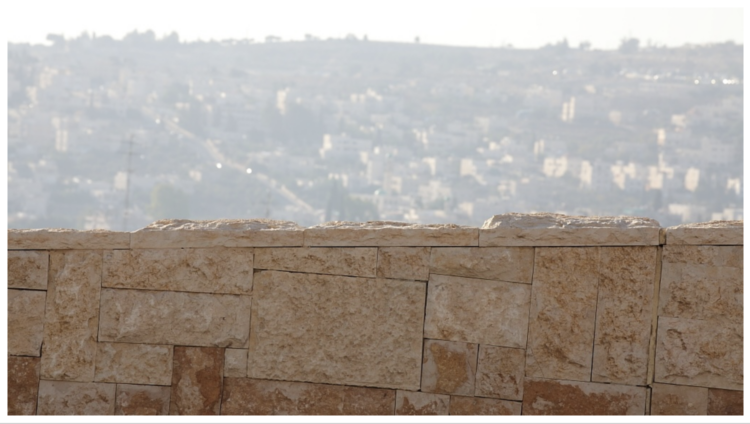
Photo by Geagea on Wikimedia Commons