AN INITIAL declaration of interest: I am married to what is quaintly termed a ‘Waspi woman’, more realistically observed as a furious, Boudicca-like warrior queen. Far more waspy than Waspi (Women Against State Pension Inequality).
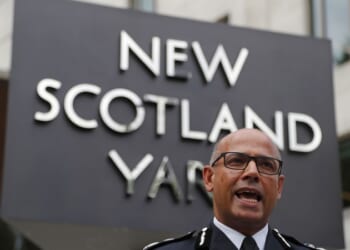
Thursday’s craven statement by Work and Pensions Secretary Pat McFadden, ruling out once and for all any hope of justice these pension-betrayed women might still cling to, achieved many things. Pouring cold water on any hopes I had of a cosy TV evening in front of a log fire was simply the most incidental (I’ll probably need a fire extinguisher to dampen Mrs L’s incinerating anger).
Upon hearing the decision to deny compensation, my initial inclination was to consider the motives for Labour reaching it. Being a political cynic, I expected it to go something like this:
Minister: ‘Hoooow much?!’
Civil Servant: ‘Ten billion. Minimum. And it will just encourage more of the same.’
Minister: ‘More importantly, how many of these bloody Waspi women are likely to vote for us at the next election, however much we give them?’
Civil Servant (shrugging indifferently, because he reckons his job is safe whatever): ‘Not very many, I can’t imagine, Minister.’
Minister: ‘Well then, sod ’em . . .’
I confess to having misjudged not just the motives of McFadden and his underlings, but also their rank stupidity. Did you hear/read his statement, justifying Labour’s V-sign to said victims?
After admitting the process had its flaws and that letters informing them could have been dispatched earlier, he produced a statement of such staggering, misogynistic idiocy that I had to re-read it. And then again.
Here we go.
Secretary for Work and Pensions: ‘The evidence, taken as a whole . . . suggests the majority of 1950s-born women would not have read and recalled the contents of an unsolicited pensions letter, even if it had been sent earlier.
‘Furthermore, the evidence suggests that those less knowledgeable about pensions, the very women who most needed to engage with a letter and where it might have made a difference, were the least likely to read it, so an earlier letter would have been unlikely to make a difference to what the majority of women knew about their own state pension age.’
Yup, you read that right. McFadden might be a comparative babe-in-arms, having been born so ‘recently’ (March 1965), but he’s eminently qualified to call women born a few years earlier thick. Stupid. Maybe even illiterate.
He certainly appears to be explicitly making that assumption. They wouldn’t have read the letter and wouldn’t have understood it if they had. The nerve of the man.
It gets better. The women most needing the state pension (probably Labour voters, once upon a time, if not now) would be least likely to know the front of a pension book from the back. So McFadden was blithely comfortable putting all of these mouthy (if uneducated) women back at the kitchen sink where he obviously thinks they belong.
It’s a good job he’s not canvassing down our street!
But here’s a simple thing that I can only assume he wasn’t bright enough to consider. It didn’t need every 50s-born woman, of whatever imagined ‘class’ or intellect, to be informed in person. It required just a few of sufficient intelligent and activist natures to rally the rest to their justifiable cause.
In a benighted Parliament where U-turns and own goals have become so common as to be barely worth remarking upon, McFadden’s howler deserves a crown of its own.
Now let me go buy Mrs L some flowers and a box of choccies . . .