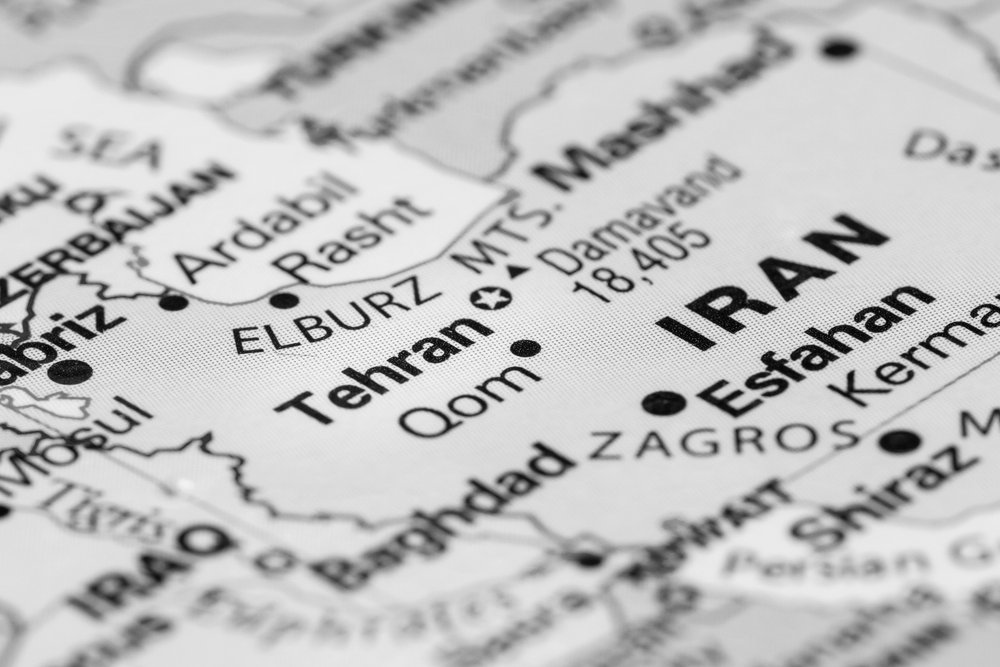
THE mainstream media are struggling to report sensibly on the Iran war. The short version is that Iran is massively degraded militarily, its barbarous regime is hugely damaged and a ceasefire is in place. The Strait of Hormuz is open to those from Iran-approved regimes who are prepared to pay a toll (contrary to the principle of maritime free passage). The West is secure, albeit with constrained access to oil and gas, and the Islamic Republic is a waning power.
All this has been achieved with minimal losses to Israel and the United States and, crucially, thousands fewer Iranian civilians killed than the despotic mullahs butchered in January. The current truce proposal may or may not come to fruition, but the outcome surely is what success would look like. The markets agree with me: the oil price is falling fast on the spot markets. It’s still some 50 per cent above the pre-hostilities level, but it’s also 15 per cent to 20 per cent below its peak. The price now is about the same as it was when Russia invaded Ukraine; Western economics survived that and they’ll survive this.
As I have written before, the BBC suffers from the Bowen perspective. It’s not alone; the contagion is widespread. President Trump is an anti-establishment figure as well as being (by dint of being President of the United States) the most powerful man on Earth. He is therefore a threat to the globalist government machines of America and most of Europe. Threatening them also threatens the media barons who have become influential on the back of advancing their flawed agendas. They rightly see President Trump as a danger to their worldview, not least the alluring delusion of the ‘rules-based international order’ (RBIO – I’m tempted to call it Rubio, but lefties don’t do irony!).
Before the current US/Israeli actions, Iran was on the brink of having both nuclear weaponry and the missile hardware to strike anywhere on earth. The Islamic Republic’s regime was secure and remained in power, not least because it brutally suppressed its own population. That murderous brutality is surely against the concepts of the RBIO, although none of the Mullahs has been indicted and the UK hasn’t even proscribed the Iranian Republican Guard Corps (IRGC).
Worse, Iran’s Hamas proxies had committed the murderous barbarism (contrary to RIBO rules) of October 7. Iran’s Hezbollah and Houthi proxies also attacked Israel with impunity. The latter occasionally attacked shipping in the Red Sea, lengthening Western energy supply lines from the Gulf. Israel’s offensive in Gaza destroyed Hamas – which chose to fight rather than surrender, thereby rendering the wide-scale destruction of Gaza inevitable. Despite the sneering of Bowen and the Guardianistas, it was President Trump who brokered the ceasefire (which still holds, as the BBC won’t tell you).
Last summer’s strike on Iran set back its nuclear programme. The mullahs restarted it and now the programme and its supporting infrastructure are being (probably have been) destroyed.
Note that RBIO didn’t stop the Iranian restart; RBIO didn’t stop the mullahs slaughtering their own population in January. Negotiating a settlement with Iran on nuclear stuff has been tried since Obama (leftie super-darling) and was last attempted by Mrs Biden’s minion, Sleepy Joe. It never worked. Yet the anti-Trump press pretend that doing nothing was an option. Presumably they would contend that the use of nuclear weapons might be argued to be a crime against humanity and thus precluded by RBIO, so Israel and the world have nothing to fear. ‘Yeah, right,’ as they say in Tel Aviv.
Back in the real world, in February, Israeli intelligence enabled the assassination of much of Iran’s leadership. That’s not attempted regime change, it’s decapitation – in any war it’s often advantageous to damage the opposition’s commanders. Some argue that the operation has handed power to the IRGC leadership. Maybe it has, but IRGC commanders are also mortal and their locations vulnerable.
In response, Iran did what it always does – fired missiles at Israel and its allies, lashed out at neighbouring Gulf states and closed the Strait of Hormuz. (Those strikes on the Gulf states included hitting desalination plants – something that the RBIO chorus led by Starmer and his ilk have yet to act on.) Iran is now running out of ballistic missiles, and many or most of them are intercepted. It still has drones, but they too are vulnerable to being shot down, as the Royal Air Force is demonstrating. Crucially, Iran’s responses have failed to shift the US and Israel from their objectives. They have therefore failed.
What Iran may have regarded as its trump (ha!) card, choking off 20 per cent of the world’s oil, didn’t work either. Why? Because neither the United States nor Israel depends on it. The entirely predictable price spike has hurt, particularly in the UK. However, it’s not a knockout blow to the protagonists. As some 40 per cent of the oil passing through the Strait of Hormuz is bound for China, inflicting a squeeze on their physical supply has no downside for the United States. Reminding India, another major consumer of Gulf oil, who the real-world superpower probably appeals too.
Many commentators push the view that President Trump is an idiot who changes his mind and always chickens out. They confuse his Truth Social posts as strategic pronouncements rather than tactical noise – quite possibly intended to confuse the opposition (which includes the sneering media and now Sir Keir Starmer’s government). They also forget that the Israelis, who can never afford to lose a war and therefore never have, are exceptionally good at intelligence gathering and analysing that intelligence.
Following the debacle of the 1973 Yom Kippur War, the Israelis particularly guard against groupthink. (The Tenth Man Rule, if you’re interested). US military professionals are working closely with Israeli military professionals to deliver the systematic destruction of Iranian military infrastructure, political leadership and, if necessary, other infrastructure.
If the aim of the action was to remove the threat of Iranian nuclear missiles, it has pretty much worked. It will be complete if and when the enriched uranium and other fissile materials have been handed over to the International Atomic Energy Authority (or some other trusted Western organisation – such as the US Marines) and removed from Iran. While it is true that the rescue of a downed aviator was a tad expensive, it is feasible for US and Israeli forces to raid and snatch the fissile material. Like all such operations, it would be risky, but not impossible. Those military risks must be balanced against the risks of Iran cheating on any deal, if one emerges.
The war has not been cheap; anti-aircraft missiles cost at least $1million each and the US aircraft losses have cost close to $1billion. Despite reasonable concerns about the supply of hi-tech weaponry, US stocks have held up and Israel seems not to have (yet) run out of the Arrow 3 missiles that underpin its David’s Sling anti-ballistic missile system. Similarly, the American THAAD systems deployed around the Gulf seem to have held up both physically and logistically. It would be reasonable to assume that both systems will be replenished and repaired during the ceasefire. The Iranians might also replenish a bit, although with their factories trashed it might be hard. Moreover, I’m sure US and Israeli drones, satellites and agents will be watching and noting activity and adding them to the target list. If or when the ceasefire collapses, it will be open season on Iranian military infrastructure again.
President Trump cares deeply about his blue-collar voter base. He has already reshaped US support for Ukraine from an expense into a profit line – European nations pay for weapons shipped there. He’s signalled that Nato cannot rely on the largesse of the US taxpayer without building up its capability. (Embarrassingly, the UK’s only warship in the region, HMS Dragon, is broken after a rushed deployment. It’s possible that Dragon was one of only four functional warships in the entire Royal Navy, which sort of makes President Trump’s point. If the Europeans want the Strait of Hormuz open, Trump thinks they should chip in some warships. It’s possible that he also thinks that Iran should pay a fee to the US for its oil reserves or share them with the US. Who knows? President Trump’s initial negotiating positions are (sensibly) maximalist.
His phrasing is brutal, but that does not make his sentiments unreasonable. The United States has supported Israel against the malign forces of the Islamic Republic and has received precious little help (I exaggerate) from European countries, most of whom are also Nato allies. The United Kingdom actually sabotaged American efforts through the denial of RAF Fairford and Diego Garcia for ‘offensive’ operations. Starmer did the same with his recognition of the (non-existent) Palestinian State and his attempted sale of the Chagos. President Trump is unlikely to forgive that. Starmer has comprehensively and wilfully damaged the UK’s interests through his delusions and desperate need for domestic electoral support. ‘Interests’ is too non-specific – Starmer’s actions have actually delayed UK growth. Working people (including long-suffering HGV1 drivers) are poorer.
President Trump has one other avenue for saving the American taxpayer money. The United States provides billions of dollars’ worth of weaponry to Israel, typically over $2billion a year. In March 2025 President Trump approved $25billion of arms ‘sales’ to Israel via the Foreign Military Sales (FMS) process. Under FMS, weaponry may be paid for by the recipient or the US Government. A secure and peaceful Israel would need neither the American hardware nor the massive discounts.
Which just leaves the prices of crude oil, refined oil and liquefied natural gas (LNG). These are determined by international markets, which match supply and demand. Generally there is a global oversupply of crude oil; other producers will probably start pumping more, increasing supply to meet demand. The complication is that tankers stuck in the Persian Gulf aren’t available to transport it. Those that emerge might be unwilling to re-enter such a volatile region, and changing routes will cause complexities in the supply chain. It will settle, but the crude oil spot price will remain volatile.
Refined oil is more constrained. Ten per cent of the world’s oil refining happens in the Persian Gulf and that’s closed. The market is complex; reorganising a supply of (say) diesel that used to come direct from the Gulf is not straightforward. Moreover, at times of tight supply, cargos can change ownership and destination en route.
That, of course, drives down supply as shipping times increase when tankers are forced into U-turns. The UK has about enough refining capacity to produce its refined oil needs from crude oil, and little of the UK’s crude comes from the Gulf. (We would, of course, be in an even better position if Starmer could get Mad Ed Miliband, his idiot Energy Secretary, to open the North Sea, but our lacklustre prime minister can’t even manage that).
The LNG market is more complex. Qatar is the world’s third-largest producer, delivering about 20 per cent of the world’s supply. The US and Australia are bigger producers, and the US supply is growing quickly. LNG carriers are also trapped in the Gulf, which complicates distribution in the same way that it does for oil. There are no backup gas pipelines in the Middle East, and of course the Nord Stream pipelines from Russia were destroyed by Ukraine. The good news for the UK is that Qatar supplies only about 2 per cent of the UK’s LNG, so that can easily be replaced.
Following the destruction of Nord Stream, some European countries now rely more heavily on Qatari LNG. Much of this is imported via the UK’s three LNG terminals, which are working at 100 per cent capacity until 2029. There is ample terminal capacity in southern Europe, but the pipework connecting them to northern Europe is constrained. North European gas prices will therefore stay volatile for a while. The UK is not well placed for that due to its shameful, chronic shortage of gas storage. Of course we have the North Sea fields, which provide 30-50 per cent of our gas needs (subject to the whims of Mad Ed). Much comes by pipeline from Norway too. Of the LNG exports, the largest source is our former close ally and largest trading partner, the United States of America.
In summary, Iran is militarily defeated and has no hope of winning a war against the world’s superpower and Israel (home of the world’s most successful armed forces). Its attacks in the Gulf have cost it allies and its attempt to strangle the world’s oil trade has failed. While it is true that increasing scarcity of supply (and shipping) will bite further and the price of petrol at an Iowa gas station is a concern in the United States, that’s not an existential threat to the United States – or its president. The combination of Israeli intelligence and US firepower is an existential threat to Iran and their negotiation position is weak.
Europe’s failure to support the United States will cost it dearly in tariffs and support for Nato. The United Kingdom’s fall from grace is compounded by the exposure of the inadequacy of its military, its ludicrous energy policies and its deluded Prime Minister – just back from a press tour round the Middle East (at our expense) – when the dogs in the souk know that the UK has little military capability, a bankrupt economy which pays a hefty moron premium to service its out-of-control debt and a leader (a term used loosely) who has lost the confidence of his party and his electorate.
The only people who don’t see this are the UK’s mainstream media, who have allowed their disdain for President Trump to blind their already distorted worldview. The unpopular, failing government desperately seeking favourable press coverage is chasing its media tail, rather than focusing on the national interest. In doing so, Keir Starmer has inflicted terrible damage on the UK.
It’s time for regime change here.
This article appeared in Views From My Cab on April 11, 2026, and is republished by kind permission.