IN 1928 the British politician Arthur Ponsonby (1871-1946) published an unsettling book titled Falsehood in War-Time. Written in the shadow of the catastrophe that had ended only a decade earlier, it was not a military history of World War I but an examination of the stories told about it. Ponsonby’s contention was stark: wars are accompanied by systematic distortions designed to shape public opinion. Governments, newspapers and patriotic organisations, he argued, produce a torrent of rumours, exaggerations and moral simplifications whose purpose is not accuracy but indoctrination and mobilisation.
Ponsonby assembled examples from the propaganda campaigns of the belligerent nations. Some were grotesque atrocity tales: stories of enemy soldiers mutilating civilians or committing acts of almost medieval cruelty. Others were subtler manipulations – mistranslated speeches, inflated casualty figures, or reports of decisive victories that existed only on paper. None of this meant that every report from the front was false, but the cumulative effect created a climate in which truth became secondary to persuasion.
War, Ponsonby suggested, demands a narrative that is simple enough to stir emotions. In such a narrative one’s own nation must appear reluctant and honourable, while the enemy becomes egregiously aggressive or barbarous. His own verdict on the phenomenon was expressed with a bluntness that has lost none of its force: ‘The international war is a monster born of hypocrisy, fed on falsehood, fattened by humbug, kept alive by superstition, directed to the death and torture of millions.’
The book caused controversy at the time, partly because it challenged the moral clarity through which the war had been remembered. Yet Ponsonby’s broader observation has endured. In almost every conflict since 1914 the same rhetorical patterns have reappeared. Nations insist they did everything possible to avoid war. Responsibility is attributed entirely to the adversary. Reports of enemy atrocities circulate with remarkable speed, often long before they can be independently verified. Those who question the prevailing story risk being accused of sympathy with the enemy. Nothing is above the ‘national interest’. Superstition prevails.
Ponsonby – a creature of the establishment born at Windsor Castle and a Page of Honour to Queen Victoria – belonged to a current of political thought which emerged after World War I and grew deeply sceptical of the moral narratives used to justify the conflict. The scale of the catastrophe – millions dead, empires collapsed, Europe destabilised – produced a generation of writers who believed the public had been mobilised by a steady diet of patriotic mythmaking.
None of this should come as a surprise. War is not fought only with bombs and bullets. It is also fought with words – a form of symbolic warfare. Public support must be maintained, allies reassured, and neutral observers persuaded. In the early twentieth century this work was carried out largely through newspapers, pamphlets and official communiqués. Today, countless channels work at a speed that would have astonished the propagandists of 1914. Yet the underlying logic remains strikingly familiar.
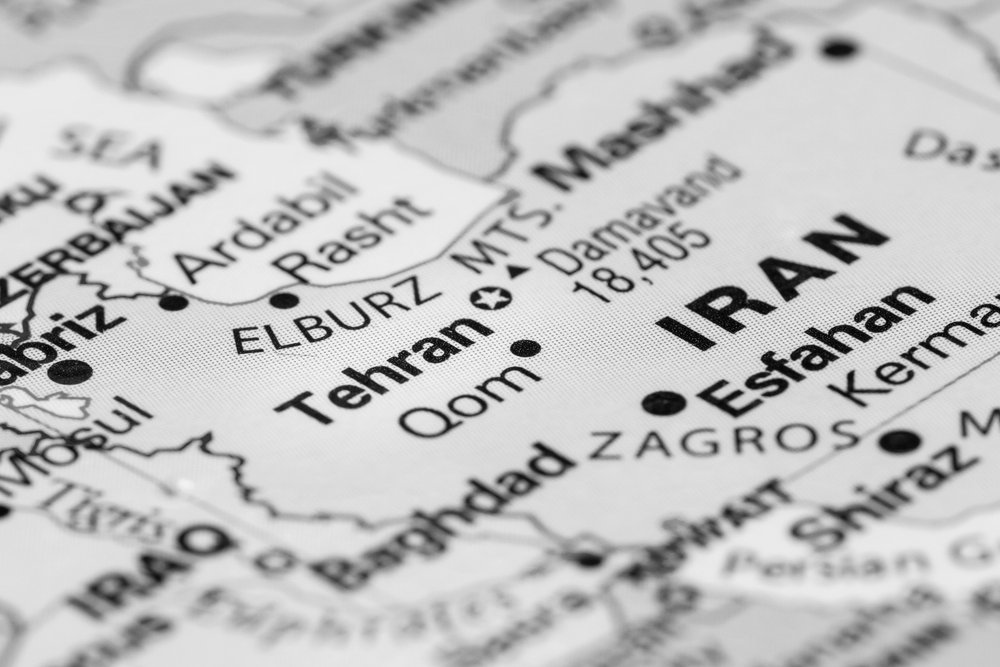
The landscape surrounding the present tensions with Iran is dominated by mainstream media reports, official statements and commentary circulating almost instantaneously across the globe. Within minutes of a military incident, competing interpretations appear: one side describes a defensive response, another an unprovoked attack. Video fragments and satellite images are scrutinised, shared and endlessly reinterpreted by millions. In this environment the distinction between verified fact, plausible speculation, and deliberate disinformation is impossible to maintain.
Political leaders frame events in stark moral terms and reassure their domestic audiences that their actions are necessary and justified. Opponents are portrayed not merely as rivals but as threats to civilisation or stability. Each side emphasises the evidence that supports its case while minimising or dismissing inconvenient details. The resulting narratives are rarely identical, but they often mirror one another in structure. Each insists the other bears primary responsibility for escalation.
Ponsonby would likely recognise the pattern. He never argued that only one side in a conflict employs propaganda. On the contrary, he suggested that all governments are subject to the same pressures once war begins. The desire to maintain morale and unity encourages the circulation of stories that flatter national virtue and highlight enemy misconduct. Over time these stories may take on a life of their own, repeated so frequently that they acquire the aura of settled truth.
There is also another aspect of Ponsonby’s argument that resonates today. Propaganda does not always consist of outright invention. More often it involves emphasis and omission. A particular event is presented as representative while contradictory evidence receives little attention. A statement is quoted selectively, stripped of its context. Numbers are framed in ways that magnify success or minimise loss. Such techniques can shape perception without requiring the fabrication of a single fact. Half-truths are the most effective form of lies because they can be defended by incontestable logic.
Ponsonby’s book was not an argument for cynicism. He did not suggest that truth is unattainable or that every report from wartime sources must be dismissed as propaganda. His warning was subtler. Citizens, he believed, should approach wartime information with a degree of scepticism, aware of the political and emotional forces that shape what they are told. In a democratic society, the health of public debate depends on that awareness.
Nearly a century after its publication, it reads less like a relic of the past than like a manual for interpreting the present. The technologies of communication have changed beyond recognition since the days of World War I, but the human incentives that govern wartime storytelling remain stubbornly constant. When conflicts flare, whether in Europe, the Middle East or elsewhere, the first casualty may not be truth itself, but the patience required to discover it.
After all, it was Winston Churchill – whose statue at Parliament Square has recently become a target of vandalism – who observed that in wartime truth is so precious that she should always be attended by a bodyguard of lies.