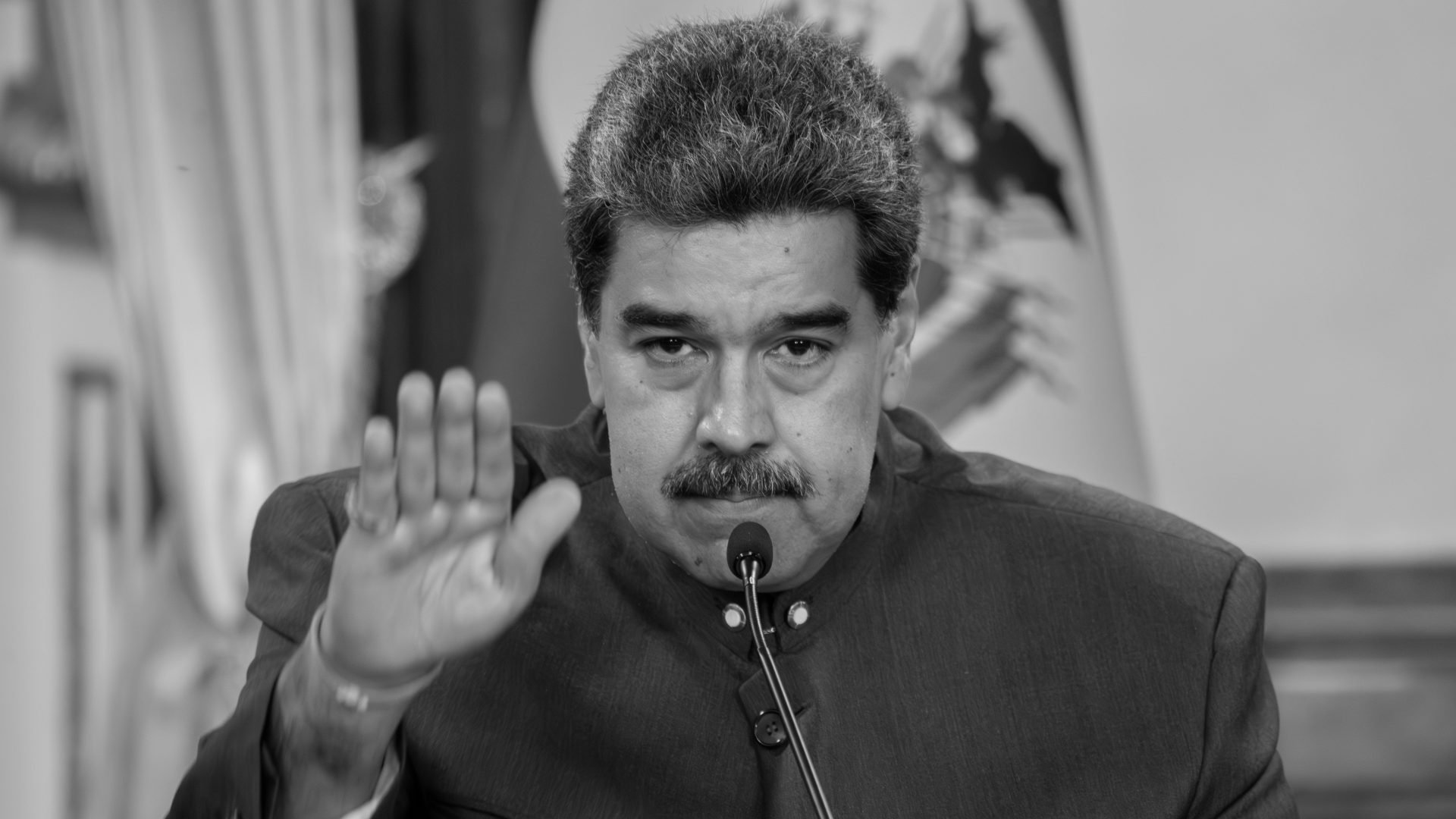
US President Donald Trump appears to have overseen the swiftest regime change for more than a century with the capture of Nicolás Maduro, the despotic hard left President of Venezuela.
Cui bono? Trump’s critics around the world point angrily to the Americans, who they say will rebuild the economy of an oil-rich country to their own advantage. In their dislike of Trump they will overlook the fact that he has acted decisively to protect the American people from Venezuelan drugs cartels who have been targeting their cities. They may also ignore the fact that the biggest winners of all will be the Venezuelan people whom Trump has liberated from nearly three decades of misery.
Maduro, a 63-year-old former bus driver, was hand-picked by fellow socialist Hugo Chávez, the country’s president from 1999, to succeed him upon his death in 2013 and to consolidate his ‘Chavista’ legacy.
Maduro followed his flawed policies faithfully, and within three years food shortages were so acute that an estimated 44 per cent of Venezuelans were down to two meals a day and almost 20 per cent surviving on one meal. The accompanying weight loss epidemic became known as ‘la dieta de Maduro’ – the Maduro diet.
The president responded to the crisis by pretending starvation didn’t exist, to the point of haranguing a supporter, during a televised speech, about why the man looked so painfully thin. Maduro suggested that he had been jogging a trifle too much. A woman came quickly to the man’s defence, shouting out that he was on the ‘Maduro diet’. The president’s response was as callous as it was sarcastic. ‘The Maduro diet, that’s the one that makes you tough,’ he snapped back. ‘You won’t even need Viagra now.’
El Estimulo, a national newspaper, then named half a dozen children who had died from starvation and reported how others had died from poisoning after they ate animal feed mixed with excrement.
People who queued for hours to buy whatever food they could supplemented their rations by hunting wild animals, including flamingos and giant ant-eaters. An estimated eight million citizens emigrated, mostly to neighbouring Latin American nations.
What is significant about the suffering of the people of Venezuela is that it was caused by the bad government of a country with massive potential to be very prosperous indeed. It is not that Maduro did too little, but rather that he and his predecessor intervened too much and in ways that proved disastrous.
Insatiable for power, the Chavistas expanded the state’s role in the economy by seizing major enterprises deemed to be of ‘strategic interest’ and nationalising them, and by the exercise of strict price and currency controls which discouraged private sector investment.
At the same time, the government depended excessively on revenues from oil, which nose-dived when global crude prices dropped. Under Maduro, the result was rampant inflation – soaring past 200 per cent – and widespread shortages of basic goods and medicine.
The population grew disaffected by the false dawn of sunlit Socialist uplands and their ingratitude was met with repression of free expression and the accelerated diminution of what little remained of properly functioning democratic institutions of civil society.
The military and the judiciary were politicised as violent crime rose to the highest levels of any South American country. Three of the ten cities of the world with the highest murder rate are in Venezuela, the worst being the capital Caracas, which annually experiences about 120 homicides per 100,000 people. About 1,900 political activists are in detention, including adolescents. Some face allegations of terrorism, and there are reports of torture and forced confessions.
Maduro is a classic example of a far-left tyrant. When he stood for re-election as president in 2018, most opposition parties boycotted the process when it became clear that it was rigged. The legislative elections in 2020 were considered by opposition parties and international observers to be equally fraudulent.
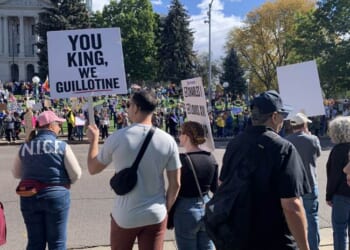
In January last year Maduro was sworn into office for a third presidential term after national elections the previous July. Tally sheets recovered from 80 per cent of the nation’s electronic voting machines showed twice as many people had chosen opposition candidate Edmundo González over Maduro yet, rather than relinquish power, Maduro brazenly claimed victory. When protesters took to the streets to express their anger at electoral fraud, Maduro’s security apparatus murdered at least 20 of them. Mr González was exiled to Spain.
Nothing was going to stop Maduro, dressed proudly in the yellow, blue and red presidential sash of Venezuela, from taking the solemn oath of office at the national assembly in Caracas in front of envoys from China and Russia.
Among his guests was Nicaraguan President Daniel Ortega, another banana republic despot who remains in office only by repressing the people he purports to represent, who sat on the front row alongside President Miguel Díaz-Canel of Cuba, a fellow Socialist hard man.
But Presidents Luiz Inácio Lula da Silva of Brazil and Gustavo Petro of Colombia, considered long-standing regional allies of Venezuela, could not stomach Maduro’s shameless power grab and stayed away.
Another leftist regime, Canada, was among the first to express its anger by imposing economic sanctions on five Venezuelan officials, including the head of the country’s high court, on the grounds that they had engaged in electoral fraud.
On the day of Maduro’s inauguration, the United States went further by offering a $25million (£20million) reward for information leading to the president’s arrest.
Outgoing US Secretary of State Antony Blinken said: ‘The Venezuelan people and world know that Nicolás Maduro clearly lost the 2024 presidential election and has no right to claim the presidency today. We stand ready to support a return to democracy in Venezuela.’
Even David Lammy, at the time Britain’s Foreign Secretary, joined the outcry and announced sanctions against 15 members of Maduro’s team, including the head of top court and senior military officers, and demanded the release of all political prisoners and the end to repression.
Maduro clearly banked on the West doing nothing. He brushed off threats in a 90-minute speech in which he declared that he ‘wasn’t made president by the US government or the pro-imperialist governments of the Latin American right’ but that he was ‘of the people – and my power emanates from history and from the people’.
Those who would criticise Trump for removing him would do well to remember that the US President is in harmony with policies set by the previous US administration. What distinguishes Trump from his predecessor and from other Western leaders is his willingness to act.
Given Venezuela’s natural wealth, rampant speculation about the Trump’s motives and the geo-politics that underpins them will be inevitable, yet the prima facie reason for Maduro’s removal is commendable.
Trump has explained that Maduro was seized not because of the criminal mismanagement of his country but because he is allegedly the head of the Cartel de los Soles, a designated terrorist organisation which has been smuggling narcotics into the United States on a vast scale.
Maduro stands accused of deliberately fuelling an epidemic of fentanyl abuse in the United States which has gravely harmed American cities, communities, families and individuals, and it is in connection with such ‘narco-terrorism’ that Maduro will stand trial in an American court.
Don’t expect the people of Venezuela to weep for him in his hour of reckoning.