AN EARLY memory is of being taken to Manchester’s Belle Vue Zoo in the 1950s. There was a lion house consisting of a row of bar-fronted cages. In one a lion was pacing back and forth, back and forth, back and forth . . .
There are probably many animals which are grateful for bed and board in a zoo, or will at least put up with it, such as tortoises and giant centipedes. For others, captivity must be a living hell.
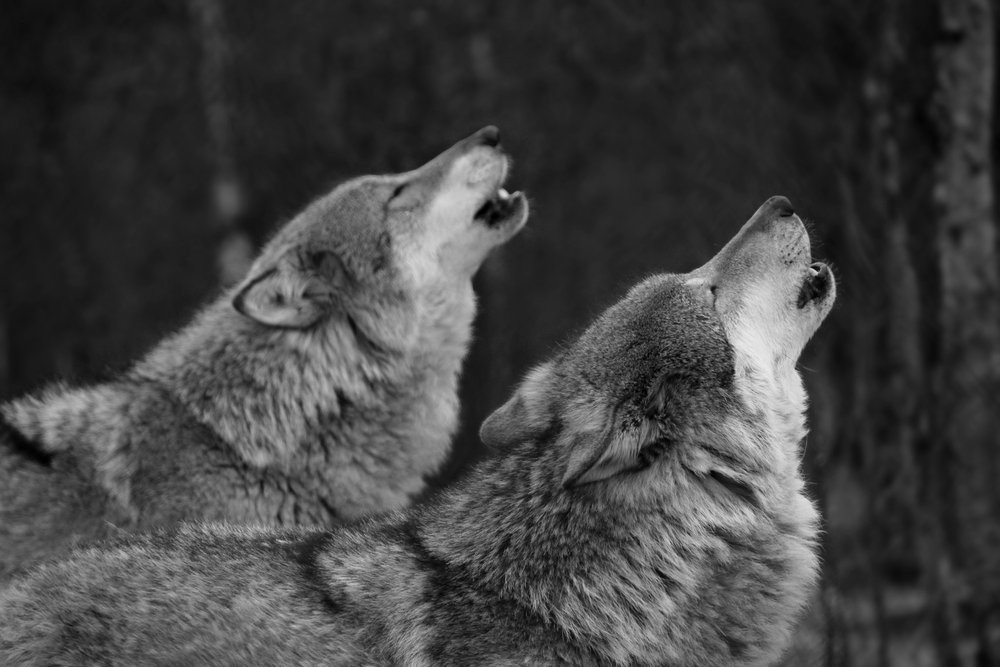
Many readers will have seen the report that five adult wolves were put down at a Kent wildlife reserve last week. The management of Wildwood Trust issued a statement on Friday which said in part:
‘Over a short period of time, there was a severe escalation in aggressive behaviour within the pack, leading to a rapid breakdown in their social structure. This resulted in multiple serious and life-threatening injuries.
‘Over a prolonged period, extensive efforts had been made to manage the pack, support individuals, and prevent escalation. However, the situation reached a point where there was no safe or humane alternative.
‘Wolves are highly social animals with complex family structures, and once those dynamics break down in this way, separation or relocation is not a viable or safe option.
‘This is an incredibly difficult moment for Wildwood. We are truly heartbroken. But as always, our responsibility is to the welfare of the animals in our care, even when that leads us to the hardest decisions.’
The trust, which says its ‘mission is to protect, conserve and rewild British wildlife’ brought the first two wolves of the Wildwood pack from Switzerland and Sweden in 2017 or 2018 (there are wild wolves in both countries) when they were two years old. In July 2018 it was reported that their four cubs were soon to be released into their enclosure. Wildwood Trust Director General Paul Whitfield said: ‘Our ranger and keeper team have created a magnificent new home for our wolves. Our vision is to enable people to immerse themselves inside the wolves’ woodland world. The new wolf cubs will be able to enjoy their huge new enclosure displaying many of the behaviours of a wild wolf pack, acting as ambassadors for our charitable mission to return wolves to Britain.’
By the time the wolves were euthanised, there were apparently only three left from the litter, all males, eight years old.
To judge whether wolves should be kept in reserves, here are some figures. Wolves (Canis lupus) hold large territories which vary in size according to the amount of prey available, from 30 square miles to more than 1,000, which is the approximate size of Dorset or Derbyshire. The largest recorded is nearly 2,500 square miles held by a pack of ten in Alaska. In search of food the animals cover as much as 16 square miles per 24 hours (the size of Cambridge or Portsmouth). The Wildwood Trust property in Kent is 40 acres, and since they boast of holding 200 species it is reasonable to assume the wolf enclosure would be no more than ten acres, and that is being generous. Ten acres equates to 0.016 square miles. In wolf terms, this is a battery cage. To put it another way, it is cruelty.
The charity says that wolf packs have ‘complex’ social systems, but they are actually pretty simple. The basic pack is a pair of adults and their offspring; sometimes two families combine. When the juveniles reach sexual maturity, or when food is short, individuals may leave the group, pair up with another singleton also on the lookout for a territory, and start a new pack. The point being that in a reserve, if a wolf needs/wants/is requested to leave the pack, there is nowhere to go in search of a new territory and a mate. In any case, as the Wildwood statement says, packs rarely adopt other wolves; typically they kill them. Only a very young individual might be accepted.
The rewilding zealots who run such places as Wildwood claim to be wildlife experts, but if they knew anything at all about wolves, how could they not realise that keeping them in a relatively tiny space would lead inevitably to disaster? These are not domestic animals, bred and developed over centuries to fit in with humans. They are obeying their instincts developed over 500,000 to one million years. They should certainly not be forced into servitude ‘as ambassadors for the charitable mission to return wolves to Britain’.
The charity is now said to be reviewing whether or not to replace its wolves. Paul Whitfield said: ‘The truth is, they’re not an easy animal to keep in captivity. They are a complex social group and if people are going to keep them, they really need to understand that and talk to experts about that.
‘I wouldn’t say they should never be kept in captivity, but I think a lot of thought needs to go into whether they should be in any case.’
What a pity he did not take his own advice eight years ago.
Footnote: Wolves were extinct in Britain by 1684 but there are breeding packs in 23 European countries totalling an estimated 20,300 individuals. Domestic livestock are easy prey, and some nations offer compensation or state insurance for losses.