THIS IS the transcript from a recent recording made by one of the members of my local Society for the Prevention of Senior Moments. I thought the information that came to light was so interesting that it should be passed on.
‘Good morning, everybody. Because many of you are living alone and you’re all worried about energy costs, your secretary has asked me to explain to your delightfully named social club all about the government’s Price Cap.
‘From April 1 the maximum you have to pay has been set at £1,641. Sorry, what was that? I really would prefer questions at the end, but yes, lady at the back, the cap is only for three months. Why, did someone ask, is it so high then? Well, it does seem strange they quote an annual figure but maybe we have to divide that by four. Gentleman at the front says that’s £410.25. You were very quick there, weren’t you?
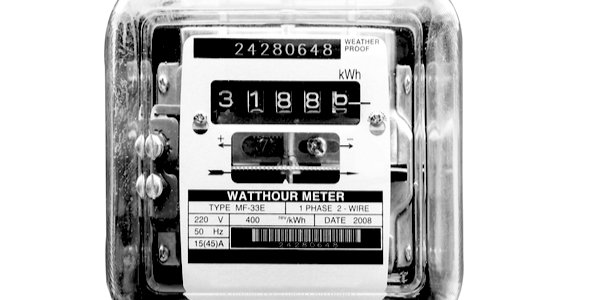
‘No, lady in the pink blouse, that word “cap” doesn’t mean you can have the heat full on until June 30. Oh, please be careful. The cap doesn’t work like that. If you use more electricity or gas then you’ll pay more. Well yes, gentleman with the walking stick, you’re right, it’s not really a definite limit. The cap is actually on the price per unit, per kilowatt-hour. What’s that, did someone ask?
‘We’re getting in a bit deep here, but you probably already know that your use of both gas and electricity is measured in kilowatt-hours. The real price cap is on the pence per unit for each one. Yes, that’s right, a unit is one kilowatt-hour. Gentleman with a beard on my right is asking how that £1,641 cap comes from a cost per unit.
‘Now it gets really complicated but I’ll try to keep it simple. I have some actual figures here . . . let me see . . . for this area the unit rate for electricity was 28.16 pence but is now capped at 24.97 pence, per kilowatt-hour that is, from April 1. For three months, remember. It looks like going up a lot after that. Thank you, Mr Trump.
‘Yes, my dear, well spotted, there is also a standing charge, that’s a daily rate . . . oh, how strange, that seems to have gone up from 55.11 pence to 57.90 pence per day. Yes, that is curious, I didn’t realise that myself. In the same way your unit rate for gas will go down from 6.15 pence to 5.89, and . . . the gas daily rate goes down by 6 pence a day.
‘Yes, lady on the front row, gas is quite a lot cheaper than electricity. No, I’m sorry, this is not a discussion about why we have to have heat pumps which, yes, gentleman on my right, are run on electricity.
‘No, lady on my left, I can’t tell you what you will actually pay without knowing what you will use in the three months. Yes, sir, the calculation is not simple. Your monthly cost for each of the three months will be . . . well . . . if anyone wants to know how to work it out for themselves come and see me afterwards. I’ll try to take you through but I’ll need a calculator or laptop.
‘My friend the gentleman at the front here is still puzzled about that figure of £1,641 that the government quotes. Surely, he’s saying, all our bills go down in spring anyway? And does that figure apply to us? Well, no not actually. Who, then, did you ask? I have no idea. I had to look this up before I came.
‘That total is (and I’ll read this from the government website), ‘based on the England, Scotland and Wales average for people who pay by Direct Debit’. The average figures they use are 11,500 kilowatt-hours of gas plus 2,700 kilowatt-hours of electricity, plus (presumably) appropriate day-rates. There’s 5 per cent VAT on top of that, apparently, did you know? I didn’t. Too much maths in all this for me, really.
‘Oh, yes, you must be right, lady in the second row. They’re annual figures again, not just for the three months. How confusing. There’s even more confusion on that official website because they give specific unit rates that are different from the ones you’ll pay. I’m not saying what my political views are, but I do think this government should be more careful in what it says on its own websites.
‘Yes, lady on the front row, the country is not in a good situation at the moment but we’re not here to discuss that, are we? Moving on, I have a question from the lady in the wheelchair on my right. She is saying that surely everyone is paying the same? We’re all capped together?
‘I was hoping that I could keep this simple, but wheelchair lady has spotted yet another peculiarity about this capping business. For energy purposes the UK is divided into 14 regions. Each one has different unit and daily rates for gas and electricity. Yes, my dear, they’re all capped but all different. And no, before anyone asks, I have no idea why.
‘I hope I’ve made everything as clear as was possible in the light of so much confusing information. Yes, gentleman at the back, you’re right, they proudly announced a reduction in the Price Cap to £1,641. But it seems that’s not the price you’ll pay, your bill’s not actually capped, and the £1,641 is both meaningless and misleading.
‘But I hope I’ve explained enough for you to work out your own bills, at least those of you good at maths and happy with spreadsheets. Maybe you could help the others.
‘I had planned to have time for a discussion but I must apologise. I have to rush off as I’ve promised to visit my mother in hospital.’
Helpful reading: