THE Iranian regime is reframing its ‘tolls’ on traffic in the Strait of Hormuz as a ‘maritime insurance policy’.
On Saturday, Fars – a media outlet associated with the Islamic Revolutionary Guards Corps (IRGC) – reported that it has seen a plan by Iran’s Ministry of Economics to force shipping companies to pay ‘verifiable insurance policies’.
Ebrahim Azizi, the chairman of the National Security Committee to Iran’s Parliament, also said that Iran has prepared a ‘professional mechanism’ to permit ‘only commercial vessels and parties co-operating with Iran’.
This was confirmed on the same day by Iranian state media, which reports that the IRGC Navy is permitting the passage of ‘neutral’ ships, such as Chinese, Japanese, and Pakistani, and is negotiating with unspecified European states for passage through the strait.
However, Iran says it will continue to deny passage to ships affiliated with any country that co-operates with the US blockade, or the recent US operation to escort traffic (Project Freedom, which US President Donald Trump paused on May 5, amid ongoing Iranian attacks and proposals to restart negotiations).
Iran has spent decades building a protection racket in the Strait of Hormuz. Like all protection rackets, it follows a simple formula: create insecurity, undermine legitimate authorities, and sell protection from the threats you created.
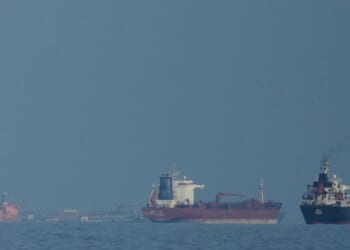
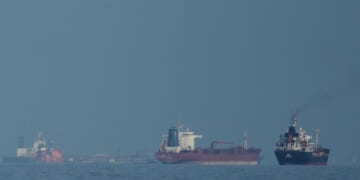
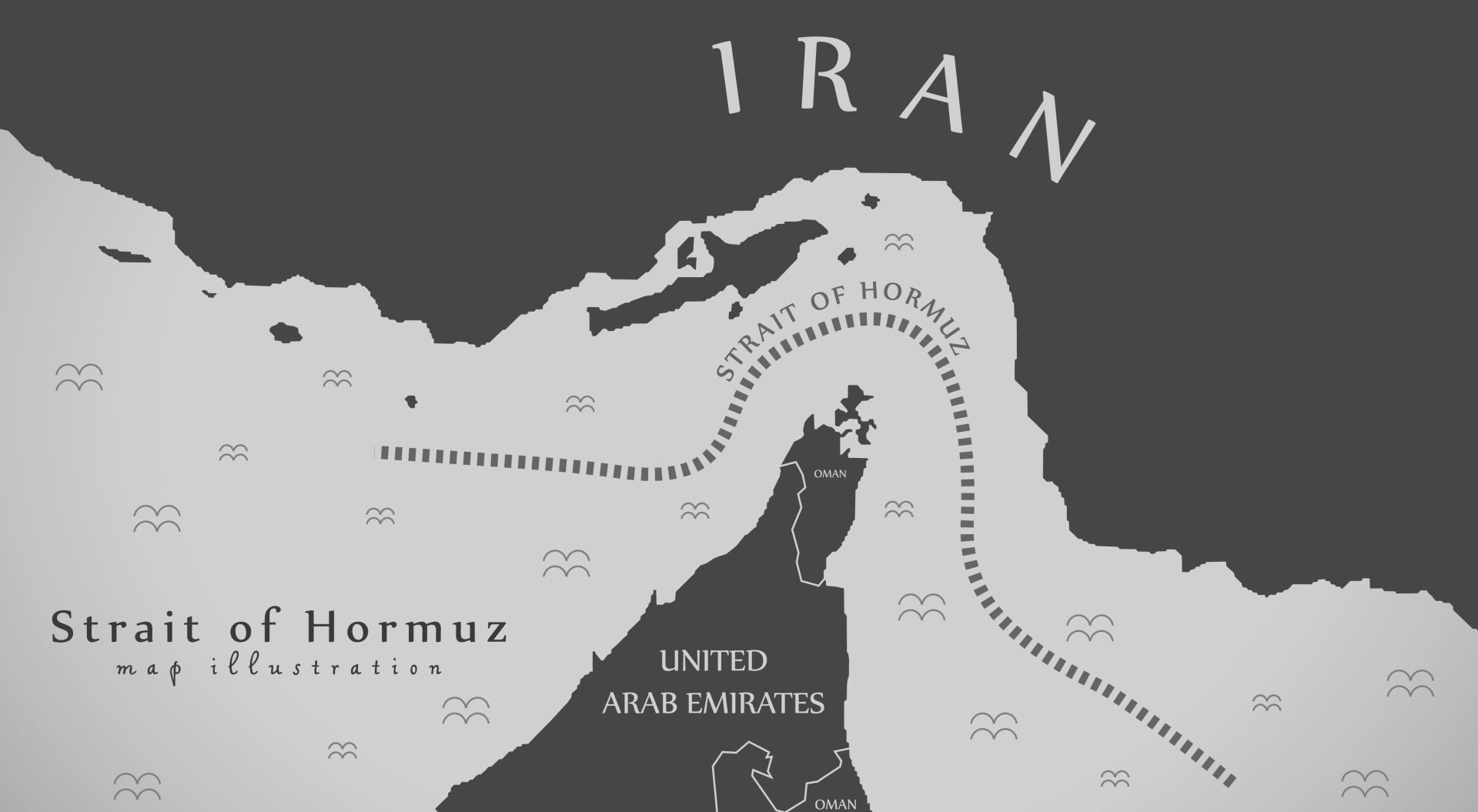
The Strait of Hormuz is uniquely suited to such a racket. Roughly one fifth of the world’s traded oil and liquefied natural gas pass through the strait. Tankers from Saudi Arabia, Iraq, UAE, Kuwait and Iran itself negotiate this slender passage from the Persian Gulf to the Indian Ocean. At its narrowest, it measures just 21 nautical miles. Two shipping lanes have been agreed internationally, but they are extraordinarily confined. In places, tankers pass within a few miles of Iranian territory.
Iran cannot defeat the United States Navy in open battle. But it does not need to. Instead of absolute control, Iran cultivates chronic risk. Risk raises insurance costs, delays shipments, spikes energy prices, and pressures foreign governments to make concessions in other domains.
This strategy emerged during the ‘Tanker War’ phase of the Iran-Iraq War in the 1980s. Iran laid mines and harassed tankers while pretending it is an innocent victim of foreign aggression.
Tehran learned an important lesson: total closure of Hormuz is unnecessary. Limited disruption achieves political and economic effects disproportionate to the resources expended.
In 2011–2012, Tehran threatened to close the strait in retaliation for economic sanctions on its nuclear programme. In 2015, the US, China, and Europe agreed to permit that programme and to lift some sanctions and to unfreeze assets in return for Iranian agreement to use nuclear materials peacefully and to permit foreign inspections.
In 2018–2019, after the US withdrew from the Joint Comprehensive Plan of Action (JCPOA), Iranian forces attacked maritime traffic – initially covertly, with limpet mines for instance.
Between 2015 and 2024, Iran harassed or seized around 20 merchant ships, often in retaliation for Western sanctions. These incidents were stealthy and episodic – deniable enough to avoid full-scale war but disruptive enough to raise costs on adversaries.
Following renewed US-Israeli strikes on Iran, at the end of February this year, the IRGC laid mines in the international channels of the strait, attacked ships with drones and fast attack boats, bombarded its neighbours, and invited preferred shipping into its territorial waters – for a fee.
Fees were demanded sometimes in yuan, cryptocurrency, or in kind, to evade US oversight. The US Office of Foreign Assets Control has warned interested parties that paying Iran’s ‘safe passage fees’ – in any form – risks sanction.
By some estimates, Iran earns more from tolls and oil exports since the war began than it did before.
In March, Alaeddin Boroujerdi, a member of the Iranian parliament’s national security commission, told a Farsi-language television news outlet in London that the toll is as high as $2million for a supertanker. He claimed Iran’s ‘inherent right’ to control the strait, and compared this right to Panama taking ownership of the Panama Canal.
Compliant traffic includes Chinese vessels supplying dual-use components in payment for sanction-busting exports of Iranian oil.
Compliant ships receive formal clearance and armed escorts through Iran’s territorial lanes. Non-compliant traffic is attacked, turned around, or boarded by IRGC personnel, who tell the world of vague ‘violations’ of Iranian regulations, such as smuggling or unsafe navigation.
By March, shipping traffic collapsed to less than 10 per cent of normal levels. Oil prices rose above $120 per barrel at peak. Average American gasoline prices rose above $4 per gallon. Despite the nominal ceasefires in April, by May commercial traffic dropped to a new low.
Gulf states have expanded their research and development of pipelines across the Middle East to the Red Sea and Mediterranean, and across UAE to Oman. Yet pipelines cannot be built quickly enough.
Military escort operations are expensive and invite more attacks. But tolerating the tolls normalises extortion.
Donald Trump and Benjamin Netanyahu are too easy to blame. They ordered the US and Israeli airstrikes this year, for which Iran claims to be retaliating. However, their administrations argue that their predecessors had normalised Iran’s protection racket. Past sanctions relief, nuclear agreements, and reluctance to punish Iran, normalised Iran’s hold on the strait.
UAE officials and energy executives denounce the tolls as ‘extortion’. The Foundation for Defence of Democracies calls them a ‘shakedown’.
The Jerusalem Post editorialised that the strait is ‘a test of broader international resolve’ and that stability cannot come from ‘accommodating rogue regimes’ but by ‘shutting down their protection rackets’.
Indeed, Iran has become more provocative in recent weeks, and more intransigent in its proposals for peace, particularly on its nuclear programme.
The question now is whether the international community will treat the strait as a shared public good that must be policed by international naval power, or allow it to be partly nationalised by Tehran.
UAE shows the way. It has run traffic covertly through Iran’s blockade, and has committed to helping the US to re-open the strait.
By contrast, Britain leads a talking shop of more than 40 countries nominally committed to re-opening the strait but only after the war ends. The latest meeting of this group occurred last week, when Defence Secretary John Healey spoke of a force to re-open the strait, though this force is composed of elements already in the Middle East which are already over-stretched and under-resourced. Healey urged other states to prepare to re-open the strait and restore normal business, but only after ‘a sustainable ceasefire’.
This is the wrong way around. If you want peace, you need to break Iran’s protection racket.