WITH some honourable exceptions, nobody perceives decisive historical turning points while they are actually occurring. Romans did not wake one morning to discover that Rome had become an empire. The French aristocracy did not immediately grasp that powdered wigs were entering their terminal phase. Likewise, the British electorate failed to recognise the significance of the moment when nearly every aspiring public official quietly adopted the same haircut.
Yet by the late 2010s the evidence had become overwhelming.
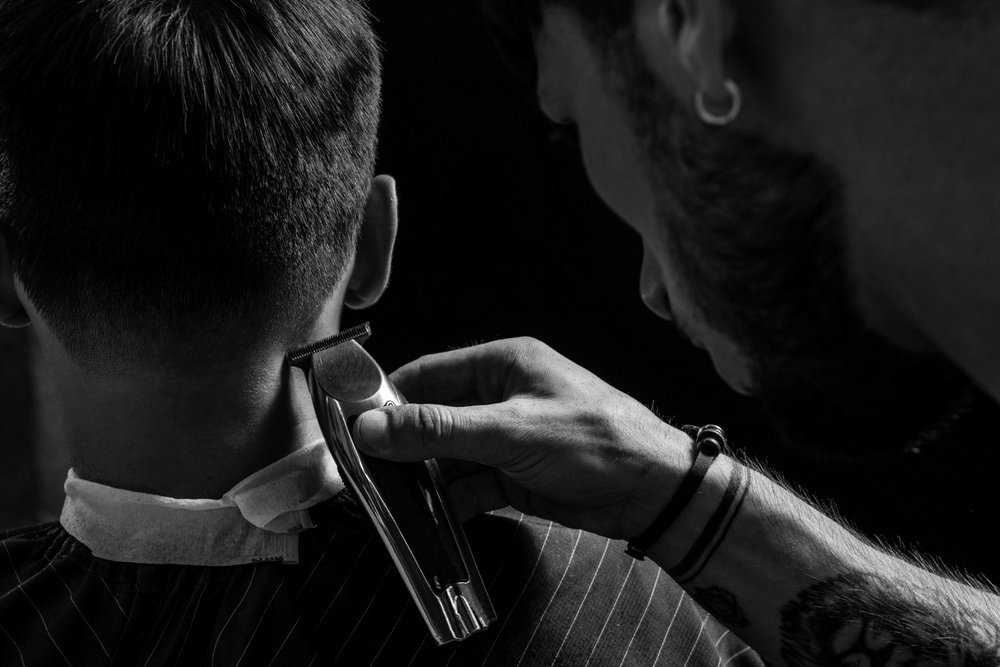
Across the whole spectrum – from ministers to mayors, from policy technocrats to media-trained opposition figures – a peculiar follicular convergence had emerged: short back and sides, carefully graduated fade above the ear, modest volume on top, restrained quiff at the front, no ideological deviation permitted. It is not quite military, not quite footballer, not quite corporate middle management. It occupies a carefully engineered middle zone between authority and relatability. The haircut conveys discipline without severity, youthfulness without rebellion, athleticism without danger.
The Ivy League Fade rules the waves.
Of course, spokesmen of every tendency – from the extreme left to the most conservatorial quarters – dismiss the theory as absurd. Senior party officials insist that hairstyle choices are ‘entirely personal matters’. Such denials merely raise further questions. Is it truly plausible that thousands of ambitious men independently converged upon precisely the same barbering template within a single decade?
The origins of the movement remain obscure. Some researchers trace its emergence to the post-financial crisis years, when exhausted ideological conflict gave way to the managerial age. Others locate the decisive shift in the cultural authority of stellar footballers wearing narrow jackets and discussing ‘processes’, ‘standards’, and ‘collective mentality’. In either case, the haircut spread with astonishing speed through Westminster, local government, think tanks, mainstream media, and the broader consultant ecosystem. By 2018, no climber hoping to appear ‘serious but dynamic’ could safely present himself in public without the sanctioned gradient.
Older hairstyles vanished almost overnight. The chaotic Borisian haystack came to be regarded as a mild form of extremism. Traditional side-part conservatism appeared geriatric and faintly colonial. Gel-heavy New Labour architecture acquired the melancholy aura of an abandoned third-rate provincial hotel. Baldness is definitively out of the question, a flagrant anathema, a death sentence.
In every interview candidates and incumbents no longer attempt to persuade through grand rhetoric or philosophical argument. Instead, they radiate managerial composure while every hair is positioned at the exact midpoint between spontaneity and control. The fade itself functions as a visual metaphor for technocratic governance: smooth transitions, no sharp discontinuities, carefully blended edges, minimal surprise. No decent person can distrust a man whose head is under control.
Critics have exaggerated the phenomenon, unfairly describing them as identically barbered men in suits one size too small, endlessly reproducing managerial vocabulary supplied by unseen advisers. That is an unsupported lie. Some propose higher taxes; others say that prefer lower taxes. Some advocate regulatory reform; others advocate frameworks for regulatory reform. These distinctions matter deeply to the people employed in policy communications. Still, in all the cases the approved cranial uplift stand defiant and undeterred.
Nevertheless, one cannot ignore the wider cultural symbolism. The Ivy League Fade bureaucrat belongs to a civilisation increasingly uncomfortable with strong definitions of any kind. Ideologies soften into managerial vocabulary. Convictions dissolve into stakeholder engagement. Public language itself becomes carefully tapered, avoiding dangerous edges or abrupt contrasts. The avoidance of visible offence increasingly replaces the pursuit of conviction.
This perhaps explains why genuinely eccentric hair now provokes such alarm within the establishment. Untamed hair implies untamed thought. Wildness of grooming raises disturbing questions about wider unpredictability. Could a man with an unkempt moptop be trusted with fiscal rules? Might a woman with asymmetrical fringes possess views sufficiently aligned with the needs of the national economy? These days, social stability rests upon these boundaries.
And yet signs of resistance are beginning to emerge.
In obscure corners of the country, dissident councillors reportedly maintain uncompromising side parts. Independent candidates have been seen wearing disorderly mullets in open defiance of accepted norms. There are even rumours – impossible to verify at closing time – of a clandestine parliamentary caucus experimenting with slightly longer sideburns in an attempt to resuscitate the roaring seventies. Be it as it may, in an increasingly intellectually degraded environment coifs decide elections the way great newspapers did 50 years ago.
Whether such movements can succeed remains doubtful. The institutional power of the Ivy League Fade is like a force of nature. Universities, media training programmes, and metropolitan barber shops continue to reproduce the aesthetic with near-industrial efficiency. Each year another generation of ambitious young men enters public life looking less like ideological actors than assistant sporting directors for mid-table Premier League clubs.
Perhaps this is merely the natural endpoint of Western evolution in the AI era. Ancient societies expressed power through crowns, robes, armies, and grandiose pieces of oratory. Ours has chosen the carefully moderated taper.
Future historians may judge the period harshly. They may conclude that Britain was not governed by parties, classes, or ideologies at all, but by a single vast coalition of mildly textured quiffs.
And perhaps they will not be entirely wrong.