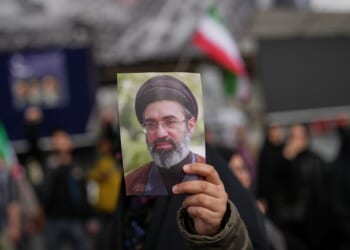
THE collect for today, Whitsunday, in the 1662 Book of Common Prayer reflects the fact that Christianity is not a legalistic religion involving rigid adherence to a code such as Sharia law or the detailed rules Mormons are expected to obey.
On the day the Church celebrates God’s gift of his Holy Spirit, the collect invites Christian worshippers to pray that the Spirit will enable them to exercise their own judgement rightly: ‘O God, who as at this time didst teach the hearts of thy faithful people, by the sending to them the light of thy Holy Spirit; Grant us by the same Spirit to have a right judgment in all things, and evermore to rejoice in his holy comfort; through the merits of Christ Jesus our Saviour, who liveth and reigneth with thee, in the unity of the same Spirit, one God, world without end. Amen.’
The collect resonates with Jesus’s teaching in his farewell discourse to his disciples in John’s Gospel chapters 14 to 17. The prayer book Gospel reading for Whitsunday is from John 14:15-31.
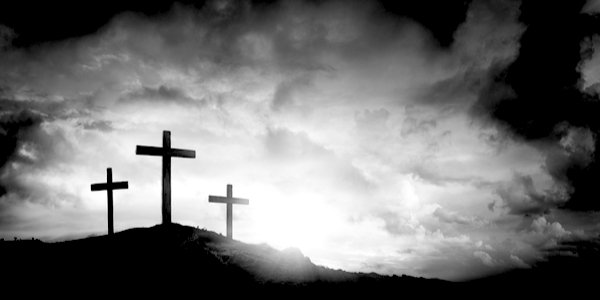
On the night before his crucifixion, Jesus promised his disciples that he would ‘pray the Father, and he shall give you another Comforter, that he may abide with you for ever; even the Spirit of truth, whom the world cannot receive, because it seeth him not, neither knoweth him: but ye know him; for he dwelleth with you, and shall be in you. I will not leave you comfortless: I will come to you’ (John 14:16-18 – King James Version).
The Lord poured out his Holy Spirit on his Church at the Jewish Festival of Pentecost after Jesus’s Resurrection and Ascension. The prayer book epistle reading from Acts 2 describes the Holy Spirit filling the first 120 Christian disciples gathered in Jerusalem: ‘And when the day of Pentecost was fully come, they were all with one accord in one place. And suddenly there came a sound from heaven as of a rushing mighty wind, and it filled all the house where they were sitting. And there appeared unto them cloven tongues like as of fire, and it sat upon each of them. And they were all filled with the Holy Ghost, and began to speak with other tongues, as the Spirit gave them utterance (Acts 2:1-4).’
The Holy Spirit empowers Christians to obey Jesus’s commands. In John 14:15 he told his disciples: ‘If ye love me, keep my commandments.’
Obeying Jesus’s commands, according to the New Testament, is about believing in his divinity as the Messiah, the Christ of Old Testament promise; being faithful in prayer to God the Father in Christ’s name; being devoted to the teaching of Christ’s Apostles as preserved in the New Testament; being prepared to stand up for Christian truth; loving one’s neighbour, especially one’s fellow Christians in the family of the Church; and exercising self-control in speech, personal behaviour and sexual conduct.
But it is precisely because following Jesus Christ is not a legalistic exercise involving strict dietary rules, alcohol prohibition, dress codes and micro-instructions for daily life that Christians need God’s Holy Spirit to enable them to exercise that ‘right judgment in all things’.
To give a practical example, a local church wants to launch an initiative to reach its community with the Christian message of salvation. What should it do? Should it distribute copies of one of the Gospels to homes in its vicinity and if so, which one? Should it hold a children’s holiday club? Should it hold a guest service to which members of the church are encouraged to invite their non-Christian friends? Or should it hold a whole week of outreach events?
It cannot do all of these things with the resources that it has. So, its leadership, its trustees or its council need to ask the Lord’s Holy Spirit to give them that ‘right judgment in all things’ and then they need to make a decision. They should certainly not allow themselves to be bamboozled into one particular course of action by one person claiming that the Holy Spirit had told them which option the church should choose.
That would be doing violence to Christianity, turning it into a legalistic religion. The church would be allowing itself to be ruled by the dictates of one person claiming a special revelation not vouchsafed to the rest of Christ’s people.
Instead, under the supervision of the Holy Spirit the church would need to come to a right judgement about its best outreach option through biblically-informed, reasoned debate, suffused with prayer. The Holy Spirit does not override the minds of Christ’s people in their decision-making but he comes alongside them as their gracious counsellor. That is why Christianity allows for plenty of freedom of action within biblical boundaries.