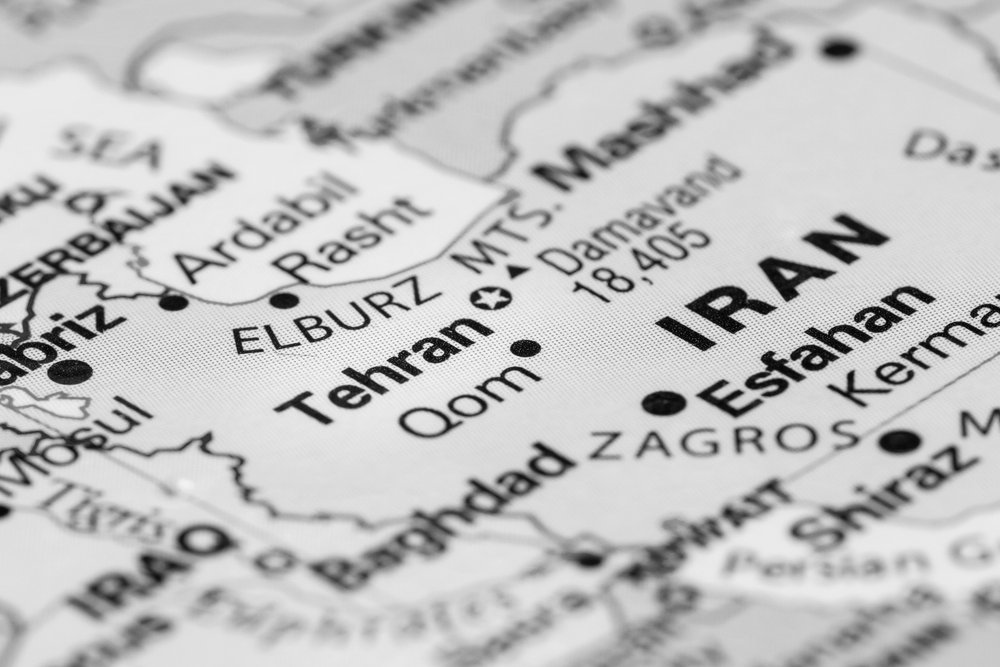
THE US is beset with allies who are not allies. Not everyone in the region is moving toward confrontation with Iran. Two American partners are actively undermining the campaign.
Turkey, a Nato member, had three companies sanctioned by the US Treasury in February for routing Iranian drone and missile components through Turkish shell companies. Turkey’s foreign minister called Iranian strikes legitimate self-defence. Turkey announced export controls on dual-use goods to Iran under US pressure in April, then the same month saw additional Treasury sanctions on Turkish individuals helping Iran rebuild its ballistic missile inventory. The controls exist on paper. The networks continue operating. Turkey is also an active corridor for Iranian weapons reaching Sudan and other third parties.
Pakistan is hosting the US-Iran negotiations in Islamabad while simultaneously running Iran’s largest active sanctions evasion corridor. Iran is smuggling at least six million litres of fuel per day into Pakistan through Balochistan in violation of US sanctions, with volume increasing since the war began. In April, Pakistan’s Commerce Ministry formally legalised third-country cargo transit to Iran through Gwadar Port, creating legal infrastructure for high-volume goods movement into a country under American blockade. Pakistan is collecting fees from both sides of this conflict.
The full accounting of what Turkey and Pakistan have cost America across decades of the global war on terror will get its own essay. For now the point is simple: the economic war has real leakage, and the leakage runs through two governments that present themselves in Washington as partners.
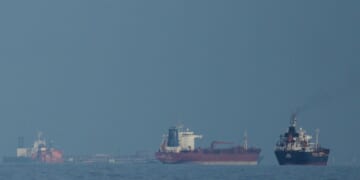
Then there is the closure of the Strait of Hormuz, the largest maritime disruption in modern history. About 20 per cent of global oil and gas normally flows through those 21 nautical miles. Since February 28, that flow has collapsed by more than 80 per cent. Every major carrier made the same decision within 48 hours of the strikes. Maersk, MSC, CMA CGM, and Hapag-Lloyd all suspended transits. All rerouted around Africa. The Cape of Good Hope alternative adds ten to 14 days to every voyage on Asia-Europe and Asia-US lanes.
Here is a critical fact.
The strait was effectively closed before Iran laid a single mine. Within 48 hours of the February 28 strikes, Lloyd’s of London and the Joint War Committee redesignated the entire Arabian Gulf as a conflict zone. P&I (Protection and Indemnity) clubs issued 72-hour cancellation notices for existing war risk extensions. Replacement coverage came back at prices so extreme that rational commercial operators could not pay them. War risk premiums surged from 0.25 per cent of hull value to 3 per cent or higher. For a $138million (£103million) supertanker, that is nearly $4million (£3million) per transit before fuel, crew wages, and cargo costs. The strait was commercially closed by insurance pricing before it was physically closed by mines and drones.
That is worth understanding. The private insurance market in London has a structural interest in elevated risk premiums. The worse the geopolitical environment, the higher the premiums. The higher the premiums, the more revenue flows to the City. This is not a conspiracy. It is a business model. It has operated continuously from the tanker wars of the 1980s through the Red Sea Houthi crisis of 2024 and into the present conflict.
Trump moved to break that model directly. He announced a Development Finance Corporation-backed reinsurance facility with $20billion (£15billion) in capacity, underwriting transit risk at rates commercial operators could actually pay. That single announcement threatened something Lloyd’s has held for centuries: the monopoly on pricing geopolitical risk in contested waters.
Now understand what Iran is attempting to build alongside all this, because it changes the financial picture completely.
Iran established the Persian Gulf Strait Authority (PGSA) in May and has claimed that 300 ships have applied for transit permits. The PGSA requires vessels to disclose ownership, crew manifests, cargo declarations, and insurance information before the Islamic Revolutionary Guard Corps (IRGC) grants passage and collects a fee. Reports confirm some vessels have paid $2million per transit, in Chinese yuan, flowing directly to the IRGC.
Do the maths. Before this war, roughly 3,000 ships transited Hormuz every month. That is about 100 ships per day. At $2million (£1.5million) per transit and full restoration of pre-war traffic, the PGSA generates $6billion (£4.5billion) per month, $72billion (£54billion) per year. International trade lawyers and economists have already run these numbers. Their published projection: Iran could collect $70billion (£52billion) to $90billion (£67billion) annually if the toll system continues at normal traffic levels.
Iran’s entire pre-war oil revenues ran approximately $35billion (£26billion) to $50billion (£37billion) per year. The toll booth, at scale, generates more than double Iran’s entire oil income. It requires no oil infrastructure, no tankers, no sanctions evasion network. It taxes everyone else’s oil. Every barrel from Saudi Arabia, Kuwait, Qatar, and the UAE pays the toll. Iran does not need a single drop of its own crude to flow.
This is why US Treasury Secretary Scott Bessent sanctioned the PGSA last week and called it maritime extortion. This is why he explicitly warned that any corporate or state entity caught paying tolls, including those disguising payments as aid, faces US sanctions. The warning about disguising tolls as aid is not hypothetical. Someone is already trying to do it.
The US also directly warned Oman not to participate in any toll-sharing arrangement after reports emerged that Iran and Oman were discussing splitting PGSA revenues. Bessent stated flatly: the United States will not tolerate any effort to impose a tolling system in the Strait of Hormuz. Iran needs a neutral co-administrator to give the scheme international legitimacy. Without Oman, the PGSA is an IRGC enforcement operation with an email address. With Oman, Iran could argue that a recognised sovereign nation co-administers the world’s most important shipping lane.
There are now effectively two blockades operating simultaneously. The US naval blockade targets ships going to or from Iranian ports. Centcom (US Central Command) has described it as impartial, stating it does not interfere with vessels transiting the strait to reach non-Iranian destinations. The PGSA controls the physical narrows and charges everyone through, regardless of destination. A ship going from Saudi Arabia to China navigates both: US enforcement on Iranian-bound traffic and IRGC toll collection on everything else.
The compliance trap is severe. Paying the PGSA violates US sanctions because the PGSA is itself a sanctioned entity operated by the IRGC, a designated foreign terrorist organisation. A ship-owner which pays the toll to avoid IRGC seizure has committed a federal crime under American law.
Senator Tom Cotton put the strategic stakes plainly: beyond the immediate revenue, formal recognition of the PGSA by any government, ship-owner or financial institution sets a dangerous precedent for every coastal state near a critical maritime chokepoint. The Turkish Straits. The Strait of Malacca. The Strait of Gibraltar. Every nation with territorial waters over a major shipping lane watched Iran assert sovereignty over Hormuz and survive this long. If the precedent holds, the toll booth spreads.
So whither the deal? And who can sign?
US Secretary of State Marco Rubio told the Senate Foreign Relations Committee that the Iranian regime’s internal decision-making structure is ‘somewhat fractured’ and that responses from Tehran can take days to arrive because messages have to move through internal channels and approval councils before anyone can authorise a reply.
That is the diplomatic translation of: we do not know who is actually in charge.
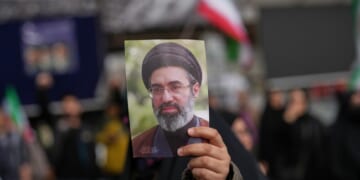
Mojtaba Khamenei has not appeared in public since his father was killed on February 28. He survived the opening strike by seconds, according to a recording leaked to the British press. His wife and son were killed in that same strike. Hegseth said in March that Mojtaba is wounded and likely disfigured. The Iranian government has offered contradicting accounts of his condition. US media reported a prosthetic leg and multiple surgical procedures. Director of National Intelligence Tulsi Gabbard said he was very seriously wounded and the decision-making structure has been disrupted. IranWire reported that President Masoud Pezeshkian himself had no contact with Mojtaba as of the 11th day of the war. The president of Iran could not reach the supreme leader. Government ministers did not know his location or status.
American officials summarised the situation plainly: ‘We don’t think the Iranians would go through all this trouble to install a dead man as supreme leader, but at the same time, we have no proof that he is at the helm.’
This week, Trump told the New York Post that he believed Mojtaba was involved in negotiations and expected to meet him at some point. He acknowledged not knowing the extent of Mojtaba’s injuries: ‘If you believe the stories, he’s missing a lot of different parts.’ That is not the language a president uses when his intelligence picture is clean.
The structural problem underneath all of this is unchanged. The IRGC controls the enriched uranium. The Supreme Leader’s directive, issued on May 21, prohibits transfer of the stockpile out of Iranian territory. The civilian negotiators in Doha represent a government that cannot override it. Rubio confirmed on Tuesday that Iran has nearly 1,000lbs of uranium enriched to 60 per cent purity, just below weapons grade. The US position is no sanctions relief without eliminating the highly enriched uranium. A senior Iranian source confirmed to Reuters that the nuclear file is not part of any preliminary agreement under discussion.
Both of those things cannot be the endgame. One of them is real. The other is for external consumption.
The polished diplomat in the well-cut suit in Doha genuinely wants a deal. He may genuinely believe one is possible. He just does not control the rockets, the mines or the enriched uranium. He is negotiating on behalf of a government which cannot deliver what it is implicitly offering because the institution that controls the one thing that matters is operating on a directive he cannot override, issued by a supreme leader whose physical condition is unknown, whose location is undisclosed, and whose son’s personal life is, by credible account, illegal under the laws of the very state he now nominally leads.
The IRGC needs Mojtaba as a symbol. Whether he is directing events or being used as institutional legitimacy while Ahmad Vahidi runs the actual operation is secondary. The IRGC’s institutional logic, its theological commitment to the uranium as an existential asset, and its 40-year identity as a force defined by resistance to American pressure make genuine concessions structurally difficult regardless of the economic conditions. And Russia has every incentive to keep IRGC hardliners committed to non-resolution. Elevated oil prices have been a lifeline for Moscow’s war economy. Putin is not calling Tehran to encourage flexibility.
To be continued.