BABY doll dresses have been back in the spotlight recently, and not in a good way. Clips of the American singer Olivia Rodrigo performing in a floral mini-dress, reminiscent of something a child might wear, have gone viral, with the star drawing criticism for dressing in a way that marries sexuality with childlikeness.
Many women’s publications have jumped to Rodrigo’s defence, citing 20th-century fashion history and the origins of the baby doll dress as a pushback against traditional expectations of femininity. Anyone with a problem is labelled a ‘misogynist’ for policing how a woman chooses to dress or, worse still, perverted for projecting such a dire interpretation on to her sartorial choices. Except you can validly express discomfort with the aesthetic without being either of those things, especially in our cultural climate.
Despite mainstream women’s media attempts to lump all historic portrayals of the baby doll dress together, there were clear differences between the styles of the decades. The 1960s did indeed give birth to this shorter, free-flowing silhouette as a challenge to the body-hugging shapes of the 1950s. These were especially popularised by the English model Twiggy. However, aside from their deliberate shapelessness, these dresses were actually closer to the structured, mature lines of the ‘shift dress’.
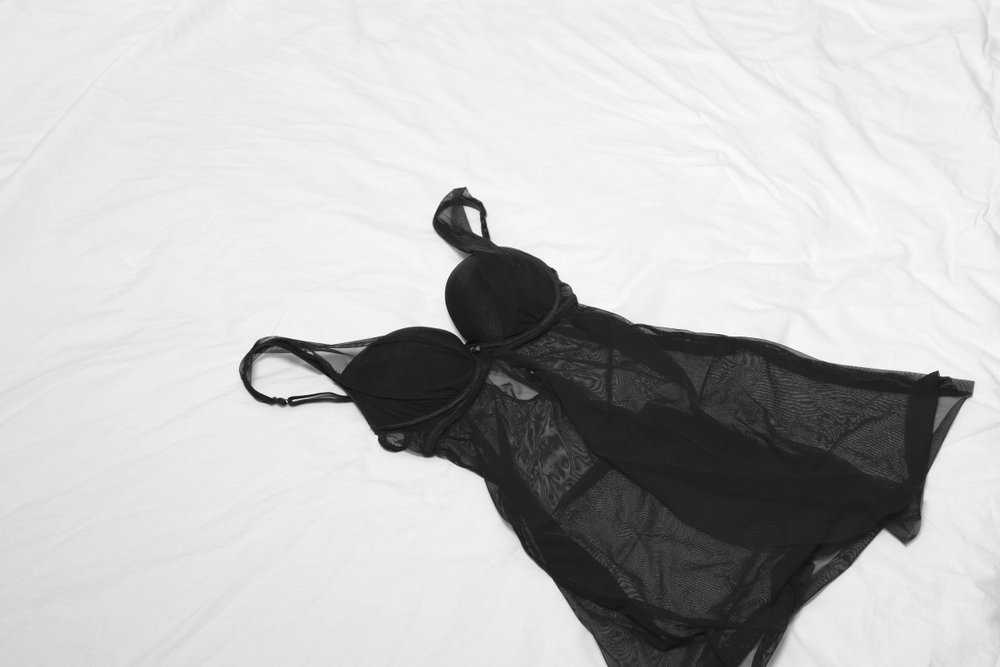
Same with the 1990s, the next major heyday of the baby doll. Its most famous devotee, Courtney Love, often performed wearing short dresses. Alongside electric guitars and emotionally raw lyrics, this successfully communicated irony, rebellion and female anguish. Yet, Love’s garments often resembled slip dresses, characterised by their own provocativeness, as women typically wear them as bedroom attire. Modern pop star Sabrina Carpenter also wears baby doll-esque, gauzy lingerie on stage, but, again, any onlooker would recognise this as adult underwear.
Even the 2010s revival of the baby doll dress, largely through the ‘twee’ aesthetic, tended to resemble office wear with its Peter Pan collars: girlish and playful, perhaps, but still plausibly adult. Rodrigo’s take fails to achieve this delicate contrast.
There is nothing inherently wrong with clothing that gestures towards youthful innocence. After all, adults need not shed all wholesome traits in order to be taken seriously by society. The problem arises when girlishness becomes overt infantilisation.
The reason Rodrigo’s specific dress feels so uncomfortably inappropriate, for one, is that it’s not even a dress. The French brand Generation 78 lists the garment as a blouse, so it automatically looks inappropriately short, as if it were made for a much smaller body. So short that as the singer moves across the stage, her underwear — frilly bloomers, reminiscent of a toddler’s — is exposed, revealing her buttocks. The sleeves are huge, puffy, and ornamental, exactly as if they were made for a doll. In fact, the outfit is so infantile that even the black combat boots don’t temper it — they just look childish too.
These distinctions may seem minute, but context matters: this visceral discomfort arrives in the age of internet pornography. Research has shown that pornography has addictive potential, with habitual consumption causing desensitisation and driving some users to seek out increasingly extreme material to achieve the same dopamine hit.
Unfortunately for Rodrigo, the uproar about her outfit arrives on the heels of surrounding controversies, such as Sydney Sweeney’s portrayal of an OnlyFans model on the television show Euphoria and her character’s creation of ‘fetish content’. Among these scenes were depictions of Sweeney, a grown woman, dressed as a baby. As the old adage goes, ‘everything you can imagine is real’, and sadly, when it comes to fetishes, this holds. That’s precisely the reason the scene was so hotly contested, because it’s not ‘just acting’. It’s a depiction of real-life sexual interests, blurring uncomfortable social boundaries around infantilisation and sexuality.
The entertainment industry is influential, and when such imagery is beamed into people’s living spaces, it sends a subliminal message that this is normal, or even desirable. A similar phenomenon happened with erotic strangulation, something practically unheard of until the advent of online porn. Many women have since reported being involuntarily asphyxiated upon going to bed with men who believe this to be ‘normal’ sexual behaviour. Once confined to underground subcultures, BDSM (bondage, dominance, submission and sado-masochism) also entered the mainstream upon the publication of Fifty Shades of Grey. As interest in this former taboo took off, copycat erotic fiction appeared in the aisles of supermarkets aimed at middle-class women.
I’m not suggesting for a moment that Rodrigo is purposefully promoting sexualised infancy. But those arguing that anyone uneasy about adults dressing in overtly infantile clothing must secretly be projecting their own desires are plainly wrong. With the knowledge that such imagery might be unconsciously catering to extreme internet subcultures, Rodrigo may wish to pair her blouse with the matching midi skirt currently listed on the designer’s website.