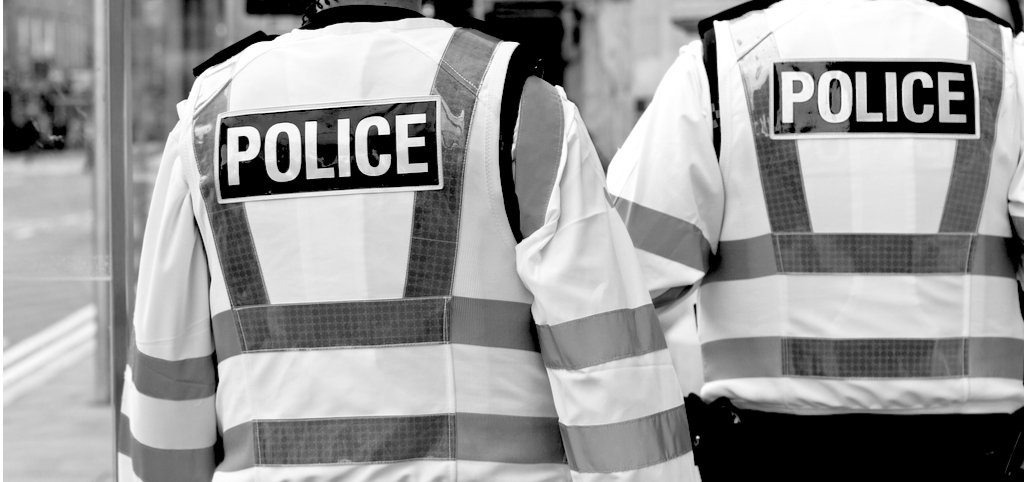
THE death of Henry Nowak on December 3 revealed something deeply unsettling about modern Britain. Not merely a tragic misjudgment in a chaotic moment. Rather, it exposed the extent to which certain ideological reflexes have penetrated institutions supposedly devoted to impartiality and fact.
A dying teenager lay on the ground telling officers he had been stabbed and could not breathe. Yet according to the subsequent reports and bodycam footage, police initially treated him not as the victim but as the likely aggressor because his killer alleged that he had uttered a racial slur. The accusation itself appeared sufficient to shape the officers’ assumptions before they had established the most elementary facts of the scene.
The horror of the case lies not only in the murder but in the sequence of priorities it revealed. In that moment, the possibility of verbal impropriety seemed to carry greater institutional weight than the visible collapse of a human being.
This inversion did not emerge from nowhere. It is the outcome of a broader transformation in a vast array of Western societies whereby speech increasingly occupies the centre of moral and legal concern. Over recent decades, elected and non-elected bureaucrats have steadily expanded the categories of expression deemed socially dangerous. ‘Offensive’, ‘abusive’, ‘hateful’ and ‘harmful’ have become elastic terms capable of justifying police intervention, professional sanctions, digital and actual censorship and sometimes criminal prosecution.
In Britain, quite a few people have been arrested for social-media posts, jokes, memes and inflammatory comments. Authorities defend these measures as necessary to preserve social cohesion and protect vulnerable groups from intimidation. Yet the cumulative effect has been to erode a principle once considered foundational to civilisation: words are not remotely equivalent to physical aggression.
Modern Britain has drifted far beyond those traditional limits. Increasingly, the state concerns itself not merely with preventing violence or threats, but with regulating emotional discomfort and ideological offence. This inevitably grants extraordinary discretion to bureaucracies, police forces and quasi-political institutions.
The danger of vague standards is not simply overreach but arbitrariness. Terms such as ‘grossly offensive’ or ‘hate incident’ possess no objective boundaries. Their interpretation depends heavily upon prevailing political and cultural fashions. Enforcement becomes selective because selectivity is built into the system itself. Ideology – the imaginary relationship of individuals to their real conditions of existence – is the leading force guiding state bureaucrats’ actions.
Once institutions begin policing imaginary offences – expressions deemed harmful merely because they provoke subjective emotional discomfort – they cannot avoid political bias. Officers, prosecutors, and administrators absorb the assumptions dominant within elite institutions. Over time, entire bureaucracies develop ideological instincts. Certain allegations trigger immediate seriousness; others barely register. Certain victims receive symbolic solidarity; others receive procedural indifference.
The Nowak case became so explosive precisely because many people sensed this imbalance. Had the racial accusation never been uttered, would the officers have responded differently? One cannot prove the counterfactual with certainty. Yet the public reaction revealed a widespread suspicion that identity politics now exerts a powerful gravitational pull upon institutional behaviour. In Britain, a verbal slur can qualify as a hate crime provided it meets the extremely low threshold for a criminal offence and demonstrates hostility toward a protected characteristic.
Modern speech regulation increasingly rests upon subjective emotional interpretation. Whether a statement is ‘hateful’ or ‘grossly offensive’ often depends less on its literal content than on the political identity of the speaker, the audience, and the surrounding cultural climate. This creates the conditions under which arbitrary authority flourishes.
Historically, true liberal societies sought to minimise this danger by sharply limiting the state’s role in regulating opinion and expression. The old principle was simple: punish concrete criminal acts, not ideological deviance. Citizens could be vulgar, offensive, blasphemous or politically obnoxious without fearing police attention so long as they did not directly threaten or assault others. The principle emerged from hard historical experience. European societies learned repeatedly that once governments acquire the authority to suppress harmful ideas, the definition of harmful ideas expands relentlessly.
Every bureaucracy believes its own moral mission to be righteous. Every governing gang imagines itself uniquely enlightened. The temptation to silence supposedly dangerous opinions therefore becomes irresistible, turning public life into a Platonic theatre of shadows where nothing is what it appears to be.
During the last PMQs, Kemi Badenoch accused Nigel Farage of appealing to tribalism, while Farage spoke like an apocalyptic haruspex and Starmer repeated the same inanities that no one seemed to be listening to. Ed Davey, in turn, urged that the teenager’s death not be used as a political football when that was precisely what they were doing – swinging back and forth promiscuously over the death of young Nowak amid jokes and laughter.
All of them sounded out of place, like bad actors in a tacky melodrama. The problem is here to stay, and its underlying causes continue to strengthen. Sentimentalism, a guiding force in the digital society, has a firm grip on vast majorities who readily adopt and repeat noble words deeply distorted by manipulative slogans.
The ultimate lesson of the Nowak case is therefore larger than one catastrophic police error. It is that societies which train institutions to prioritise ideological sensitivities over objective reality risk disorientation and gradual civic fragmentation. When authorities become more alert to possible verbal transgression than to visible human suffering, something fundamental has gone wrong.
A civilisation confident in its principles does not treat offensive words as equivalent to physical violence. And it certainly does not handcuff dying victims because someone accused them of impolite speech.