THERE are moments in the life of a nation when a single paragraph says more than a thousand speeches.
Buried within this year’s Sovereign Grant Report is such a paragraph, as reported in TCW by Henry Getley.
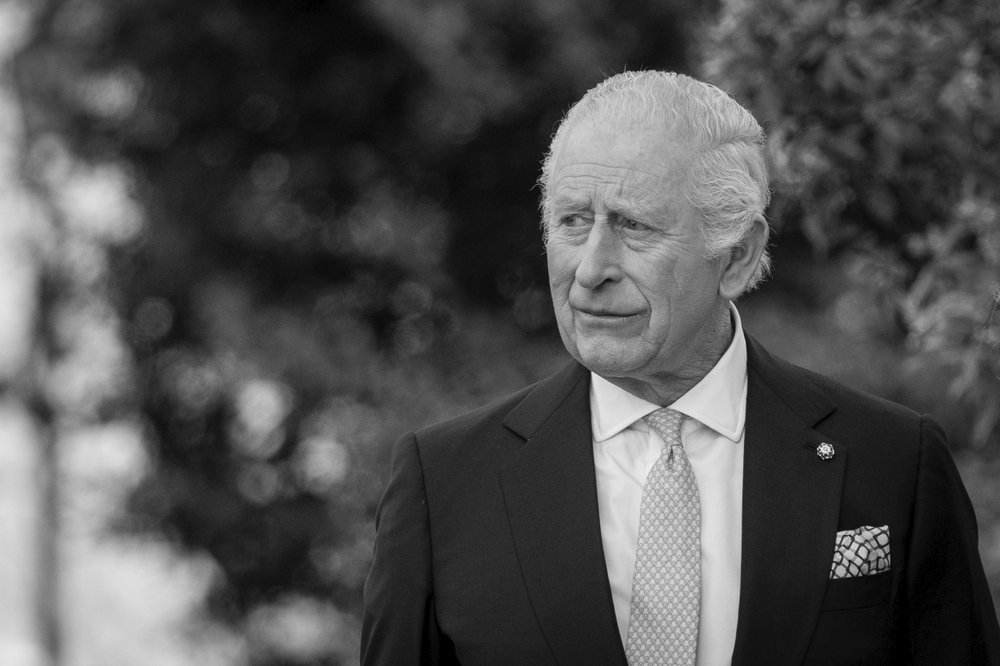
For generations, the British Crown has been publicly understood as standing at the head of our constitutional settlement as Supreme Governor of the Church of England and Defender of the Faith. Today, however, the official description speaks instead of His Majesty as one who ‘protects the space for Faith within the multi-faith nation’.
To many, this will appear a harmless adjustment in language. To others, a recognition of modern Britain.
I believe it is neither. Words matter. Constitutional language matters even more.
A nation is ultimately governed by the ideas it chooses to enshrine, and when those ideas change, the nation itself begins to change with them.
Several months ago I wrote an open letter to His Majesty King Charles III. It was written not in anger. It was written not from political tribalism. It was written because bishops are called to watch over souls, and when the spiritual foundations of a nation begin to crack, silence becomes dereliction of duty.
The Palace replied with impeccable courtesy. For that courtesy I remain sincerely grateful.
Yet courtesy is not substance. The questions I asked were not answered then, and they remain unanswered now.
Indeed, the publication of this year’s Sovereign Grant Report makes those questions more pressing than ever.
For over a millennium the English Crown has occupied a unique constitutional office. The monarch is not merely a head of state who happens to possess private religious convictions. The Coronation itself is a profoundly Christian act. The Sovereign swears before Almighty God to uphold the Protestant Reformed Religion established by law. The monarch is anointed with holy oil, receives Scripture as ‘the most valuable thing that this world affords’, and assumes responsibilities unlike those of any elected politician.
These are not decorative ceremonies preserved for tourists. They define the office itself.
It is therefore impossible to redefine the public understanding of that office without raising profound constitutional and spiritual questions. The issue before us is not whether people of other religions should enjoy freedom of worship.
They should. That freedom is one of the great fruits of Britain’s Christian inheritance. Christians have long defended liberty of conscience because genuine faith cannot be compelled by the sword.
The issue is altogether different. The question is this: what exactly is the British Crown called to defend?
There is an immeasurable difference between protecting the civil liberty of people to practise different religions and presenting the Crown itself as the protector of all faith equally. These are not the same proposition.
One concerns civil peace. The other concerns constitutional identity.
A king may protect the legal rights of every citizen. But the office of Defender of the Faith has never meant defender of every faith. Indeed, if every faith is equally defended by the Crown, then the historic meaning of the title becomes almost impossible to define.
What, then, is the Faith being defended? If Christianity is merely one faith among many, what becomes of the Coronation Oath? What becomes of the Established Church? What becomes of the constitutional settlement painstakingly forged across centuries of British history?
These are not abstract theological debates. They reach into the very heart of national identity.
Britain did not become a nation because every belief was treated as interchangeable.
Our institutions, our laws, our liberties, our Parliament, our universities, our understanding of justice, mercy, dignity and human rights all emerged from a civilisation consciously shaped by Christianity. That is not triumphalism. It is history. To acknowledge that fact is not to diminish anyone else’s freedom. It is simply to tell the truth about our own inheritance.
Increasingly, however, our public institutions seem embarrassed by that inheritance. The language of Christianity is quietly diluted. Historic convictions are carefully softened. Distinctive truths become generic values. Eventually the foundations disappear altogether, not by revolution but by revision. Paragraph by paragraph. Report by report. Definition by definition.
This is why Christians should resist the temptation to dismiss this as insignificant.
Civilisations rarely collapse in a single dramatic moment. They usually decline through accumulated concessions, each appearing too small to warrant objection until the original foundation has almost entirely vanished.
Yet let me also speak directly to His Majesty. I do not question your sincerity. Nor do I doubt your genuine desire to serve every community across these islands. Every Christian should continue to pray for the King, not merely because Scripture commands us to pray for those in authority, but because leadership carries immense burdens that few of us will ever fully understand.
My concern has never been personal. It has always been constitutional and above all spiritual. The Crown exists not merely to reflect the religious landscape of the nation. It exists to remind the nation that there remains a higher authority before whom King and people alike must ultimately give account.
That authority is not Parliament. It is not public opinion. It is not cultural fashion. It is Almighty God.
History teaches us that Britain has endured wars, revolutions, economic collapse and political upheaval because she possessed a moral centre beyond politics itself.
Once that centre is surrendered, neither government nor monarchy can long preserve what previous generations painstakingly built. My appeal therefore remains exactly what it was when I first wrote to the Palace.
Not condemnation. Not hostility. Not republicanism masquerading as religious concern. But invitation. An invitation to honest conversation. An invitation to national reflection. An invitation to recover confidence in the Christian inheritance that shaped these islands.
The British people are not crying out for another exercise in institutional neutrality. They are crying out for moral leadership. Leadership anchored not in the shifting winds of cultural consensus but in eternal truth.
The title ‘Defender of the Faith’ was never intended to be an ornamental relic. It was a solemn calling. The question confronting Britain today is not whether that title still exists. It does.
The question is whether we still possess the courage to believe what it means.