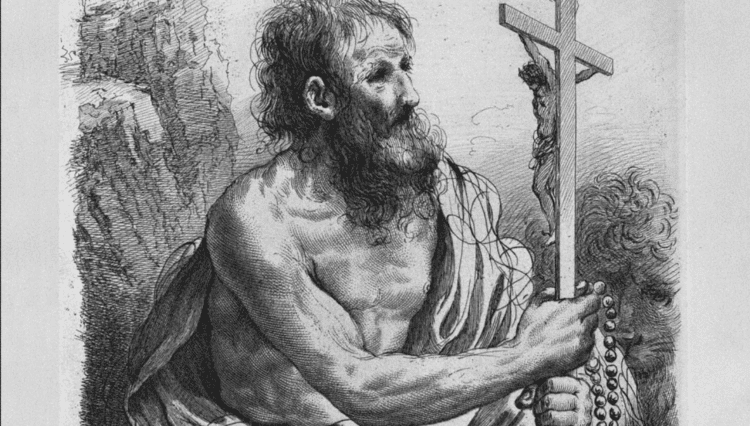
Today, the Church commemorates the memorial of Our Lady of the Holy Rosary. Pope St. Pius V originally instituted the feast to mark the victory of the Christians at the Battle of Lepanto in 1571. On that occasion, the rosary obtained the help of the Queen of Heaven in a contest against flesh and blood. Today it aids us in the noble struggle to deny ourselves and follow after Christ.
From a certain point of view, the Law of the Old Testament imposes easier demands than that of the New Covenant. Ten Commandments plus another six hundred, the Old Law lays out everything required, clear and simple. It provides a straightforward set of action items by which to live (Psalm 147:19-20; Ezekiel 20:11). Christ’s teaching, on the other hand, asks more of its followers than adherence to a list of dos and don’ts. To fulfill the new commandment requires an interior transformation of self-renunciation.
Citing St. John Chrysostom, St. Thomas Aquinas observes that “it would seem that the New Law is more burdensome than the Old. For Chrysostom says: The commandments given to Moses are easy to obey: Thou shalt not kill… but the commandments of Christ are difficult to accomplish, for instance: thou shalt not give way to anger, or to lust” (ST I-II, q. 107, a. 4). Not killing someone, it turns out, is far easier than not losing your temper when stressed or on your morning commute. Saint Thomas explains further: “In this respect the precepts of the New Law are more burdensome than those of the Old; because the New Law prohibits certain interior movements of the soul, which were not expressly forbidden in the Old Law in all cases.” The Old Law legislates our external actions; Christ’s new commandment governs the very motivation from which our actions arise. To fulfill this law, we must be transformed in our heart and mind.
How, then, do we accomplish this transformation? St. Paul points the direction when he reminds the Corinthian Christians that “we have the mind of Christ” (1 Cor 2:16) so that we may know and judge according to the Holy Spirit. We need to be like Christ. The sacraments principally effect this change in us. They communicate the divine life of grace, so we ourselves become what we receive, especially with the Most Holy Eucharist. We receive the Body and Blood, Soul and Divinity of Jesus Christ, and he makes us into his very likeness. We participate further in this transformation by nurturing this life through our personal prayer.
Among the devotional prayers of the Church, the rosary is a privileged aid. Where the sacraments communicate the divine life to us, the prayer of the rosary focuses our attention and mind to meditate on and to contemplate the very life we encounter in the sacraments—Jesus Christ—because the rosary is itself a scriptural meditation on his very life. The rosary “derives from [the liturgy, i.e. worship of God], and leads the people to it” (Sacrosanctum Concilium, 13) and therefore abets our discipleship, the conformation of our heart and mind, to Christ.
Today, the Church commemorates the memorial of Our Lady of the Holy Rosary. Pope St. Pius V originally instituted the feast to mark the victory of the Christians at the Battle of Lepanto in 1571. He had implored the Church to pray the rosary in advance of the battle, so he credited the victory to Our Lady’s intercession. On that occasion, the rosary obtained the help of the Queen of Heaven in a contest against flesh and blood. Today it aids us in the noble struggle to deny ourselves and follow after Christ (Matt 16:24). For this—our will, our ambition, our very ego—is in the end that which hinders our conformation to Christ. We must endeavor to surrender our life so to gain life in Christ. If, then, you would be his disciple, if with St. Paul you would say, “to me life is Christ, and death is gain” (Phil 1:21), or with Mary say “May it be done to me according to your word” (Luke 1:38) and Christ “Not my will but yours” (Luke 22:42), then take up the rosary and be transformed by the conformation of your mind to the mind of Christ. Contemplate, meditate on the very life of Jesus Christ in the rosary and become his disciple. To Jesus through Mary.
✠
Republished with gracious permission from Dominicana (Octoberber 2026).
The Imaginative Conservative applies the principle of appreciation to the discussion of culture and politics—we approach dialogue with magnanimity rather than with mere civility. Will you help us remain a refreshing oasis in the increasingly contentious arena of modern discourse? Please consider donating now.
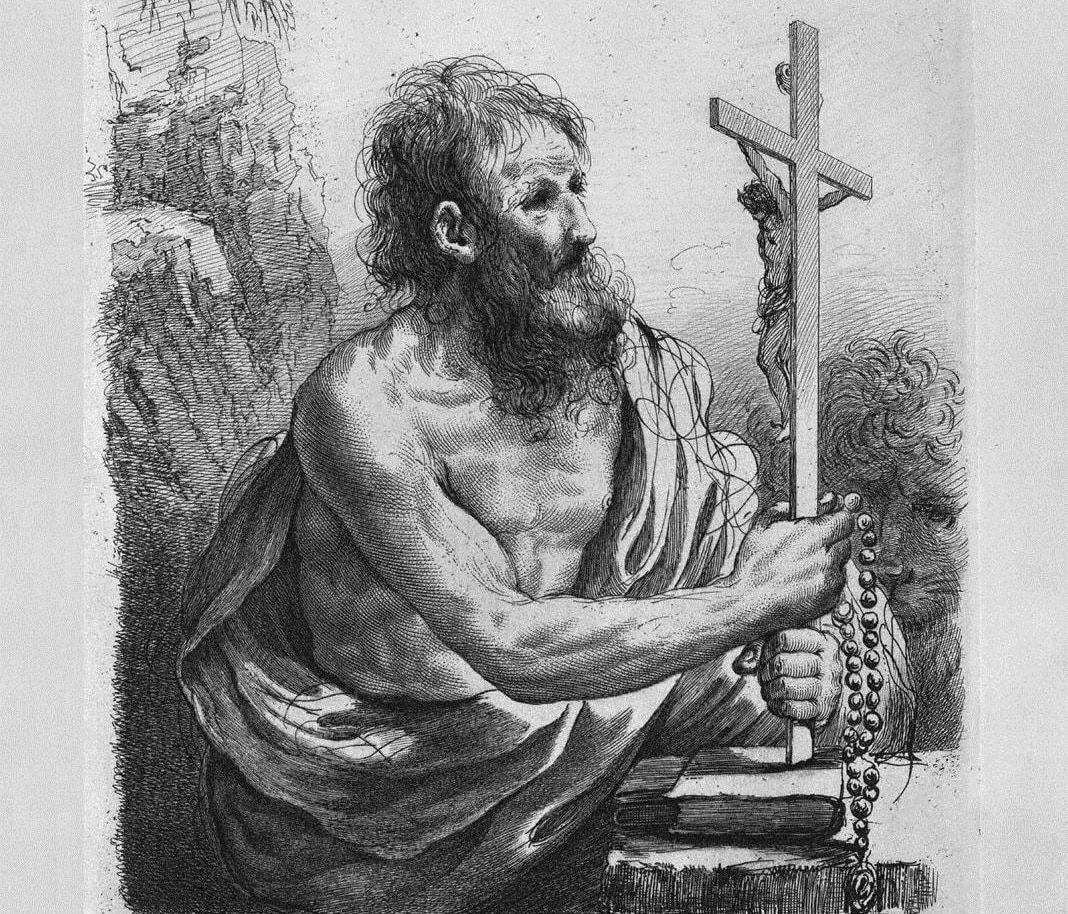
Image: Giovanni Battista Piranesi, St. Jerome Contemplating the Crucifix