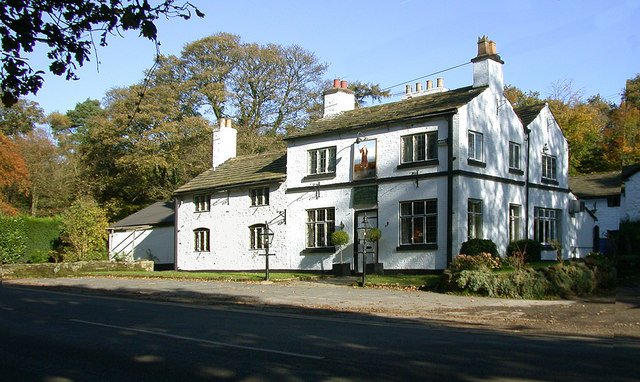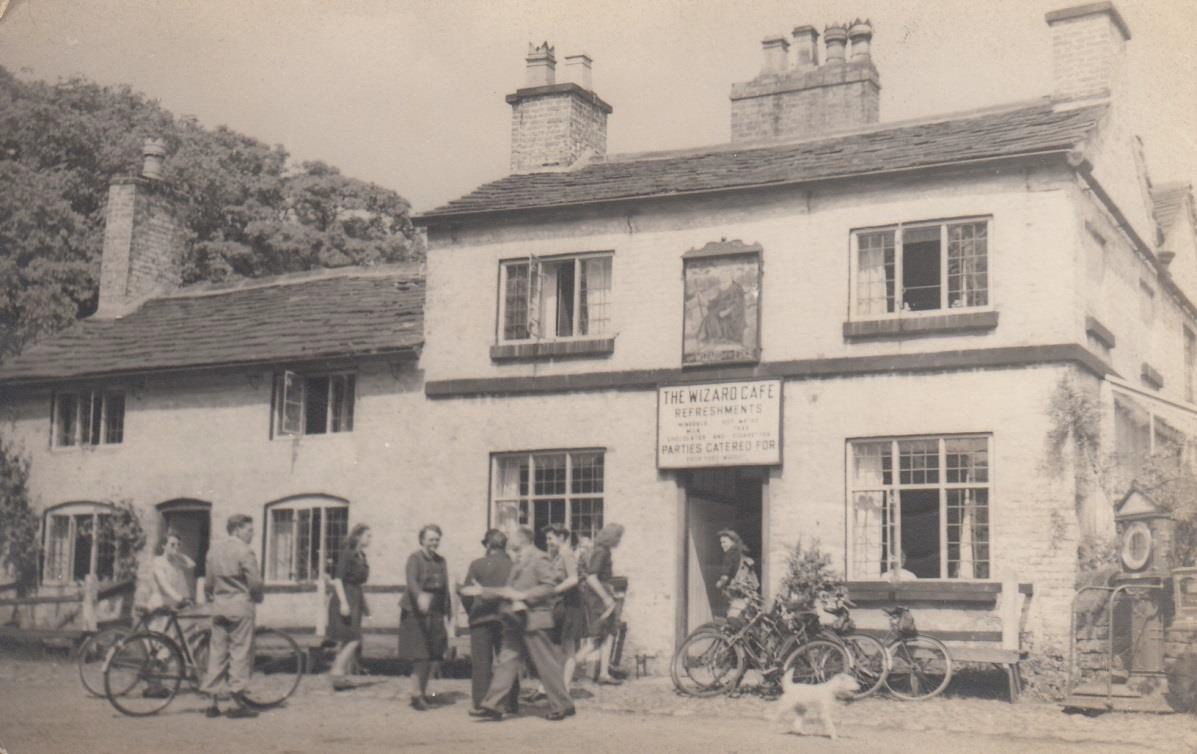
I GREW up in an old inn in rural Cheshire that was originally called The Miner’s Arms, as there were many old mines in the area, but renamed The Wizard. This picture was taken around 1939-40.

I was born in one of the bedrooms at the front on December 27, 1941, three weeks after the attack on Pearl Harbor. I was the only child as my parents married late. My father, Cliff, worked in the cotton industry in Manchester and commuted daily by train from Alderley Edge. We had a dog called Leo.
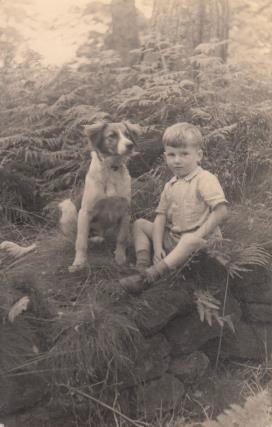
At the time the inn did not have an alcohol licence as the third Baron Stanley of Alderley, who took over the Alderley Edge estate following his father’s death in 1869, was a convert to Islam; he was frequently spotted in Turkish-style robes. As a strict Muslim, Stanley closed Alderley Edge’s pubs, so he was not the most popular person among locals.
From the late 1930s my mother, May, ran The Wizard as a café serving hikers, cyclists, the few that had cars and the occasional coach party. There was no electricity or mains sewerage. Lighting was by oil lamps and candles and cooking was by calor gas. There was a ‘copper’ in the scullery for heating water for washing up and laundry.
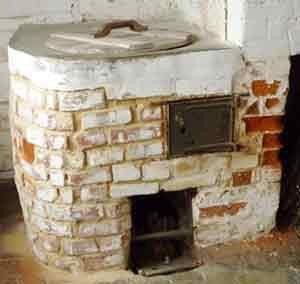
In the kitchen there was a large range also used for cooking and a small pantry off for storing cakes and supplies. I toasted bread on a long extending fork on the fire of the range even when I was only a young boy and enjoyed toast and honey sitting by the range fire on a cold winter’s day after school.
There was a general ‘hall’ or open area with large square rubberised mats – I remember these as I slipped on one that was wet and broke a leg in the war. There was no plaster of Paris available so I had to go to Altrincham to have a wooden splint fitted.
From this ‘hall’ there was a corridor with a couple of small rooms. My father used one of these rooms for a home-made wine store. On one occasion in the war, there was a loud bang and he thought that we had been invaded or something terrible had happened, but it turned out that it was a damson wine bottle that had exploded. It also broke several other bottles so the room was awash with red wine.
I can recall going to bed up the stairs at the end of this corridor to my room that was at the back of the building and overlooked the farmyard with a Wee Willie Winkie candle holder and a hot water bottle. Upstairs the bedrooms were spartan and cold.
Nearby in the hedgerow was a well that was used when the water pressure did not lift the water sufficiently to flow in the taps in the kitchen. We had to pump the water into buckets and carry them to the house on those occasions.
There were no loos in the Wizard at that time. The toilet was a small building across the yard, which was cold on winter days to say the least. The bedrooms all had chamber pots to avoid a dash across the yard in the night!
At the kitchen end of the building was a large greenhouse where my father would grow tomatoes and other produce for the café.
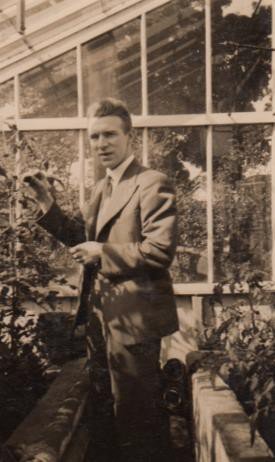
In the yard, there was a large chopping block to cut wood for the fires. This large block was also the launch pad for my graduation to a two-wheeler bicycle.
Mother more or less managed the café on her own with help from my father at weekends and, when I grew up to be useful, from me. I can recall one of my jobs was to put small sugar balls and hundreds and thousands on buns, what I suppose we call cup cakes today.
There were a series of slot machines outside at the front by the Coach Road wall. These included a weight scale and machines such as a picture show called ‘What The Butler Saw’ – a bit risqué for the day.
We had a small car, a 1930s Morris that my father used to travel to and from the railway station in Alderley when he went to Manchester for work. Leo the dog would often make his way to the village and sit under the clock at Barclays Bank and wait for my father in the evenings to hitch a lift back to The Wizard.
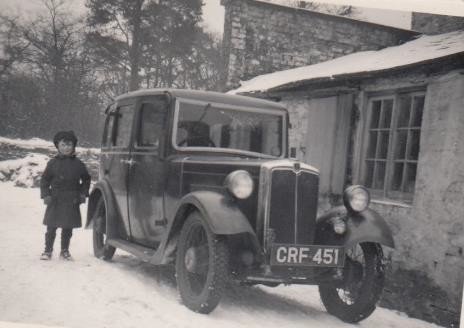
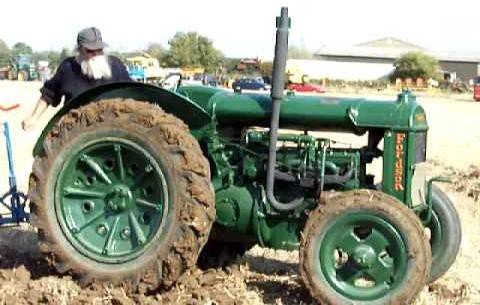
The adjoining farm to The Wizard was farmed by the Wrights, Fred the father and his two sons, Wilf and Cyril. They lived at Beacon Lodge just up the road. It was a mixed farm with cows, pigs, hens and some arable land. It was worked with horses, but the Wrights did acquire a Fordson tractor that was used for some tasks. When I was five or six, I would be asked to drive, or at least steer, the tractor whilst Wilf or Cyril spread forage from a trailer for the cows when they were short of grass. One of them would set up the speed (slow) with the hand throttle and I would steer to their instructions.
The two working shire horses, Dolly and Dick, were gentle giants that were used daily and as a boy I must have walked miles behind those tireless animals during ploughing, cultivation and harvesting in the fields.
The cows were milked by hand, usually by Cyril Wright with his cap turned round to allow his head to rest against the cow. On a cold winter’s day, it was a warm task.
Of course, I was too young to remember much of the wartime existence at The Wizard. Towards the end of the war and immediately post war I can remember scout cars and jeeps arriving and soldiers coming in for tea with their vehicles parked on the front. I can just remember a party to celebrate the end of the war.
Near the junction of Hocker Lane and Slade Lane in Over Alderley, there was a direct hit on a farm by what some said was a stray Doodle Bug (V1) that killed the family. This is referred to in my mother’s diary of that time, which says:
‘The Manchester blitz was an unforgettable experience. One day a funeral director from Upper Brook Street, Manchester came to ask if he could bring his cars and hearses as he dared not leave them in Manchester as he had so many funerals due to the blitz. He arrived with cars filled with demented people, babies and children, even in the hearses. We had over forty people and the smallest children slept in a row on the kitchen table as the kitchen was warm as we had a good fire with wood that we had collected from the woods. Luckily we could get milk from the farm so lots of cups of tea were made and drunk that night.
‘The people were covered in dirt and some had lost everything, but they laughed and made the best of things. Some went off the next day and some stayed for a few days. On the second night at about 8pm a bomb was dropped somewhere over Birtles and it struck a farmhouse and killed three people and a dog. The clock in the kitchen at The Wizard almost fell off the mantelpiece. It was an awful experience.’
Adjacent to my bedroom was another small bedroom accessed only through my room. I vividly recall my uncle Jack coming back from WW2 to sleep in that room. He had been a Japanese prisoner of war in Changi jail in Singapore and I can see to this day how his greatcoat hung off his tall, angular, thin body. These things have a lasting memory.
I started my schooling at Over Alderley Primary School in 1946. There were 14 pupils and one teacher, Mrs Wright. She was a strict but good teacher and somehow managed to cater for all the ages from five to 14 in one class. I first walked to school, and then later I sometimes went by tricycle, in all weathers from The Wizard along Macclesfield Road to the school in School Lane, Over Alderley. After the first few weeks, I would often make the journey alone. The times I walked, on the way home I would often sit on a gate between school and The Wizard and await the postman on his second round who had a bicycle with a front carrier. He used to lift me on to his carrier and take me home.
I was very fortunate to have a good education later at Cheadle Hulme School and later at university, but the grounding in the 3Rs, reading, writing and arithmetic, by Mrs Wright at Over Alderley School and her interest and encouragement in developing children was the starting point. I was sad to pass by the old school recently to see it as a derelict building, uncared for and forlorn, but not forgotten.
Editor’s note: The building and its land were given to the National Trust in 1948. Until 2020 it was run as a popular pub with tea rooms in an outbuilding but since then it has been boarded up, to the dismay of local residents. The tea rooms remain open. This picture was taken in 2006.