SCOTLAND’S parliament is full of champions for the vulnerable.
Through Scottish Environment LINK’s Nature Champions programme, MSPs volunteer to advocate for particular species and habitats. Tim Eagle, for example, champions the curlew, Laura Moodie the Eurasian beaver, while Q Manivannan is the cheerleader for ponds.
The initiative reflects a commendable instinct: vulnerable lives and places deserve protection.
Yet it also exposes a curious political contradiction.
In a parliament where politicians proudly champion endangered species, especially the more photogenic ones, nobody is prepared to champion the unborn child.
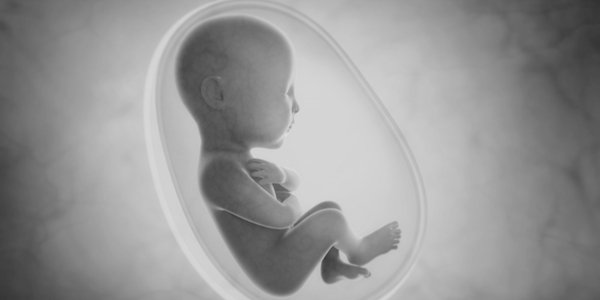
This is not because the unborn are invisible to science. Modern embryology leaves little room for ambiguity. For over two decades, we have had access to 3D ultra-sound scans which show babies at 12-weeks walking, yawning and rubbing their eyes in their mother’s womb. So from conception, a distinct human organism exists, developing continuously through every stage of life.
Nor is it because unborn children are not vulnerable. Few groups are more dependent, more voiceless or more incapable of defending their own interests.
The real reason is political.
The unborn child occupies a unique position in modern public life. Almost every vulnerable group is entitled to representation, advocacy and legal protection. The unborn are the exception. Their interests are not merely rejected; they are rarely even acknowledged.
Indeed, abortion may be the only major political issue in which one of the affected parties is routinely excluded from consideration altogether.
This intellectual blind spot has become increasingly apparent in Scotland. Politicians frequently express concern about demographic decline, record-low birth rates and an ageing population. They warn about labour shortages, shrinking communities and the long-term sustainability of public services.
At the same time, Scotland records more than 18,000 abortions every year. Yet the relationship between these two realities is treated as beyond discussion.
The contradiction is extraordinary. We are encouraged to think seriously about the future of every threatened species, but not about the disappearance of members of our own.
Even raising the question is often regarded as suspect.
That reflects a broader problem within contemporary politics. Certain categories of vulnerable life have become morally fashionable. Others have become morally invisible. The test is no longer vulnerability itself, but whether that vulnerability aligns with prevailing political assumptions.
Scottish Environment LINK is perfectly entitled to encourage MSPs to champion wildlife. Indeed, conservation is a worthy cause. The question is why Scotland’s political class appears more comfortable speaking on behalf of bats, beavers and ponds than on behalf of human beings before birth.
After all, the arguments used in defence of conservation often mirror those that historically underpinned human-rights movements. The weak deserve protection. The voiceless deserve representation. Power should be exercised with responsibility. A civilised society is judged by how it treats those who cannot defend themselves.
These principles are widely accepted—until the subject becomes the unborn child.
Then, suddenly, vulnerability ceases to matter.
Instead, abortion is discussed almost exclusively through the lens of adult autonomy. The child at the centre of the debate disappears from view. Public policy concerns itself with one set of interests while pretending the other does not exist.
A parliament genuinely committed to representing the vulnerable would at least be willing to discuss the interests of unborn children. It would ask whether they matter, what obligations society owes them, and why their complete exclusion from political consideration has become normal.
Instead, those questions are largely off limits.
That should concern anyone who values open debate. For a democratic society to declare an entire class of human beings unworthy of representation is no small matter. It reveals a hierarchy of concern that sits uneasily beside our professed commitment to equality and human dignity.
The nature champions programme rests on a noble premise: vulnerable life deserves advocates.
The common pipistrelle bat has one.
The unborn human child does not.
For a parliament that prides itself on protecting the vulnerable that is a remarkable omission.