TODAY marks the tenth anniversary of the Brexit referendum and the news that shocked the great, the good and the just plain smug: the majority of the country wanted rid of the European Union. The past decade has brought continued attempts by desolate remainers to convince us all that Brexit voters were mad, bad and ignorant; that Brexit has ruined the economy; and that only a return to Europe can save us all from our folly. For some reason voters have been unconvinced.
TCW is revisiting some of the pieces we published over the Brexit years. Readers can decide whose arguments have carried the most weight. This article was first published on March 6, 2017.
***
BRTAIN’S entry to what was then called the EEC in 1973 caused nothing but disaster to this country. Within a year, the country was working a three-day week due to a national energy crisis. There were power cuts that precipitated a political crisis. A minority government could not cope. Inflation soared. So did working days lost to strikes. There was statutory wage control. The country’s largest car manufacturer, British Leyland Motor Corporation (BLMC), went under and had to be nationalised. The government went bust in 1976 and had to beg for a loan from the International Monetary Fund, which imposed new policies on this country for which no one had voted. Things got worse. The strikes continued, causing the fall of yet another government. Inflation peaked at 25 per cent. Our country was so weakened that parts of our sovereign territory were invaded by a hostile foreign power.
All because of our entry into the EEC.
Of course, all of the above is complete nonsense. There were numerous external and internal events that led to these negative outcomes. The Falklands were invaded in 1982 because of Foreign Office defeatism and the Civil Service’s wrong-headed acceptance of the inevitability of this country’s relative decline. The energy crisis started with an Arab oil embargo following the humiliation of Israel’s enemies in the Yom Kippur War. There was a perceived need by oil suppliers to punish the West for supporting Israel. Union militancy and a paleo-Corbynite Labour Party caused our industries to become uncompetitive as shop stewards usurped management and outlawed profit-making. Keynesian policies no longer worked, if they ever did, and only stoked inflation, leading to strikes on the back of pay claims, that led to more inflation and more militancy.
Joining the EEC could not be held directly to blame for all this misfortune.
It is highly likely, however, that every future negative political or economic event will be laid at the door of Brexit. Brexit is the new dividing line in British politics, replacing the whole big State/small State, capitalist/socialist divide. There is a new dialectic in British politics.
At present, both of the two main parties support Brexit. Labour made a serious strategic error by leaving opposition to Brexit to the LibDems and SNP after June 23. There seems to be a need in the next 12 months for a pro-EU party to emerge from the ashes of Corbyn’s Labour. The memory of the fate of the SDP should not be a deterrent.
Labour is trying to save its face by using a prefix and calling it a ‘Tory Brexit’. However the party of ‘straight-talking honest politics’ can hardly do this and then instruct its MPs to troop through the Aye lobby on a three-line whip. This is not a ‘Tory Brexit’.
So be prepared for every future negative economic event to be ascribed to Brexit in the same way that unseasonal frost is blamed on global warning.
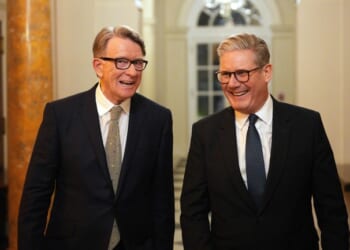
Brexit is moving away from rational debate and into public mythology. The Brexiteers may find it to their advantage to find a new message to halt this progress into public superstition. This will be a challenge as the revanchist Remainers include such media wizards as Peter Mandelson and Tony Blair. Although their currency has been somewhat devalued, they are effective communicators and are still listened to by those who are nostalgic for a time when Labour ruled all it could see.
If entering the EEC did not cause a string of national setbacks, it follows that moving in reverse gear will not either, unless the EU itself starts playing dirty. At present Jean-Claude Juncker wants us to be punished, but this only means that the EU was only really an expensive protection racket. Politicians from Germany, the biggest payers after the UK into the EU, have called for moderation. Both sides are jockeying for position.
If things do get messy, Brexit still cannot be blamed. People forget that international politics is a very harsh game.
This is the politics that does nothing when Syrian hospitals are bombed by the Russians. It is more likely that the EU will be using our example to frighten its subject nations into line. Don’t blame Brexit. Blame the EU.