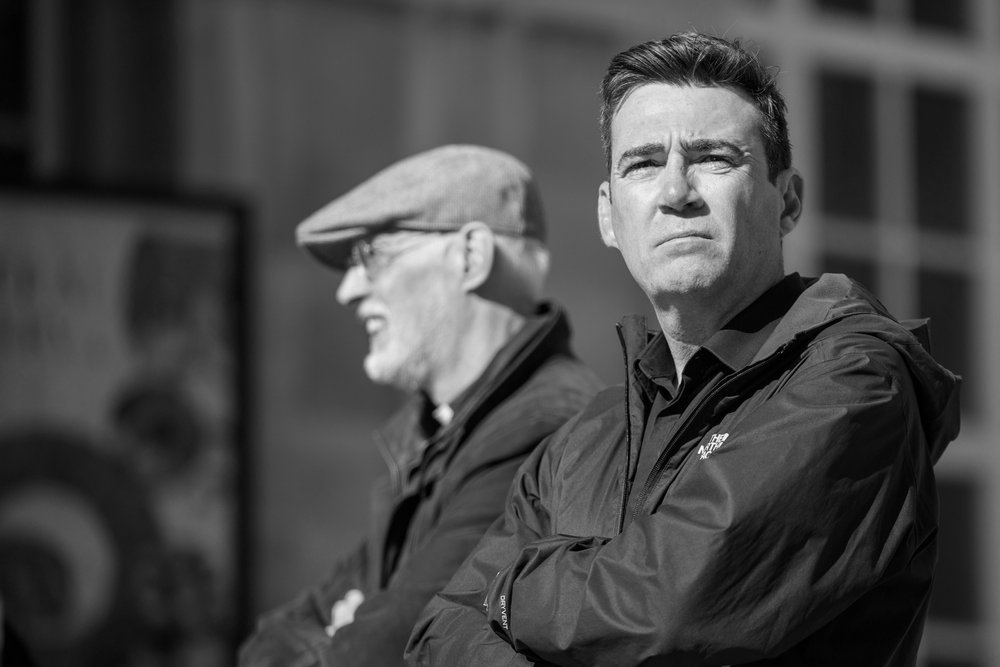
ANDY Burnham’s Makerfield ‘landslide’ was no such thing. That is the inconvenient fact being buried as commentators rush to present the Mayor of Greater Manchester as Labour’s Prime Minister-in-waiting. The result has been cast as a political earthquake. Burnham has returned to Westminster, Labour has defeated a totally discredited Reform party, and his next step, we are invited to believe, is legitimately Downing Street.
But look at the arithmetic.
Turnout to vote was only 58.7 per cent. Makerfield has an electorate of 77,462. Burnham received 24,927 votes, fewer than a third (32.3 per cent) of those entitled to vote. His majority was 9,231. That is only 11.9 per cent of the electorate.
Yet from this result, Britain is being invited to contemplate a new Prime Minister, a new, vastly more radical Labour programme and a lurch to the far left. If it happens, it is a massive, unforgivable con-trick against the British people and an insult to democracy.
Disgracefully, Daily Telegraph pieces published in the aftermath of Thursday’s by-election show how quickly the con is being advanced. Under the heading ‘Underestimate Andy Burnham at your peril’, Sherelle Jacobs wrote that Makerfield had expressed the nation’s hunger for change and discussed the programme a Burnham government might pursue. Preposterously, Janet Daley went even further, claiming that two-party politics was back and treating Burnham’s arrival in Number 10 as a serious prospect. Predictably, too, she poured bile on Nigel Farage and Reform, and demoted them to an also-ran, flash-in-the-pan protest movement.
How pathetic and alarming. A man wins a by-election by fewer than 10,000 votes and the support of fewer than a third of the local voters and within hours columnists supposedly of the right are discussing how he might become Prime Minister and reshape Britain.
Labour was elected in 2024 on a manifesto presented to voters by Keir Starmer. Whether one supported it or loathed it, that manifesto was the basis on which Labour sought office. Now, scarcely two years later, that contract with the electorate is being smashed to pieces.
The scale of the ambition bears no relationship to the scale of the mandate. Burnham and his supporters talk of a ‘new path for Britain’. The discussion includes greater redistribution of wealth, more taxes, more assaults on employers and wealth-makers, a larger and more interventionist state, constitutional reform and mass nationalisation. This is a reversion to Corbynism and the policies of Michael Foot in the 1983 General Election.
That would be troubling even if Labour had swept to power on a popular tide. It did not. Starmer won 411 seats with only 33.7 per cent of the votes cast, on turnout below 60 per cent. This is the lowest vote share since 1945 achieved by any post-war majority government. Labour’s mandate was already paper-thin. Now Burnham is planning to junk it in favour of a more radical course never authorised by the electorate.
Nor is Burnham remotely tested for the role being prepared for him. A mayoralty is not the premiership. Running Greater Manchester is not the same as being Prime Minister of the United Kingdom. He has never run the national economy, never been responsible for defence, never had charge of foreign policy, border security or energy security. Yet these basic objections are being brushed aside in the grubby rush to elevate him.
Burnham, it seems, is now cast as the acceptable insurgent. Reform must be obstructed, rubbished and belittled. That is the essence of the coverage. The scrutiny applied to the credibility of Reform by the commentariat seemingly vanishes when the contender is a Labour politician promising a larger state and more redistribution.
This is why Makerfield matters. The comment in its aftermath reveals the shabby machinations by which legitimacy is being manufactured for him. A by-election majority of 9,231 votes is being inflated into a claim on national power. It surely defies belief that a politician who won the support of fewer than a third of one constituency’s electorate is being discussed as a future Prime Minister. A programme never put before the British people is being presented as though it could govern their lives.
That is a democratic outrage.