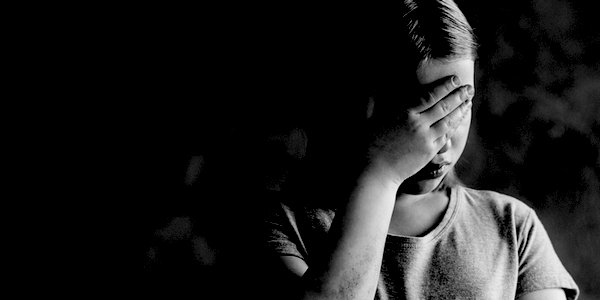
This is part of a series of articles we are publishing in TCW designed to challenge one of the most powerful orthodoxies shaping family justice across the Western world, an orthodoxy that is harming children and parents alike. You can read earlier articles here. Today’s highlights how delays in the system rob children of precious time.
WHEN parents enter the family court system, most do so with a simple assumption. Whatever has happened between the adults, the court will surely act to preserve the child’s relationship with both parents wherever it is safe to do so; that facts will be established, concerns properly investigated and decisions made in a timescale that reflects the urgency of childhood itself.
Yet after more than a decade speaking to thousands of parents through PAPA (People Against Parental Alienation), https://www.papaorg.co.uk/ I have come to a troubling conclusion. Their experience of family courts is less about finding the truth than surviving the process.
Though the stories vary enormously, a remarkably consistent pattern emerges. Parents describe entering a system that promises to place children at its centre, only to discover that delay, procedure and bureaucracy gradually become more influential than the child’s needs.
Parents rarely begin their story by describing a judge, a lawyer or even the other parent. Instead, they talk about the ‘time’: about the hearing that was postponed, the assessment that took months to arrange, the report that took months to complete, the review hearing that was pushed back because the court diary was full. Then allegations that required further investigation or a new concern that emerged just as the previous one had been addressed.
Childhood does not pause while professionals deliberate. Children continue growing, developing and adapting and relationships that once seemed secure begin to weaken, not because a court has ordered their destruction, but because time is eroding them.
This is the family court’s best-kept secret, that the greatest threat to a parent-child relationship is not always a final court order. It is the passage of time while everyone waits for it.
To discover whether the experiences reported to PAPA were typical, with colleagues I launched the Family Justice Transparency Report to gather objective evidence about families’ experiences inside the system. The resulting survey became the largest independent examination of family court experiences ever undertaken in the United Kingdom, with more than 1,400 participants contributing their experiences.
The findings were both illuminating and deeply concerning.
Again and again, families described a sense that nobody was accountable when court orders were ignored. Others reported spending years navigating a process that seemed incapable of reaching a conclusion. The picture that emerged was of a system struggling to deliver timely and effective justice to the very families it exists to serve.
Parents from different regions, backgrounds and professions described remarkably similar journeys. By the time proceedings concluded, the damage to relationships was often entrenched.
Childhood is finite. A year lost to a six-year-old is not the same as a year lost to an adult. For a young child, twelve months represents a significant proportion of lived experience, memories created and identities shaped. When children lose regular contact with a parent for months or years, they do not simply place that relationship on hold until the court reaches a decision. They adapt to its absence.
Faced with prolonged separation, children gradually adjust to a new reality. Parents who were once central figures in a child’s life can slowly become peripheral. Familiar routines disappear. Shared experiences stop accumulating. Eventually, the relationship itself may begin to feel unfamiliar.
This process is often invisible to professionals because it happens incrementally. There is rarely a dramatic moment when the relationship breaks. Instead, it weakens by degrees, month after month, hearing after hearing, delay after delay.
PAPA’s Lost Years Campaign, a national initiative that highlights the devastating impact of family court delays on children and parents, aims to expose the emotional trauma caused when children are separated from a loving parent for prolonged periods.
The irony is that nobody intends this outcome. A system can be filled with well-meaning people from judges to social workers and still produce harmful outcomes.
One critical area is the failure of enforcement. Many parents ask a simple question: what is the point of a court order if nobody ensures that it is followed? Countless families report that orders relating to child arrangements are repeatedly breached with limited consequences. Contact is denied. Arrangements are ignored. Commitments are broken. Further hearings are required. More reports are commissioned. And more time passes.
A justice system that struggles to enforce its own decisions risks becoming a system of recommendations rather than a system of law. The consequences extend far beyond practical frustration.
Over the years, PAPA has heard from individual mothers and fathers who felt they had been handed a life sentence by a family court process that failed to address the progressive loss of their relationship with their children. They described watching helplessly as months became years and their role in their children’s lives gradually disappeared. For some, the emotional impact was so severe that they came to view the loss as a form of psychological death.
More concerning still were the cases where parents had reached such levels of despair that they took their own lives. PAPA has repeatedly encountered families who believed that prolonged separation from children, coupled with a perceived inability of the system to intervene effectively, had been a significant contributing factor. Behind every such tragedy was a wider family left devastated and children who would now grow up without a parent entirely.
So what happens when a justice system allows a parent-child relationship to disappear over time despite repeated warnings, evidence of alienating behaviours, and opportunities to intervene? Unlike death, there is often no public recognition of the loss. No funeral takes place. No sympathy cards arrive. Friends often struggle to understand. Support services are limited. The child is still alive, yet absent. Parents are left grieving someone they love while simultaneously knowing that person still exists somewhere beyond their reach.
The emotional impact can be devastating.
Parental separation should not automatically result in parental loss. Most children benefit enormously from meaningful relationships with both parents whenever it is safe and appropriate. This is neither a radical nor controversial observation. It is supported by decades of research and by the everyday experiences of countless families.
Yet somewhere along the way, public discussion of family justice has become increasingly polarised. Debates become framed as battles between mothers and fathers, applicants and respondents, victims and perpetrators. Lost in the middle of these competing narratives is the child.
The reality is that the central conflict is not between adults.
It is between children and time, the time court processes take.
The public rarely sees these realities because family courts operate largely behind closed doors. This lack of visibility makes it easier for policymakers to focus on procedural targets, administrative efficiency and institutional narratives instead of engaging with the experiences of parents, grandparents and children.
Difficult questions about delay, enforcement and outcomes must be asked. Courts must recognise that children cannot wait indefinitely. The true measure of a family justice system is not how many hearings it conducts, how many reports it produces or how efficiently it processes paperwork.
The true measure is whether children are able to maintain meaningful relationships with the people who love them.
Tragically, at the moment, the families contacting PAPA show that far too few are.