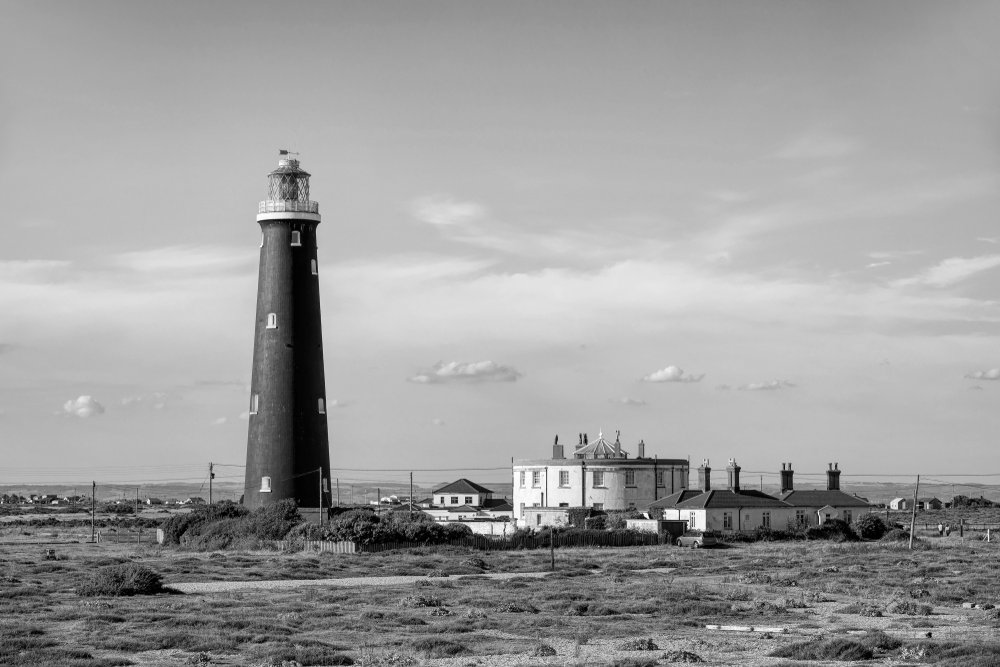
WHEN Dungeness A began operating in 1965, few could have predicted that a nuclear power station would become one of the most significant drivers of ecological improvement on Romney Marsh. Yet six decades later, the evidence is clear: the presence of the power stations (Dungeness A was joined 20 years later by Dungeness B) has coincided with and in many cases directly enabled the transformation of a shingle desert into one of the most biodiverse landscapes in the United Kingdom.
As the stations now move through decommissioning, the question facing the community is not whether energy generation should continue on the peninsula, but what form it should take. For many residents, the answer is that a Small Modular Reactor (SMR) would preserve the ecological gains of the nuclear era far more effectively than the large‑scale solar developments currently being proposed.
After some research I found an old film, The Dark Man, made in 1951 and partly shot on location at Dungeness Point. The film is in black and white but still very clear, and what struck me was the barren aspect of the place I know and love as a wildlife haven.
Fascinated by this discovery, I did a bit of digging (no pun intended) and uncovered some interesting facts about the area. Before the creation of the power stations, Dungeness was a harsh, nutrient-poor environment which supported only sparse vegetation and limited wildlife. There was no structured land management, no freshwater bodies and no long-term ecological monitoring. The landscape was open, exposed and ecologically fragile.
The construction of Dungeness A changed all that. One of the most important ecological features of modern Dungeness – the Long Pits – exists becauseof the power station. These freshwater bodies were created during gravel extraction in preparation for the power station’s foundations. Over time, they developed into rich wetland habitats supporting many species including dragonflies and damselflies, great crested newts, amphibians, migratory birds and rare aquatic plants. These plants in turn became a destination for rare bees and butterflies, and in the summer the entire landscape bursts into a riot of colour with carpets of sea poppies, viper’s bugloss, sea kale and many others.
These habitats did not exist here before the arrival of the power station. Today, they are among the most valuable ecological assets on the peninsula and have since been augmented by the arrival of the nature reserve and co-projects with Natural England, RSPB, Dungeness and the Romney Marsh Countryside Partnership.
The secure perimeter around the power stations has created a de facto wildlife refuge for more than 60 years. Areas of shingle that otherwise would have been disturbed by ad hoc development, vehicles or walkers have remained untouched. This ‘quiet zone’ effect has protected the rare flora and allowed fragile habitats to stabilise.
Dungeness is a showcase for non-intervention provided, ironically, by the bulk of the power station complex, which works hand-in-hand with the above organisations on a long-term stewardship basis.
Now along comes Mad Miliband with his destructive fantasies and all of a sudden we are faced with the prospect of extensive fencing, ground levelling or piling, heavy vehicle access, large areas of land taken out of open habitat, and permanent industrialisation on the shingle, not to mention the proposed siting of the monstrous battery storage in close proximity to a live Army camp and a shingle foreland still harbouring random live WWII landmines.
The community here is open to the idea of a SMR, which would take up the space of six football pitches on a site close to the existing power stations. It would therefore be far preferable to miles and miles of unsightly panels containing glass, aluminium and silicon and with toxic elements and non-biodegradable components, particularly polymers that can be a hazard if not properly recycled at the end of a 25-to-30-year lifespan.
Other components include lead, cadmium, silicon tetrachloride – highly toxic if not handled properly – fluorinated substances and small amounts of copper, selenium and antimony. According to ChemSec, https://chemsec.org/about/about-chemsec/ an independent non-profit organisation that advocates for substitution of toxic chemicals with safer alternatives, ‘old solar panels become waste that need to be dealt with. In Europe they are incinerated when they reach end-of-life after 25-30 years, which is not ideal since it releases harmful chemicals like PFAS into the atmosphere. Toxic PFAS leaches into soil and groundwater, posing significant risks to human health and wildlife.’
This is backed up by farmers who have stated that these chemicals do indeed leak and poison the grass which is then ingested by livestock. Deadly!
However, Miliband and his army of eco-nuts fail to address these issues.
Fortunately for those of us whose livelihoods and property values are under threat, as well as the nightmare of losing our unique and beloved landscape, our Labour MP Tony Vaughan is on our side. He is pushing the idea of the SMR and stating that the solar panels should go on the tops of public buildings and roofs.
Our farmers are being pressured into taking what, in my opinion, amounts to brown envelopes to sell or rent their land. Given the behaviour of this government towards farmers to date, this is, to me, an obscene scheme almost reminiscent of some kind of latter-day protection racket.
I find it amazing that these left-wing outfits like the Labour Party and the Greens, obsessed as they are with saving the planet (which is supposedly the whole idea of Net Zero in the first place) are hell-bent on destroying our legacy.
This is not NIMBYism. This is mass opposition to the hysteria of the eco-maniacs both inside Parliament and out. In summation it is, yet again, the politics of the insane and the greedy who masquerade as planet savers while ripping up hundreds of miles of precious habitat that will not recover for generations, if ever.