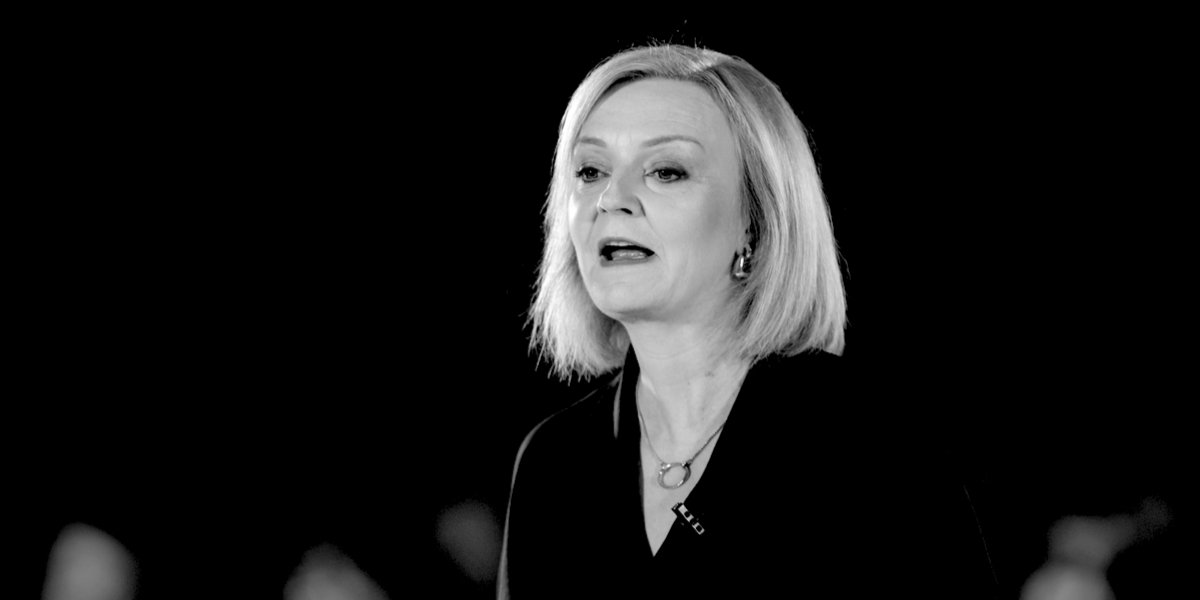
In part 2 of our exclusive interview with former Prime Minister Liz Truss, we discuss how feminism is being weaponised against women to promote transgenderism, how the family is being dismantled and how she hates diversity, equity and inclusion (DEI) are paralysing. You can read Part 1 here.
LIZ Truss is an unashamed patriot who believes the British family is under threat, parents are undermined by the system, diversity, equity and inclusion (DEI) is unproductive, and feminism has been weaponised against women to support the transgender agenda.
In the last ten years, transgenderism has taken hold in the UK, pushed by a woke agenda. The argument raging is whether a person can be born in the wrong body, or whether men who believe they are women and vice versa, are suffering with mental health issues that are being ignored.
Science is clear on the matter: while hormones and surgery can alter many physical characteristics, they cannot change chromosomes or reproductive biology. The UK Supreme Court agrees and in 2025 adjudicated on the meaning of sex. It decided unanimously, as dictated by the Equality Act 2010, that the terms ‘woman’, ‘man’, and ‘sex’ refer to biological sex, not self-identification of legal sex.
Truss, also former Minister for Women and Equalities, is dismayed at the hijacking of hard-won women’s rights.
She said: ‘Stonewall [a charity representing the LGBTQ+ community] infiltrated the States and infiltrated the police with their warped transgender ideology and people went along with it. We know rationally that you can’t become a woman, that if you take puberty blockers it could destroy your chances of having a family, and you may end up less happy. But rationality doesn’t win against warped ideology.
‘The irony with feminism is that it’s been overtaken by transgender ideology. You have people like Harriet Harman [Baroness Harman, is former Labour Minister for Women. Since 2025 she has been the UK’s Special Envoy for Women and Girls] who are allegedly feminist but also believe that men can become women.
‘The left has always had this anti-family agenda, and I didn’t realise how far it would go. It’s extraordinary that we have men trying to go into women’s toilets and everyone thinks that’s acceptable.
‘Feminism is a word that means lots of different things to lots of different people. If it means we should treat everybody equally, I’m in favour of that. I’m in favour of the justice system treating people equally.
‘I’m against identity politics, I’m against quotas, and I hate the DEI agenda. I think the Equality Act is a disaster, but I think the place we’ve got to where we have separate sports for women and where women are serving in jobs alongside men was the right place. Maybe this is nostalgia, but in the 1990s we seemed to have got to the right position and now everything seems to have gone completely mad.’
The family is facing many crises. England and Wales now have the lowest marriage rate since records began in 1862. By 2023, according to the Office for National Statistics (ONS), the marriage rate for men had fallen by 69 per cent and 67 per cent for women.
The birth rate has also suffered, and two-thirds of the world’s countries are not producing enough children to support their economies. In 1862, families typically had four to six children; now it’s fewer than two, well below the replacement rate of 2.1 children per woman. This is an economic disaster in the making and goes some way to explaining why ministers are encouraging immigration.
Sixties communism is also partly responsible for negativity aimed at the family that began in the US and infiltrated the UK. In 1963, the American Communist Party read 45 goals into the official congressional record aimed at dismantling the American way of life. Included is a goal to break down standards of morality and discredit the family as an institution. They unveiled a goal to encourage promiscuity and easy divorce, emphasise the need to raise children away from the negative influences of their parents, and attribute prejudices, mental blocks and the retarding of children to the suppressive influence of parents. Some would say they have been pretty successful.
As a former Under-Secretary for Education and Childcare, Truss, who held eight ministerial roles, reflects that the State’s efforts to support the family are now damaging rather than empowering: ‘I think the welfare state itself has been damaging to the family because it’s taken the role of the family in many people’s lives. I’m an economist by background so I see what’s happened with the economic incentives. The hollowing out of the middle of the jobs market has made it a lot harder for families to even start in the first place.
‘It’s so difficult for young people to get on the housing ladder, it’s so difficult for them to find the wherewithal. I immediately jump into solutions, and I think we need a tax and benefits system that is much more pro-family. I think the Hungarians did a certain amount of that, but I think we need to do it a lot more.
‘I’m very sad that Viktor Orbán [former Prime Minister of Hungary] didn’t win the election. I think what he was trying to do in making Hungary a family friendly country was a good strategy and it’s what we need to look to do. If you look at the birthrate in our country and across the West. It’s very, very worrying.’
When women began fighting for equality, not many considered the negative impact two working parents might have on the emotional wellbeing of babies, toddlers and children. In the early nineties, TCW editor Kathy Gyngell co-founded Full Time Mothers (later renamed Mothers at Home Matter) to raise that awareness, while in the mid-nineties, I became media spokeswoman for the charity What About the Children? (WATCh?) set up to highlight the emotional needs of the under-threes.
Inspired by psychiatrist John Bowlby’s attachment theory, we advocated for women to receive financial support if they wanted to stay at home with their children. Now in England and Wales, one in nine children has a diagnosable mental health condition, whereas we argued that secure attachment leads to fewer mental health difficulties, stronger relationships and more confidence.
Truss thinks this was prescient. She said: ‘We are now in a situation where mothers either feel obliged to work or have no choice economically. I think the way that you stop discrimination against stay-at-home mothers is that you move to a family taxation system. I haven’t studied it in detail, but Germany has a system where you can opt to be taxed as a family, or as an individual. I think that’s a better system than what we have here in Britain.
‘As for daycare, I think that parents should be able to use the childcare that they want to use. Parents should be in charge. It’s much too hard to use informal childcare in Britain now there are so many regulations on childminders, babysitters, etc; you have to trust parents to do the best for their children and you have to also enable them to have the wherewithal to start a family, which goes back to the economic question.
‘Stable childcare – i.e. a parent or grandparent – might be the ideal scenario but are you going to ban people from doing something different, is the question. I think that far too much power has been taken away from the family and from the parent and put in the hands of the government and I think it’s been a disaster.
‘Government is a terrible parent. You have to go back to parents who are best placed to make those decisions.’