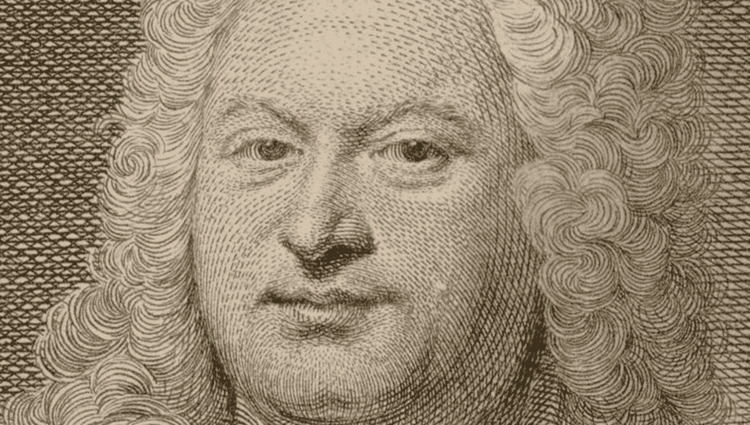
J.S. Bach had many artistic associations during his life, but one of the most intriguing was with Silvius Leopold Weiss, the celebrated player of the lute. The connection between the two goes deeper than their literal friendship. Weiss is one of the few Baroque composers whose work could actually be confused for Bach’s on first hearing.
 The culture of classical music tends to extol the solitary “genius,” the isolated artist creating masterpieces against all odds. Although entertaining, this Romantic view is mostly a myth. The reality is that composers and musicians are part of a community of individuals that interact and influence each other. Our standard music histories seldom deal with this “horizontal” aspect of musical life, and this is to our loss. What were the musical relationships that shaped and nourished Bach, or Mozart, or Beethoven in their creative life?
Bach had many musical and artistic associations during his life, but one of the most intriguing was with Silvius Leopold Weiss (1697–1750), the celebrated player of the lute. An instrument of great beauty and subtlety, the lute was extremely popular during the Renaissance and into the early Baroque era. But by the time Weiss came along, the lute was in eclipse, overtaken by louder and more powerful instruments—including, eventually, the piano. Weiss kept the flame of the lute alive, writing for his instrument compositions of poetry and emotional and intellectual complexity which he performed himself. He was known as the greatest lutenist of his time, and perhaps of all time. According to a contemporary, Weiss was “the first to show that more could be done on the lute than was hitherto thought possible.”
Essentially, Weiss treated the lute as a complex, multi-voiced instrument capable of playing harmony and counterpoint. For Weiss, the delicate, evanescent timbre of the lute is no obstacle to creating full, richly satisfying music. My friend and colleague John Armato, a gifted lutenist, swears by the music of Weiss as his favorite repertoire. Written in tablature—a special form of musical notation—it requires extensive training to play well. Musicians who start on the guitar, like John, sometimes find their way to the lute and, when that happens, they sometimes decide to stay there.
This is not the place to go into the intricacies of the lute, but suffice to say that this subtle assemblage of gut strings over a pear-shaped box is one of the unsung wonders of Western music. Originating in the Arabic oud and with roots going back to ancient times, the lute reached its peak in Western Europe in the 16th and 17th centuries. With its soft timbre, the lute was the ideal instrument for the home and for those who played for pure pleasure. Considered old-fashioned by the turn of the 19th century—Weiss was one of its last masters—it was reduced to a museum piece and stage prop for several generations. Its modern revival is the work of the last 80 or so years.
Born to a father (Johann Jacob Weiss) who was himself a famous lute player, Weiss was performing on the lute for the emperor Leopold at the age of seven. He later went to study in Italy, the center of everything new and exciting in music. Weiss’s German intellectual discipline met Italian melody and lyricism, forming a powerful combination that would shape his music. He would truly make the lute “sing” in a way that did not seem possible before. Upon returning home to Germany, Weiss found employment in the celebrated band of musicians at the court of Dresden. It was perhaps the finest collection of musical talent in all of Europe. Bach himself wanted to join this collective and would write his venerable Mass in B Minor as a job application.
Bach and Weiss were destined to cross paths. A contemporary, Johann Friedrich Reichardt, writes:
Anyone who knows how difficult it is to play harmonic modulations and good counterpoint on the lute will be surprised and full of disbelief to hear from eyewitnesses that Weiss, the great lutenist, challenged J.S. Bach, the great harpsichordist and organist, at playing fantasies and fugues.
In 1739, the two great men of music met in Bach’s home of Leipzig. Weiss was visiting from Dresden with his new friend, Bach’s son Wilhelm Friedemann. Weiss stayed for four weeks, during which he and Bach met many times and played together. Bach’s secretary reports that the music that resulted was “extra-special.”
What did they play? Undoubtedly there was improvisation, something of a lost art in classical music today. Weiss was handy at improvising fantasies (free-form pieces) on the lute, and Bach was even capable of making up complex fugues on the spot.
A while back it was discovered that the great Suite in A major, numbered 1025 in Bach’s catalog of works, is actually an arrangement of a lute work by Weiss. Bach took the lute suite and composed a violin part to go on top of it. Did the work originate during the Bach/Weiss “jam sessions”? Perhaps we will never know, but we can imagine how it must have sounded to hear two of the greatest musical geniuses of the day improvising together in the living room. A “challenge” it may have been, but a challenge founded in friendship, not rivalry or pride.
Playing it with my own friend John, the friendship of this historical duo is reenacted and merges with our own friendship. The big suite (about 25 minutes long) has become a signature piece for us, one of our favorites that aways brings us together.
Weiss’s pieces all follow the format of the Baroque dance suite, a genre that grew out of the courtly dances of the aristocracy (especially from the court of Louis XIV at Versailles), with more rustic steps thrown in for good measure. Music meant to be listened rather than danced to, it conveys movement and gestures through tones alone.
In a typical Weiss sonata, we might have a stately and dignified Allemande; the lively Courante (from the French for “running”) with often dizzying rhythmic patterns; the slow sarabande, rich with pathos or peacefulness; the graceful minuet; and often an exuberant allegro or rollicking gigue (cousin to the jig of the British Isles) to send us out in high spirits. All the foregoing is framed by a freestyle prelude, which is like improvising. Despite the fixed structure of Weiss’s pieces, they show a wide variety of invention and feeling.
The connection between Bach and Weiss goes deeper than their literal friendship. Weiss’s music sounds Bachian—he is one of the few Baroque composers whose work could actually be confused for Bach’s on first hearing. In large part this has to do with his powerful fusion of harmony and counterpoint on a single instrument.
As fate would have it, Weiss died the same year as Bach, in 1750. His tomb bears the laudatory inscription: Es soll nur Silvius die Laute spielen— “Only Silvius can play the lute.” The tomb is in the Old Catholic Cemetery in Dresden. Born a Lutheran, Weiss apparently converted to the Catholic faith during his time in Rome. His friendship with the Lutheran Bach was, then, a friendship across denominational lines.
Composers who specialize in one genre, instead of mastering many (as did Bach, Mozart, or Beethoven), are liable to be devalued or seen as somehow less great or significant. Yet Frédéric Chopin is generally accounted one of the great composers of Western music despite concentrating almost exclusively on the solo piano. Why don’t we accord the same honor to Weiss?
In part, because the Baroque revival is still recent and hasn’t fundamentally affected the fixed “canon” of classical music. Yet the rediscovery of the Baroque tradition and aesthetic, especially in music, is one of the major events in the arts in the last 80 or so years. It has opened up a whole new (old) world of beauty and human expression, like the music of Weiss. And in the process, we are developing a richer sense of music history. Romantic individualism is giving way to a more well-rounded picture of the past, in which we recognize the realities of influence and collaboration among like-minded musical creators.
The German Baroque produced some of the most profound music in the Western tradition, and Weiss was at its forefront. His lute music is like a fine wine, filled with gentle melancholy or a warm melting lyricism. He was the poet of the lute, who showed that a composer does not need an orchestra to create rich and moving music.
Weiss composed a lot of music that is now lost. We know that he wrote duets for lute and the Baroque wooden flute, as well as concertos for lute with strings, but only the lute parts of these works have survived. I imagine that some of this music may have perished during the brutal bombings of Dresden during World War II. It is heartbreaking to think what might have been. But it certainly makes us appreciate even more what we do have: a beautiful collection of pieces for solo lute, and a marvelous suite composed in collaboration with the greatest composer of them all, Bach. It was truly a musical match made in the heavens.
__________
The Imaginative Conservative applies the principle of appreciation to the discussion of culture and politics—we approach dialogue with magnanimity rather than with mere civility. Will you help us remain a refreshing oasis in the increasingly contentious arena of modern discourse? Please consider donating now.
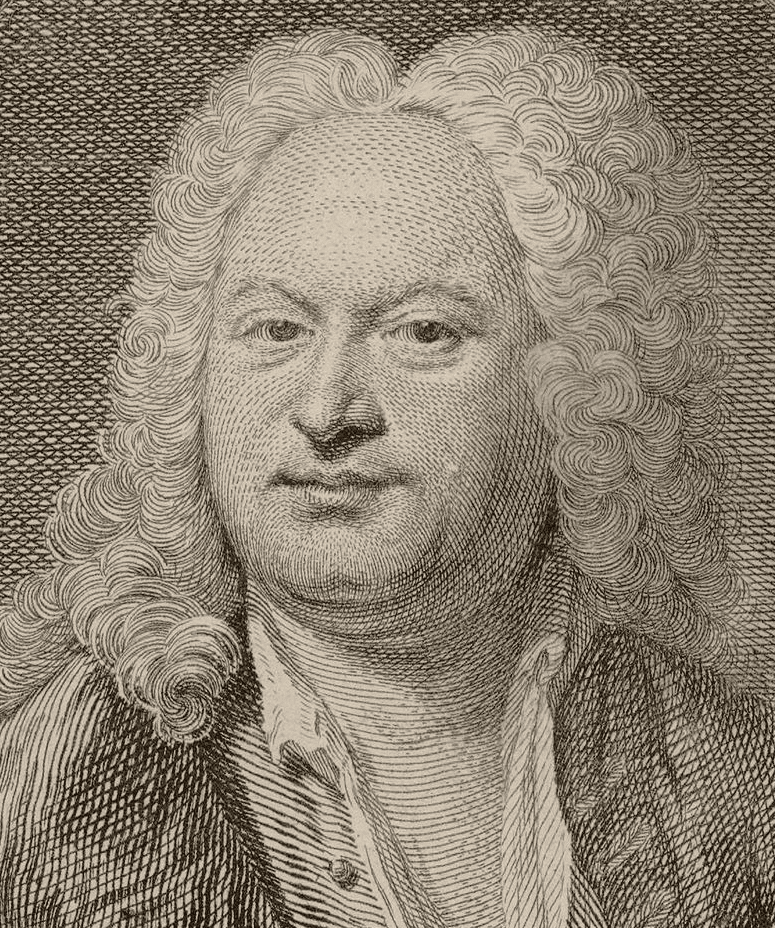
The featured image is “Silvius Leopold Weiss. Crop from copper engraving by Bartolomeo Follin, after a painting (now lost) by Balthasar Denner. Date 1765.” This file is in the public domain, courtesy of Wikimedia Commons.