Street saints are people who have heard the call and obeyed. They are very different kinds of people in very different places, but they have one thing in common: They have heard the call to go, and they have said “here I am Lord, send me.”
 Why should anyone embark on the way of compassion? Where should we start? We see a world full of needs, homeless people with their hands outstretched at the intersection, drug-infested neighborhoods with drive-by shootings, pockets of poverty, kids abandoned by deadbeat dads, and prisons full of people the world has written off as dangerous and hopeless. What can anyone do to put a dent in these problems that are so overwhelming? How can our efforts possibly make a difference? Mother Teresa was once asked how she could do her work, knowing that every day the city of Calcutta would pick up the dead from its streets, and thousands of other people would continue to live in squalor, people she could not reach. She replied that if she ever looked at all the misery she would never begin. But decided she could simply love one person at a time and start there each day. “Besides,” she added, “God didn’t call us to be successful. He called us to be faithful.”
We should embark on the way of compassion for three reasons. We should do it out of love and gratitude for the love that God first gave us. “This is my commandment” says the Lord, “love one another, as I have loved you.” [1] We are being asked to give a loving response to love we receive. “We love because he first loved us.” [2] We should do it out of obedience, because the Lord tells us in more than four hundred verses in the Bible of his real and tender concern for the poor. “Be open handed to your brothers in need,” he urges us.[3] “He who oppresses the poor shows contempt for his maker. He who is kind to the needy honors God.” [4] We should do it, because Jesus said, “I tell you the truth, whatever you have done for one of the least of these brothers of mine, you did for me.”[5] And there is another reason for engaging in compassion: we should do it because it changes us. There is a reciprocal exchange in ministry, a healing power that comes to the wounded healer in an ellipse of love, received by the giver, who gives it away, and receives more in return. [6] We should give not only because it may benefit the recipient, but because it changes our hearts.
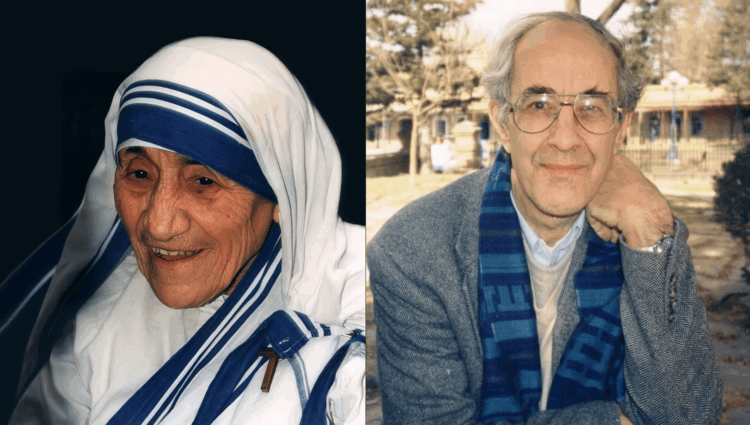
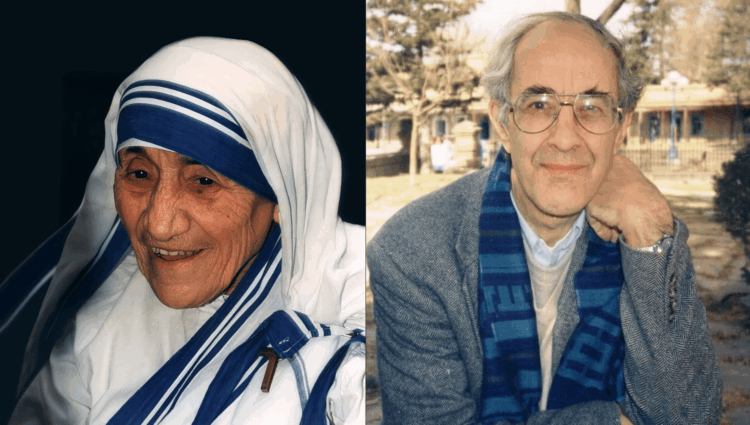
The name of one person in the 20th century became synonymous with the word compassion: Mother Teresa. No one else on the face of the earth became so well known for her acts of mercy and her saintliness. She was, in fact a living saint, and has now been acknowledged by the church as one. Her example has inspired many people to follow and join the order of the Missionaries of Charity. The lesson of her life is a rich one, and she has inspired countless others to be compassionate and aspire to holiness. Although she never sought the limelight, she was thrust onto the public stage many times in her later years, where she was often uncomfortable but always fearless. She did not like the attention, but she rose to the occasion to speak the truth. She was not awed by political power in the least, and stood in such stark contrast to the worldly ways that when she was in the corridors of political power, she won hands down by the sheer moral power of her presence.
Mother Teresa Comes to Washington
The contrast between moral power and political power was made very clear to me in an encounter early on in my experience on the White House staff of President Reagan. I had already spent a number of years in Washington on Capitol Hill, working with Members of Congress and their staffs, engaging in the fray of political confrontations. I found myself one morning stepping out of a chauffered White House limousine to go and hear Mother Teresa. Even to my Washington sensibilities, it seemed faintly ludicrous, opulent and inappropriate. She seemed incongruous in the imposing Dirksen Senate Office Building, with its marble floors, rich wood panels, television lights – a tiny nun from Calcutta addressing the purveyors of Washington’s political power.
The crowd was large, and the photographers and reporters aggressively jostled each other to get near her. The nun who had become synonymous with compassion was frail looking and wrinkled, and in contrast to everyone else’s expensive suits and “power ties,” she was dressed in a plain white sari with a blue border, and sandals. She seemed uncomfortable, not as much with the noise and shoving as with the praise she received. Everyone was on their feet with applause. Then she spoke quietly to several hundred perfectly still listeners. Every small gesture she made provoked a swarm of photographic clicks, like so many gnats around her. But the sound of the milling photographers soon dissipated in a consciousness that was riveted to her joyous face.
She told us of newborn babies that were left in dustbins in Calcutta near the home of the Missionaries of Charity in Calcutta, with the mother’s unspoken hope that they would be found and saved. Mother Teresa and her sisters collected thousands from the streets, abandoned children, the sick, the dying. They ministered to lepers. Each day in Calcutta they fed 8,000 people, and somehow they have never had to turn one away because there was nothing to give. She told us of a man who lay dying in a gutter, half eaten by worms, rotting. Mother Teresa herself carried him to her home for the sick and dying, and gave him what he had not known until then, a clean place to lie, unconditional love, and dignity. “I have lived like an animal all my life,” the man told her, “ but I will die like an angel.” She told us of one of the sisters who found eight fetuses from an abortion clinic in Calcutta that were still alive. They took them in, nurtured them, and three lived for a time. One eventually grew into a healthy girl and they found a home for her adoption. Although the Missionaries of Charity needed money for their work, Mother Teresa did not ask for it. The sisters live in the same abject poverty as those to whom they minister. Mother Teresa told us, “We take the vows of poverty and live among the poor because to us poverty is freedom.”
Part of the power Mother Teresa yielded came from her renouncing everything the world counts as influential. She and her Missionaries of Charity own only a change of clothes, a pair of sandals, and a few paltry belongings that can fit into one box. They do not receive payment for their work, and may not accept hospitality of others. They have chosen to live in absolute poverty among the poorest of the poor in order to serve them in total reliance on God. In this, they model a holy life of asceticism, and their deeds speak volumes. In every dying person they wash, they see themselves touching the body of Jesus “in the distressing disguise of the poorest of the poor.” At a deeper level, in sharing in the suffering of the poor, they identify with them in solidarity. In a mysterious way, by suffering with the poor, they are also participating in Christ’s suffering on the cross.
With flashbulbs popping, Members of Congress came to stand by her side, one by one. Most of the section that had been reserved for them was empty, filled with a few aides sent instead. It occurred to me that a day in Mother Teresa’s life brought more good to the face of the earth than all our efforts combined. Mother Teresa came to the White House for lunch with President and Mrs. Reagan the next day. I came to join the crowd of reporters and colleagues on the White House staff for her farewell. “What did you talk about, Mr. President?” shouted one of the reporters. “We listened,” he replied.
She came to Washington again to speak at the National Prayer Breakfast in Washington in 1994. There were some 3000 people assembled from all over the world. Prime Ministers, Presidents, Ambassadors, Members of Congress, Supreme Court Justices, and dignitaries from 150 countries. President Clinton was seated on the stage. And as I looked around that huge ballroom in the Washington Hilton at the staggering assembly of political power, and watched their reaction as that tiny nun entered, the electrifying response made it clear who had the real power. She spoke with a moral and spiritual authority that eclipsed theirs. And despite the fact that she had to step up on a footstool to be seen over the podium, she was not intimidated. Mother Teresa said boldly, “St. John says that you are a liar if you say you love God and you don’t love your neighbor. How can you love God whom you do not see, if you do not love your neighbor whom you see, whom you touch, with whom you live?… Jesus makes himself the hungry one, the naked one, the homeless one, the unwanted one, and he says, ‘You did it for me.’” [7]
Mother Teresa then threw down her gauntlet, with President Clinton seated a few feet away, and said, “The greatest destroyer of peace today is abortion. And if we can accept that a mother can kill even her own child, how can we tell other people not to kill one another? We are fighting abortion by adoption – by care of the mother and adoption for her baby. We have saved thousands of lives … Please don’t kill the child. I want the child. Please give me the child. I am willing to accept any child who would be aborted, and to give that child to a married couple who will love the child.”[8] Give me the child. Her plaintive plea seared the hearts of everyone who heard her. As the crowd rose in thunderous applause, the President and First Lady remained seated. And it was clear who had won that encounter.
A Promise to Deny Him Nothing
Mother Teresa was born of Albanian parents in 1910 in Skopje, Yugoslavia, as Agnes Bojaxhiu. She had a special grace from her first communion at 5 ½, and a love for souls that grew. She entered the Irish order of the Sisters of Loreto at the age of 18, bid her family a tearful farewell and went to Ireland to learn English. She chose her new name after Theresa of Lisieux, the Little Flower. She was sent to Calcutta in 1929, where she taught geography and catechism at St. Mary’s High School, and later became the principal. There she learned Hindi and Bengali. It was a school that accepted orphans and poor children as well as boarding students, and on her daily trips to another Loreto school that she oversaw she observed the bone-crushing poverty and squalor of the city.
Mother Teresa was on a train Sept. 10, 1946, when she received what she called “the call within the call.” It was quite clear that she was to follow Jesus into the poorest slums of the city, live among the poor, and do his work there. We know that she did that heroically. But what has come to light only very recently in the investigation for her canonization is that she had a long discussion back and forth, first with the Lord, and then with the Church, before she could act on this call. The Postulator of the cause, Father Brian Kolodiejchuk of the Missionaries of Charity, has documented her story, based on interviews and correspondence with her spiritual advisor Father Van Exem and Archbishop Perier.
Mother Teresa had made a secret vow in 1942 that she wanted to give as a gift to Jesus, “something very beautiful…something without reserve.” She promised “to give God anything that He may ask – not to refuse Him anything.” [9] She carried this private vow within her four years, and then God spoke. Through an inner voice He said to her: “You have become my spouse for My love. Will you refuse to do this for me? Refuse me not.” [10] Mother Teresa kept a journal of her conversations in prayer with the Lord. In seeking permission to do this work on the streets among the poorest of the poor, she wrote to Archbishop Perier in 1947: “One day at Holy Communion I heard the same voice very distinctly: ‘I want Indian nuns, victims of my love, who would be Mary and Martha, who would be so very united to me as to radiate my love on souls. I want free nuns covered with my poverty of the Cross. I want obedient nuns covered with my obedience of the cross. I want full of love nuns covered with the charity of the Cross. Wilt thou refuse to do this for me?” On another day she recorded the words: “You have become my spouse for my Love. You have come to India for Me. The thirst you had for souls brought you so far. Are you afraid to take one more step for your Spouse, for me, for souls? Is your generosity grown cold? Am I a second to you?” [11]
She wrote to the Archbishop, “These words, or rather, this voice frightened me. The thought of eating, sleeping, living like the Indians filled me with fear. I prayed long – I prayed so much – I asked Our Mother Mary to ask Jesus to remove all this from me. The more I prayed, the clearer grew the voice in my heart and so I prayed that He would do with me whatever He wanted. He asked again and again. Then once more the voice was very clear: ‘You have been always saying, ‘Do with me whatever you wish.’ Now I want to act. Let me do it, My little Spouse, My own little one. Do not fear. I shall be with you always. You will suffer and you suffer now, but if you are my own little Spouse of the Crucified Jesus, you will have to bear these torments on your heart. Let me act. Refuse me not. Trust me lovingly, trust me blindly.”
The Lord in speaking to her was very specific about what she should do, even what to call the others who would join her. He said, “I want Indian Nuns, Missionaries of Charity, who would be my fire of love among the poor, the sick, the dying, and the little children.” And he was blunt as well. He said, “You are, I know, the most incapable person, weak and sinful, but just because you are that, I want to use you for My glory. Wilt Thou refuse? Little one, give me souls. Give me the souls of the poor little street children…. I long for the purity of their love…. Wilt thou refuse?” [12]
In a vision, she saw a crowd with their hands lifted to her in the midst, as they cried out “Come, come, save us. Bring us to Jesus.” She saw a second picture, the same crowd, and wrote, “I could see great sorrow and suffering in their faces. I was kneeling near Our Lady who was facing them. I did not see her face but I heard her say, ‘Take care of them. They are mine. Bring them to Jesus. Carry Jesus to them. Fear not…” Then in a third picture, she could see the crowd in darkness with Christ on the cross before them, as she stood as a little child with Our Lady, facing the cross. Our Lord said, “I have asked you. They have asked you and she, my mother, has asked you. Will you refuse to do this for me, to take care of them, to bring them to me?” She answered, “You know Jesus, I am ready to go at a moment’s notice.” [13]
But it was not going to be an easy path, and she was both warned and encouraged. She sensed the Lord saying “Fear not. Even if the whole world is against you, laughs at you, your companions and superiors look down on you, fear not. It is I in you, with you, for you.” [14] When Mother Teresa initially asked to be released from the convent to go onto the streets, she was denied permission. She was told to say nothing and go back and pray, which she did. When she implored again, her superiors in the church doubted the authenticity of her call. Once again, she went back in obedience to pray further. But her perseverance and prayer finally sufficed to persuade Fr. Van Exem. And when Archbishop Perier received Mother Teresa’s letter with the entries from above, he no longer doubted that it was the will of God. She then asked permission to move out of the convent to live among the poor. Although it was a highly unusual arrangement to have a nun ex-claustrated, when the permission finally came from Rome, she was allowed to remain in her order despite the fact that she would be living on the streets among the poor she served. But she encountered serious resistance from her fellow believers. David Aikman writes, “One convent where she stopped by to eat her lunch ordered her to eat under the back stairs like a common beggar. A Yugoslav Jesuit, of the very nationality and order that had first inspired her love for India, commented brusquely, ‘We thought she was cracked.’” [15]
Mother Teresa embarked on the ministry that the world now knows, the outreach to the unloved, the lost, the unwanted, to lepers, the untouchables. She picked up the dying and brought them to the home she founded to give them love and dignity in death. She picked up babies and infants that had been abandoned in the garbage heaps, like human refuse. Aikman writes, “Many, perhaps the majority of the babies, had been abandoned almost as soon as they were born, and almost all were suffering from acute malnutrition or tuberculosis. Their eyes were weary and sunken into their skeletal little faces, their limbs often mere sticks, incapable of independent movement. Several were beyond saving even when immediately provided with the proper medicines and nutrition. And, of course, all of them were starving for love.” [16]
The ministry of the Missionaries of Charity eventually spread to other countries, including some in the West that did not think of themselves as home to the “poorest of the poor.” But the spread of AIDS, drugs, and the squalor of urban slums in first world countries spawned pockets of third world conditions. Mother Teresa diagnosed the poverty of the soul that has sickened affluent countries, and she concluded that the hunger of the heart is crippling. The maladies of the affluent countries were crippling the human heart. She said that for her the “least of my brethren” meant “the hungry and lonely, not only for food but for the word of God; the thirsty and the ignorant, not only for water but also for knowledge, peace, truth, justice, and love; the naked and unloved, not only for clothes but also for human dignity;… the homeless and abandoned, [who yearn] not only for a shelter made of bricks, but for a heart that understands, that covers, that loves.” She redefined the poor to include the poor in spirit. The “least of our brethren” includes “the unwanted, the unborn child, the racially discriminated against;” it includes captives, “not only in body but also in mind and spirit,” the alcoholics and drug addicts. Her heart went out to “all those who have lost all hope and faith in life.” [17]
There are two words written on a sign that hangs on the walls of the Missionaries of Charity homes all over the world: “I thirst.” These words Christ uttered on the cross are a reminder to the sisters that He thirsts for souls. This thirst motivated Mother Teresa, and became a motivating force for the order she founded. The constitution of the Missionaries of Charities says: “Our aim is to quench the infinite thirst of Jesus Christ on the Cross for love of souls. We serve Jesus in the poor, we nurse Him, feed Him, clothe Him, visit Him.” It was this profound love, deepened in contemplative prayer, and nourished by the Eucharist, that sustained Mother Teresa through what would have been a crushing burden of misery for lesser souls. “We do not do social work,” she insisted. “We are contemplatives in the world.” The ultimate source of this power is Christ Himself.
She called herself a pencil in God’s hand. In her faithful yielding to God, she wrote with her life what He intended to demonstrate to a world grown cold. She was able to live and give His transforming love. Mother Teresa had a winsome but arresting way of enlisting the aid of people to assist. She would simply ask them: “would you like to do something beautiful for God?”
The results won her the Nobel Peace Prize, the Templeton Prize for Religion, and penetrated the conscience of a jaded generation. The respect for her saintliness spread throughout the world, and her order spans the globe. Although the Missionaries of Charity live in the acute poverty of those they serve, there is no shortage of young women, and now also men, who have joined this order.
She warned that it is not possible to do this kind of work “without being a soul of prayer.” Time for silence and contemplative prayer was crucial for her work, as was daily mass. She said “We must be aware of oneness with Christ, as He was aware of oneness with his Father.” We must “permit Him to work in us and through us, with his power, with His desire, with his love. We must become holy, not because we want to feel holy, but because Christ must be able to live His life fully in us. We are to be all love, all faith, all purity, for the sake of the poor we serve.” [18] Mother Teresa encouraged others to serve as well. “Our work is to encourage Christians and non-Christians to do works of love. And every work of love, done with a full heart, always brings people closer to God.”[19]
Mother Teresa believed that we all are called to live our lives as beacons of love. She said, “We must grow in love and to do this we must go on loving and loving and giving and giving until it hurts – the way Jesus did. Do ordinary things with extraordinary love: little things like caring for the sick and the homeless, the lonely and the unwanted, washing and cleaning for them. You must give what will cost you something.” [20]
She points us toward the way of what she calls “A Simple Path.”
The fruit of silence is
PRAYER.
The fruit of prayer is
FAITH.
The fruit of faith is
LOVE.
The fruit of love is
SERVICE.
The fruit of service is
PEACE.[21]
One of the greatest mysteries in Mother Teresa’s life is a phenomenon that was almost entirely unknown to others during her lifetime. Only her spiritual directors knew. She suffered from a spiritual darkness that lasted more than forty years, until, as far as we know, her death. This woman whose radiant smile lit up the world around her was in fact walking by faith, and not by sight. Her communication with her spiritual directors in the 1960’s, 70s and 80s describe a “darkness and nothingness” that eclipsed her spirit. In her “dark night of the soul” that lasted for decades, she had an overwhelming thirst for God that caused her great anguish. She likened her suffering to that of souls in hell, parched for God. She questioned whether He had rejected her. And yet she remained surrendered to Him, and persevered despite all.[22] It was only later that this intense longing for Him became a part of her union with Him. The postulator for her canonization, Fr. Brian Kolodiejchuk, tells us, “She understood that the darkness she experienced was a mystical participation in Jesus’ sufferings: [she wrote] ‘Father, I am alone. I have His darkness. I have His pain.’ Because it was His, she also had joy: [she wrote] ‘Today really I felt a deep joy that Jesus can’t go anymore through the agony, but that He wants to go through it in me. More than ever I surrender myself to Him. Yes, more than ever I will be at His disposal.’ …In a moment of great interior pain, in total forgetfulness of self, she cried out, ‘When You asked to imprint Your Passion on my heart, is this the answer? If this brings You glory, if You get a drop of joy from this, if souls are brought to You, if my suffering satiates Your Thirst – here I am, Lord. With joy I accept all to the end of life and I will smile at Your Hidden Face – always.” [23] In the very deepest sense, she offered up the profound pain of separation from Christ to him as a gift. “Seen in this light, the long and painful interior darkness takes on not only new meaning, but also gives the reason for total, even joyful surrender to it.”[24]
She made it a goal of the Missionaries to Charity to “quench the infinite thirst of Jesus on the cross for love and for souls” by doing joy-filled work among the poorest of the poor. One hallmark of Mother Teresa, and one characteristic she insisted on for all those who joined her order, was joy. She only wanted women to join her who would radiate joy in their faces and their demeanor, regardless of how trying their circumstances. We know now that the joy she consistently showed was not an easy effervescence. It required an extraordinary resolution of will and a commitment of her whole person to withstand the hardest of trials in extreme poverty, and even a kind of poverty of the spirit, and not to let it show. It is one of the hardest aspects of her life to fathom. And yet she radiated pure joy.
The Missionaries of Charity have a prayer that they often sent to people by way of thanking them for contributions, however modest. It came usually with a hand-typed letter from one of the sisters, obviously done on a manual typewriter. And it became for the recipients something to be handled with care and taken out to admire, something to cherish. The prayer was this:
Dear Jesus, help us to spread Your fragrance everywhere we go.
Flood our souls with your spirit and life.
Penetrate and possess our whole being, so utterly,
That our lives may only be a radiance of Yours.
Shine through us, and be so in us,
That every soul we come in contact with may feel Your presence in our soul.
Let them look up and see no longer us, but only Jesus!
Stay with us, and then we shall begin to shine as You shine;
So to shine as to be a light to others.
The light O Jesus will be all from You, none of it will be ours;
It will be you, shining on others through us.
Let us thus praise You in the way You love best by shining on those around us.
Let us preach You without preaching, not by words but by our example.
By the catching force, the sympathetic influence of what we do.
The evident fullness of the love our hearts bear to you.
Amen
White-hot Love of God
While few people are as saintly as Mother Teresa, all followers of Christ are called to put their faith into action. There is no one who does not have the capacity to love, and that is the essence of compassion and the essence of a life in Christ. John, the apostle Jesus especially loved, preserved these words of our Lord, “I give you a new commandment: love one another; you must love one another just as I have loved you. It is by your love for one another that everyone will recognize you as my disciples.” [25] This should be our distinguishing characteristic, the unmistakable evidence of our citizenship in the Kingdom of God. This love should shine through us, a natural manifestation of Christ’s presence in us. Deeds of love should be the natural outgrowth of receiving love. As Peter Kreeft explains it, “The three theological virtues are a single plant. Faith is its root. Hope is its stalk, its life-thrust. Love is its fruit. The plant is God’s own life in us….Faith, hope and charity are the hands that receive God.”[26]
We were created to live in relationship with God, and with each other. At the moment of creation, what God created was good – the earth and seas, the vegetation, the hierarchy of animals, and human beings, all in right relation to God. We were created to be relational beings, man to woman, and both to God. Even the trinity is at its essence relational in the Godhead. At the very core of our being is our capacity for relationship, and it is the deepest yearning of our embodied spirits. We are capable of a relationship with God, which He too desires. Man is a social being, and we also have the capacity for relationship with human beings, communication with them, mutuality, intimacy. We have the capacity for self-transcendence, for participation through work, art, and prayer. We have the capacity for love and for freedom. We express the wholeness of who we are through our body and all our senses, our emotions, spirit, intellect, will, memory, and imagination. Our whole being is called to be in right relation to God and to man.
The entire history of mankind turns on two axes, the vertical and the horizontal: our relationship with God, and our relationship with man. Jesus summed this up when he told us that the most important commandment is to “love the Lord your God with all your heart and with all your soul and with all your mind and with all your strength” and to “love your neighbor as yourself.” [27] Because we have been created as relational beings, our deepest essence must seek a loving relationship with God and man, the right intersection of the vertical and horizontal, which at the right angle is the shape of the cross.
Ours is a responding love: “we love because he first loved us.”[28] We must take the time to be with him, as we do with any person who is a friend. From this relationship with Christ should come a deep desire to do what he wants. “If you love me, you will keep my commandments.”[29] Keeping his commandments is a response to love, and also the evidence of it. “He who has my commandments and keeps them, he it is who loves me; and he who loves me shall be loved by my father, and I will love him and disclose myself to him.” (John 14:21) Participating in the Kingdom is the product of a will conformed to Christ’s will. The only way we can actively participate in building the kingdom at hand is to get past our limited selves and into a vibrant relationship with Christ.
The second great commandment is to “love your neighbor as yourself.” Together these two commandments constitute the grand intersection of the horizontal and vertical in human relationships, that between God and man, and that between man and man. This intersection is the axis on which all human action turns, and it is the shape of the cross on which Jesus hung. Our relationship to God is the vertical, the primary relationship. Only if we are rightly related to God can our relationship to man, the horizontal, be at a right angle. This is why he admonishes us “Seek ye the kingdom of God, and all these things shall be added unto you.” [30] If we focus on God but ignore the people around us, we ignore the Great Commission. If we focus on people but ignore God, we can never be more than a secular shadow of the greater light, a humanist drawing on only human energy. If we are rightly related to Christ as a disciple, we will be drawn to his light and seek him with a hungry heart and a willingness to do whatever he wants. If we cooperate and allow him to shape our heart, we will want the same things He wants for the creatures he created. If we open ourselves to him, we will have his eternal life flowing through us as we touch other human lives.
Richard Foster tells us that “white-hot love of God compels us into compassionate love of neighbor.”[31] If we open ourselves to receive the fire he offers, we become bearers of the flame. If we burn with love for God, we can light another torch with it. The opposite of love is not hate: it is indifference. We are called to be human torches of divine love, bearers of heat and light in a world grown tepid. Deeds of love are to flow out from the animating source. If our faith is vibrant, it will produce visible manifestations in the relationships around us. James asks pointedly, “Suppose a brother or sister is without clothes and daily food. If one of you says to him, ‘Go, I wish you well; keep warm and well fed,’ but does nothing about his physical needs, what good is it? In the same way, faith by itself, if it is not accompanied by action, is dead.”[32]
It is less about what we do than who we become. But what we do is a manifestation of our spiritual substance. James writes persuasively on holiness, claiming that whatever is in the human heart ultimately will be expressed in action of some kind. If we claim faith in Christ, it should become visible in our actions as a natural outpouring of our relationship with him. “Do not merely listen to the word, and so deceive yourselves,” he admonishes us. “Do what it says.”[33] If we have a heart rooted in love for Christ, we will love the things he loves, and do the things he would have us do.
What we do is a manifestation of our spiritual substance. James writes that whatever is in the human heart ultimately will be expressed in action of some kind. If we claim faith in Christ, it should become visible in our actions as a natural outpouring of our relationship with him. If action does not spring from the word, we haven’t heard it well enough. “Do not merely listen to the word, and so deceive yourselves,” he admonishes us. “Do what it says.”[34] If we have a heart rooted in love for Christ, we will love the things he loves, and do the things he would have us do.
Jesus cared passionately about the poor, and admonished his followers to do so as well. James writes, “What good is it, my brothers, if a man claims to have faith but has no deeds? Can such faith save him? Suppose a brother or sister is without clothes and daily food. If one of you says to him, ‘Go, I wish you well: keep warm and well fed,’ but does nothing about his physical needs, what good is it? In the same way, faith by itself, if it is not accompanied by action, is dead.”[35] We do not merit salvation by our virtue or works, but we give evidence of the presence of God in our lives by doing the things that please him. Virtue is a loving response to love received.
This is not a theology of salvation by works. This a way of taking the temperature of people who claim to be believers. The Lord does not like lukewarmness. He warns the Laodiceans in the book of Revelation: “I know your deeds, that you are neither cold nor hot. I wish you were either one or the other! So, because you are lukewarm – neither hot nor cold – I am about to spit you out of my mouth.”[36] (Some translations are even stronger: “vomit you out of my mouth.”) He admonishes them “obtain white clothes to wear,” deeds of righteousness, and to fire up out of their spiritual lethargy.
The source of our salvation is clear, as is the relationship between faith and works. Paul tells us “it is by grace you have been saved, through faith; not by anything of your own, but by a gift from God; not by anything that you have done, so that nobody can claim the credit. We are God’s work of art, created in Christ Jesus for the good works which God has already designated to make up our way of life.” [37] Peter Kreeft tells us that the “works of virtue are the fruit of faith…. Being saintly is our response to being saved. We cannot do either without God, but he will not do either without us. He respects our freedom. He makes his power and his grace available to us once we are joined to Christ. But if we simply sit back and let that spiritual capital accumulate in our heavenly bank account without making withdrawals and using it, we are exactly like the wicked and slothful servant who hid his master’s money rather than investing it, in Jesus’ parable of the talents.”[38]
John echoes James when he writes, “If anyone is well off in worldly possessions and sees his brother in need but closes his heart to him, how can the love of God be remaining in him? Children, our love must be not just words or mere talk, but something active and genuine. This will be the proof that we belong to the truth.” [39] If our lives do not radiate love in a tangible way, we are not walking fully in the relationship that Christ wants with us.
“The answer to the faith-and-works issue is essentially a simply one, in fact startlingly simple,” says Kreeft. “The whole complex question of reconciling Paul’s words on faith and James’ words on works, and of resolving the dispute that sparked the Reformation, the dispute about justification by faith, is answered at its core at a single stroke: the very same ‘living water’ of God’s own spirit, God’s own life in our soul, is received by faith and lived out by virtuous works.”[40]
The metaphor for our spiritual lives is found in the Holy Land. The Sea of Galilee and the Dead Sea are fed by the same source, the River Jordan. But there is one crucial difference. The Sea of Galilee has an outlet, and it is continually refreshed as new water flows in to replace that which has poured out. The Dead Sea is static, nothing flows out, and nothing can live within it. So it is with our souls. Only if we have are pouring out the living water that is poured into us are we capable of receiving more, and sustaining fresh life. [41]
The Social Justice Tradition
“Love and faithfulness meet together; righteousness and peace will kiss each other.”[42] So writes the psalmist, describing the place where the Lord’s people honor him. The concepts of righteousness, justice, and peace have always been interwoven, because where there is injustice there cannot be peace. Throughout the Bible there are scores of references to the righteous handling of people in need. The prophet Zechariah tells us, “This is what the Lord Almighty says. ‘Administer true justice, show mercy and compassion to one another. Do not oppress the widow or the fatherless, the alien or the poor.” [43] It was for those oppressed that Jesus came. As he inaugurated his public ministry, he spoke using the words of Isaiah: “He has sent me to proclaim freedom for the prisoners and recovery of sight for the blind, to release the oppressed, to proclaim the year of the Lord’s favor.” [44]
In the New Testament, the first social justice controversy that erupts in the young church is the distribution of food among the widows. The Greek widows contended that they were not fairly fed, and the solution was to create Greek deacons to look after them. This was an institutional response as well as a personal one. God has charged us to care for our fellow humans, including their physical needs, and sometimes institutions have to be changed to accomplish this.
Like the abolitionist William Wilberforce, John Woolman opposed slavery because of his faith. Wilberforce labored tirelessly for years until he was able to influence others to join his efforts in England. Woolman had a deep influence on his fellow Quakers in the American colonies, which led them to abolish slavery in 1758.[45] In this century, many followers of Christ resisted the oppression of communism because of their faith, although it cost them dearly. They were imprisoned, beaten, and millions died. And yet in the end, because of the efforts of people like these, the communist empire was toppled in Eastern Europe and the Soviet Union. In both cases, the oppressed were freed.
Social justice issues often touch on providing for the material needs of the oppressed and poor. Because we live in a politicized age, these concerns often skirt close to the political world. There is a great temptation to focus on the policy issues and lose sight of the spiritual dimension. Richard Foster writes that the greatest pitfall in the social Justice Tradition is “caring for social needs without reference to the condition of the heart. Organizations without number have begun with a wholehearted commitment to minister to both physical and spiritual needs, only to end up severing the spiritual underpinnings of their efforts. The only thing these organizations have left is a kind of social salvation that leaves people rooted in spiritual despair and alienated from God.” [46] If, however, the people who minister in this tradition maintain their rootedness in God, they can be powerful agents of change in a broken and often unjust world.
Examples of this tradition from history include Catherine of Genoa, David Livingstone, William Booth and Dorothy Day. Evangelicals for Social Action, headed by Ron Sider, is an organization that links the social justice stream to evangelical teaching in America today.
The Evangelical Tradition or Word-Centered Life
“Repent, for the kingdom of heaven has come near.” [47] This is the message Jesus brought, the good news for proclamation to a world awash with sin. In the years since Jesus uttered these words, the evangelical tradition has mobilized a mighty army of people who take this message to the unchurched, the unwashed and the unloved. It is a message for hustlers, drug addicts, gang bangers, prostitutes, perverts, petty thieves and murderers. It is also a message for CEOs, lawyers, and stockbrokers. For anyone who has sin in their life, this is the clarion call to confess and seek a new life in Christ.
The evangelical tradition is rooted in the Bible as the unerring word of God. It is centered in the person of Christ, his life and ministry, his crucifixion and resurrection. It proclaims the substitutional atonement accomplished for us on the cross. It offers us the chance to be born again in the spirit if we will acknowledge our guilt, ask the Lord’s forgiveness, and enter into a new life with him. Our willfulness has caused us to seek our own way and not that of God, and the resulting sin has created an abyss that separates us from him. Jesus Christ is the bridge over the abyss. All we have to do is accept him. If we do, we are charged to take this good news and share it with the world.
The Contemplative Tradition, or Prayer-filled Life
Prayer is a way of communication between man and God. A study of Jesus’ life reveals that he was often stealing away to spend time in prayer, alone. If he who was both fully man and fully God needed much time in prayer, how much more do we mere mortals? Prayer is as Teresa of Avila put it, “an intimate sharing between friends.” It is a means of forming our character, by seeking to align our will with that of the Lord. Prayer is the way of pouring out our petitions, praising God with thanks, imploring him for his forgiveness, and interceding for others. Its nature is a conversation, which at its best should be ongoing. Pray unceasingly, we are told. While some people do well giving their part of the conversation, few take the time to listen. It’s like hanging up the receiver before the person you called has had time to respond. In a world of noise and too many words, we seldom take time to listen for God in silence.
Contemplative prayer is a silent, wordless adoration that emanates from the deepest places of the soul to rest in God’s presence. When we push down deep enough to leave the layers of daily noise behind, after all the words are finished, when we let go of the need to formulate and agitate, we can enter this place where a bright beam is reflected from one lover’s soul to another. Teresa of Avila describes this place as an interior castle of the soul. This is where the contemplative gathers strength and finds guidance. A profound wellspring of peace flows into the parched crevices of our heart. John of the Cross calls this a “secret and peaceful and loving inflow of God.”[48] It is an affirmation of the permanent, transcendent reality that is so much more real than this realm that it creates a yearning, an ache, for that which is beyond. It is also where God’s barely perceptible whispers may come to direct, admonish, encourage. Thomas Merton writes, “The contemplative is…he who has risked his mind in the desert beyond language and beyond ideas where God is encountered in the nakedness of pure trust.”[49] This loving interaction with God slowly shapes our character, teaching us to want what he wants, transforming us.
The Wounded Healer
In a mysterious way, deeds of compassion transform both the giver and the receiver. What may be initiated by one person as a healing gesture may accomplish the healing of both. This opens another rich dimension in the life of compassion. It is less about meeting needs than it is about changing our hearts, and the process is reciprocal. Henri Nouwen articulated this process of mutual healing better than anyone in the modern era, and he wrote compellingly because he wrote from personal experience. His book, In the Name of Jesus, chronicles Nouwen’s journey from the classrooms of the Ivy League to a surprising destination.[50]
He writes: “After twenty-five years of priesthood, I found myself praying poorly, living somewhat isolated from other people, and very much preoccupied with burning issues. Everyone was saying that I was doing really well, but something inside was telling me that my success was putting my own soul in danger. I began to ask myself whether my lack of contemplative prayer, my loneliness, and my constantly changing involvement in what seemed most urgent were signs that the Spirit was gradually being suppressed.” [51] He joked about hell but realized that he “was living in a very dark place and that the term ‘burnout’ was a convenient psychological translation for a spiritual death.” [52]
Nouwen continues, “In the midst of this I kept praying, ‘Lord, show me where you want me to go and I will follow you, but please be clear and unambiguous about it!’ Well, God was. In the person of Jean Vanier, the founder of the L’Arche communities for mentally handicapped people, God said, ‘Go and live among the poor in spirit, and they will heal you.’ The call was so clear and distinct that I had no choice but to follow. So I moved from Harvard to L’Arche, from the best and the brightest, wanting to rule the world, to men and women who had few or no words and were considered, at best, marginal to the needs of our society.” [53]
Nouwen was in for a culture shock. Here was a man who had written many learned books, surrounded by mentally handicapped people who could not read or did not care to. He found that his ecumenical experience was useless, as he overheard one of the residents remark to another in the dinner line, “Don’t give him meat – he’s Presbyterian.” All his intellectual prowess was useless there. Nouwen floundered, learning to swim in this new milieu, and said “it forced me to rediscover my true identity. These broken, wounded and completely unpretentious people forced me to let go of my relevant self – the self that can do things, show things, prove things, build things – and forced me to reclaim that unadorned self in which I am completely vulnerable, open to receive and give love regardless of any accomplishments.” [54]
Nouwen began to find a way of relating that was not measured by success, and whose language was agape. As one of the pre-eminent leaders educating students, Nouwen had been driven by head faith, but was starving for heart faith. Even ministry was oriented toward a success model, and the result was the bitter fruit of competition and driven-ness. As Nouwen saw it, this malady characterizes the entire culture. He wrote, “Beneath all the great accomplishments of our time there is a deep current of despair. While efficiency and control are the great aspirations of our society, the loneliness, isolation, lack of friendship and intimacy, broken relationships, boredom, feelings of emptiness and depression, and a deep sense of uselessness fill the hearts of millions of people in our success-oriented world.”[55] The key to healing, says Nouwen, is understanding that “we are not the healers, we are not the reconcilers, we are not the givers of life. We are sinful, broken, vulnerable people who need as much care as anyone we care for. The mystery of ministry is that we have been chosen to make our own limited and very conditional love the gateway for the unlimited and unconditional love of God. Therefore, true ministry must be mutual.” [56]
We are all wounded healers, Nouwen writes in a book by that title. He points us toward one of the deepest wellsprings of compassion ministry. If we are real, we will acknowledge that we have broken, hurting places inside us. Every person has been bruised by life, maybe even mortally wounded by failed relationships, abusive partners, unjust circumstances, or cruelty. We may have done great damage to ourselves, through bad decisions, weakness, or malice. We may have suffered through disease or abandonment. We may have struggled with depression or addiction. We may have wounded others gravely. As soon as we can be honest about our failures and our wounds, and can accept the fact that we need Christ like every other sinner, we open ourselves to the possibility of a real conversion, and a real conversation with another hurting person.
Nouwen writes, “Through compassion it is possible to recognize that the craving for love that men feel resides also in our own hearts, that the cruelty that the world knows all too well is also rooted in our own impulses. Through compassion we also sense our hope for forgiveness in our friends’ eyes and our hatred in their bitter mouths. When they kill, we know that we could have done it; when they give life, we know that we can do the same. For a compassionate man nothing human is alien: no joy and no sorrow, no way of living and no way of dying.” [57]
One of the most remarkable phenomena of compassion ministry is the way that boundaries fall away, once you enter into the world of outreach. In a priceless moment, an investment banker turned up with his church members for a Christmas party in the homeless shelter. The banker was unshaven and wearing a ratty sweater as he sat smoking and chatting with the other men at the table. A homeless man at the table turned to his neighbor and asked “Is he one of us?” A newly separated woman who turns up at an airport with two suitcases and two children, not knowing where to begin a new life, is not much different than a refugee. People who go into the inner city to mentor at-risk teenagers may figure out that their own kids are just as much at-risk. If we are honest, this is not a world of “them” and “us.” It’s a world of hurting, wounded people all around us, and we are right in the middle of it ourselves as participants.
Compassion shatters the boundaries between rich and poor, black, white, Hispanic and Asian. It spans the great divide of income, denomination, or political party. A mother whose son was killed in a drive-by shooting in the inner city knows anguish, as does a mother in the suburbs whose son commits suicide. Kids doing drugs break the hearts of the parents in lovely homes and unlovely homes. Children abandoned by their dads hurt just as much, regardless of which zipcode they live in. Broken families leave a trail of human wreckage, wherever it happens. We are in this jostling, pushing and pulling, weeping, howling valley of tears together. And until we are willing to find learning in compassion, we will be the victim of pain rather than perfected by it.
For whatever reasons, God has chosen to manifest his light through the cracks in the vessels he has created. It takes an admission of our brokenness to be useful to him in this process, and the willingness to seek His love to fill us. Only then can it shine out on others, not as merely our own, but as his love that radiates from within us. Admitting our own brokenness allows God to fill the empty places, completing us, and allows us to hear the brokenness in another human soul. A person who listens from the experience of deep pain of their own can say to someone else not merely “that’s too bad” or “I’m sorry for you,” but they can say from the depth of their heart, “I understand.” The deepest kind of empathy can answer from another soul who has been wounded deeply.
In admitting our own brokenness, we are prepared to go to the Lord and ask for his healing love. When we receive it, a part of the healing process is being able to share it with other wounded souls. A remarkable dynamism is unleashed when we are willing to admit our own weakness, accept the love, and reach out to others in humility to share it with them. Instead of leadership by power, it is leadership from humility. It is servant leadership—to use Robert Greenleaf’s term—“in which the leader is a vulnerable servant who needs the people as much as they need him or her.” [58]
We do another human being a great disservice if we approach them with an attitude of coming from above them. Anybody who thinks there are people just waiting for a random act of kindness, who will be incredibly grateful, are in for a disappointment. Nobody wants to be needy, and it is sometimes harder to receive than to give. And sometimes we assume things about people, or populations, that are not true. Well-intended people may think they are taking the Gospel into the poor sections of the city. It may not have occurred to them that Jesus is alive and well in the hearts of “street saints” who already live there. People in troubled neighborhoods probably have a better idea what they need than somebody coming in from the outside. The only useful attitude of heart is the heart of the servant, and a vessel of love. Nothing else is helpful.
We have been told to take the good news to the least, the last and the lost. We are sent out to be agents of change, salt and light, vessels of love to people who hurt. Service is a manifestation of love. Christ fills us with love to give away, not to squander on ourselves. We do not move to give to others because we have not loved deeply enough, or realized how deeply we are loved.
Nouwen puts his finger on this, and he rocks us back to the pre-eminent question. It is the question our Lord put to Peter over breakfast on the shore of the sea of Galilee, just after the Resurrection. “Do you love me?” He asked him. Not once, but three times. Once for each time Peter had denied Him, just as we do again and again. “Do you love me?” There is no more important question if we are truly serving Jesus. Nouwen writes, “The question is not: how many people take you seriously? How much are you going to accomplish? Can you show some results? But: Are you in love with Jesus? [59] For all the talk of creating effective ministries and demonstrating results, or saving souls, the ultimate question remains “Do you love me?” And only if we can answer that with a joyous, resounding “Yes” can we be any use to Him at all.
Compassion Means “To Suffer With”
Make no mistake. Anyone who ventures to reach out to other human souls who suffer will be drawn into their suffering. This is the meaning of compassion at the deeper level. The word comes from Latin – cum meaning with, and patior, meaning to suffer. To suffer with someone is the essence of compassion. If we pray to God to be useful in the lives of others we serve, we need to be willing to pray the prayer: Lord help me to see what you would have me see, and break my heart for the things that break your heart. Nouwen writes, “Who can save a child from a burning house without taking the risk of being hurt by the flames? Who can listen to a story of loneliness and despair without taking the risk of experiencing similar pains in his own heart?… The great illusion of leadership is to think that man can be led out of the desert by someone who has never been there…..[W]e have forgotten that no God can save us except a suffering God, and that no man can lead his people except the man who is crushed by its sins.”[60]
Attitudes Toward Serving
God is calling us to a deeper place in our relationship with him, which we can fathom in its fullness by serving. It has a purpose in changing our hearts because it is at the same time a manifestation of love and a means of deepening it. The motivation we should have is to do that which is pleasing to God because he has asked us to. And if we obey, and rely on his guidance as we answer that call, a joy will come because it is right. The deepest kind of unity with God is surrender to him, joyful surrender of our own will to do his.
Street saints are people who have heard the call and obeyed. They are very different kinds of people in very different places, but they have one thing in common: they have heard the call to go, and they have said “here I am Lord, send me.” If we have ears to hear, he is asking us to go and become a part of what he is already doing in our cities. Street saints are already leading the charge. They are out at the walls rebuilding them where they are down. What we can do is find them, join them, come along side their efforts, support them and learn from them. We all have time, talent, or treasure to give. They need all of these.
The only way we can be of any use, either to them or to the Lord, is to go with the heart of servant and a student. We need a heart willing to serve others willingly, unselfishly, untiringly. We need an attitude of humility that reminds us we don’t have all the answers, and that we have a great deal to learn. A teachable spirit acknowledges that we have limited knowledge.
We must, above all things, be a presence of love. The aroma of Christ is with those who dwell in him, and if we are truly rooted in him, this fragrance should be evident in our words, our touch, our demeanor. This alone speaks volumes to the lives we touch, and it communicates the presence of the spirit that dwells in us. Love above all things must be our motivation and our means.
We have to go with a willingness to be changed. As we interact with people we serve, if we are open to what is taking place in our transaction, our hearts will be stretched in their capacity to embrace, to understand, to feel sympathy, and to admire strength in fortitude. We will be challenged in our assumptions, and rocked out of our comfort zone. And this is good.
We need to be very clear that we don’t have all the answers and that our own strength will not suffice. We will be driven to our knees in prayer. We will discover that we need God in a way we never have because our own resources are clearly inadequate. We will discover that we need other people to join us because the task is so huge that we cannot do all that needs to be done. We need other brothers and sisters in Christ working side by side in unity. Our brothers and sisters are those who have heard his word, and who are doing it.
We need to know that money will not solve the most important problems, which are problems of the heart. What appears to be economic need often has a deeper dimension. But physical needs are real, and unless we are giving sacrificially ourselves to meet these needs, our own heart has not been captured yet.
We need to rely completely on God for direction, and not come up with our own plans without him. So many seemingly good ideas have produced nothing but dust because someone has raced ahead without being guided. Timing is everything. We have to resist the temptation to get ahead of what God is doing, and not force our need for action on his plan.
We need to acknowledge that there is a purpose in suffering. This is one of the hardest things to confront, particularly when we see it up close and respond viscerally. But to short-circuit suffering by charging in as an amateur providence can thwart God’s intentions in a given situation. The refiner’s fire does in fact burn, but it will never burn away that which is essential. It only removes the dross, and the silver emerges gleaming.
We have to be willing to have our hearts broken for the things that break God’s heart. If the sight of a battered child grieves us, how much more must it grieve he who created her? If injustice makes us want to cry out, how much more must he want to cry out when he sees what we have permitted? If we open our hearts with compassion, we will discover that it truly means to suffer with.
We must honor others above ourselves, and not care if we are acknowledged for what we do. We should not expect to be thanked. It may happen or not, but waiting for an acknowledgement should never be our motivation. God sees what we do, and he knows our hearts. It should be enough to know that we have given him joy, even if it is in secret. Should there be acknowledgement, we should give God the glory.
This whole process of engaging others in service is to open us up to participate in the life that flows from God. There is a torrent of love that he pours out on us all, like a waterfall cascading over us. He pours this out in abundance, showering us with abandon, urging our souls to drink. If only we would. This abundance is available, and in serving we come to fill our hearts with this living water in order that we may give a cup of it to one of his little ones. He wants to open our hearts to receive the rivers and let them flow through us and give us joy, and complete us in himself. But he cannot if we do not cooperate. He will not force himself on us. But he is seeking us constantly, nudging, whispering, quietly calling.
If you feel a nudge to come and serve, don’t quench the spirit. Respond. Don’t ignore him. Open your heart and go where there is a need, and go to be a presence of love. Make yourself available to be a participant in the Kingdom Among Us. It is alive in your city now, hidden away but vibrant. Street saints can show you where.
The call is urgent. The need is great, but the joy in fulfilling it is even greater. Do it for yourself. Go, as Mother Teresa said, and do “something beautiful for God.’”
He has promised he is with us, if we obey.
Unlikely Vessels for Treasure
Not long ago, the residents of Brookwood Community west of Houston put on a play that showed demonstrated something about Christ seldom seen this way. These severely mentally and physically handicapped adults require intensive round the clock care, and can no longer live at home. Some are mentally retarded or have Down Syndrome, others are schizophrenic, or victims of debilitating automobile accidents, or have crippling personality disorders. But they donned costumes to become trees, angels, woodsmen, and other characters. In the story this colorful cast acted out, three trees were planted: one wanted to become a magnificent treasure chest. One wanted to be the mast of a great ship. And one wanted to become the highest tree of all, pointing to the heavens.
The trees were prayed over and nurtured, and they grew. Seasons passed, and the woodsmen came to cut them. But instead of being made a beautiful treasure chest, the first tree was made into a humble container to feed sheep. And the second tree, instead of being made into a mast of a mighty ship, was made into a small boat which would never sail on the ocean, but could only go on a lake. Years passed, and the first tree, now a manger to feed sheep, finds itself in the stable where Mary and Joseph had come. They laid the baby Jesus in it. And the tree understands that now as a humble manger, he holds the greatest treasure ever. The small boat made from the second tree finds itself the one on the sea of Galilee which carries the disciples and Jesus as he calms the storm. And the tree realizes that although it is a small boat, it has made one of the mightiest voyages ever. The third tree, when it is felled, becomes the cross on which Jesus is crucified. And when the resurrection takes place, the tree that wanted to point to the high heavens realizes that it has done so, and will for all of eternity. None of the trees had become what they hoped to be, but they discovered that they all had a noble purpose.
Some of the people playing these parts rolled onto the stage in wheelchairs. Not all of them spoke with perfect diction. A few needed prompting, but they all played their parts with heartfelt enthusiasm. The one who played Christ crucified was raised slowly into position by a wheelchair that elevated him, stretching his twisted limbs, as he wore a crown of thorns. The parents and friends in the audience watched with a bittersweet recognition of the message. Their children or siblings living in this home were trees for whom their families had higher aspirations. They were felled by disease or disability and made into more humble vessels, but they too have become vessels for holding Christ. It struck me as we watched these twisted bodies and radiant faces that in loving them, we participated in the mystery of Christ’s coming. In loving these broken vessels, we are made whole.
__________
This essay, in slightly different form, appears in Street Saints: Renewing America’s Soul.
The Imaginative Conservative applies the principle of appreciation to the discussion of culture and politics—we approach dialogue with magnanimity rather than with mere civility. Will you help us remain a refreshing oasis in the increasingly contentious arena of modern discourse? Please consider donating now.
Notes:
[1] John 15:12.
[2] 1 John 4:19.
[3] Deut. 15:11.
[4] Prov. 14:31.
[5] Mt. 25:40
[6] See Henri J.M. Nouwen, The Wounded Healer, (New York: Doubleday, 1979).
[7] Address of Mother Teresa to National Prayer Breakfast, Washington, D.C. February 4, 1994.
[8] Mother Teresa, Ibid.
[9] Fr. Brian Kolodiejchuk, M.C., “the Soul of Mother Teresa: Hidden Aspects of Her Interior Life,” Rome, Nov. 28, 2002 (www.zenit.org). part 1A. ZE02112820
[10] Zenit, Nov. 28, 2002.
[11] Zenit, Nov. 28, 2002.
[12] Fr. Brian Kolodiejchuk, M.C., “the Soul of Mother Teresa: Hidden Aspects of Her Interior Life,” Rome, Nov. 29, 2002 (www.zenit.org). Part 1, ZE02112920
[13] Zenit Nov. 29, 2002
[14] Zenit Nov. 29, 2002.
[15] Egan,p. 38, quoted in Aikman, p. 218.
[16] Aikman, p. 226.
[17] Mother Teresa, A Simple Path, (New York: Ballantine Books, 1995) pp. xxx-xxxi.
[18] Malcolm Muggeridge, Something Beautiful for God, p. 47.
[19] Eileen Egan, Such a Vision of the Street, p. 357, quoted in A Simple Path, p. xxvii.
[20] Mother Teresa, A Simple Path, p. 99.
[21] Mother Teresa, A Simple Path, p. 1.
[22] Fr. Brian Kolodiejchuk, M.C., “The Soul of Mother Teresa: Hidden Aspects of Her Interior Life,” Rome, Dec. 19, 2002 (www.zenit.org). part 2. ZE02121922.
[23] Zenit, Dec. 19.
[24] Fr. Brian Kolodiejchuk, M.C., “The Soul of Mother Teresa: Hidden Aspects of Her Interior Life,” Rome, Dec. 20, 2002 (www.zenit.org). part 2 concluded ZE02122020.
[25] John 13:34
[26] Peter Kreeft, Back to Virtue (San Francisco: Ignatius Press, 1992), p. 78. Originally published as For Heaven’s Sake by Thomas Nelson Inc., Nashville , 1986.
[27] Mark 12: 30-31 NIV
[28] 1 John 4:19
[29] John 14:15
[30] Luke 12:31,King James Version
[31] Richard J. Foster, Streams of Living Water: Celebrating the Great Traditions of Christian Faith, (New York: Harper Collins, 1998) p. 166.
[32] James 2:15-17.New Jerusalem Bible
[33] James 1: 22
[34] James 1: 22
[35] James 2: 14-17
[36] Rev. 3: 15-16. NIV
[37] Eph. 2:8-10. New Jerusalem Bible
[38] Kreeft, p. 67. See Mt. 25:14-30.
[39] 1 John 3:17. New Jerusalem Bible.
[40] Kreeft, p. 67.
[41] I am indebted to Peter Kreeft for this analogy.
[42] Ps 85:10
[43] Zech. 7:9
[44] Is. 61: 1-2; Luke 4: 18-19.
[45] See Richard Foster, p………..
[46] Foster, p. 179
[47] Mt: 4:17
[48] John of the Cross – see Foster p. 49 fn. 46
[49] Thomas Merton – see fn. 49 in Foster pp. 51-52.
[50] Henri J.M. Nouwen, In the Name of Jesus: Reflections on Christian Leadership, (New York: Crossroad publishing Co., 1989) reprinted 1998.
[51] Nouwen, op.cit.p. 10.
[52] Nouwen, op cit. pp. 10-11.
[53] Nouwen, op cit. p. 11.
[54] Nouwen, op cit. p. 16
[55] Nouwen, op cit. p. 21.
[56] Nouwen, op cit. pp. 43-44.
[57] Nouwen, The Wounded Healer, (New York: Doubleday, 1979), p. 41.
[58] Nouwen, In the Name of Jesus, pp. 44-45. See Robert K. Greenleaf, Servant Leadership: A Journey into the Nature of Legitimate Power and Greatness (New York/Ramsey/Toronto: Paulist Press, 1977).
[59] Nouwen, In the Name of Jesus, p. 24.
[60] Nouwen, The Wounded Healer, pp. 72-73.
The featured image combines an image of Mother Teresa (licensed under the Creative Commons Attribution-Share Alike 2.0 Generic license) and a photo of Henri Nouwen by Frank Hamilton (licensed under the Creative Commons Attribution-Share Alike 3.0 Unported license). Both images appear here courtesy of Wikimedia Commons.