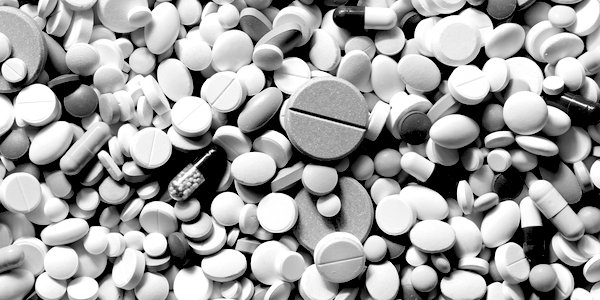
A NEW book, How to Take Drugs, by pharmacologist Dr Nick Barber, argues that many common prescription drugs, from statins to aspirins to blood pressure medication, may not work, or may work for only a small number of those who take them.
He points out that 56 per cent of us currently take prescription drugs and that the sum spent on these pills is now equivalent to one-third of the UK’S defence budget. Seven million people, for instance, are on statins. But are many of the pills which are so readily prescribed these days a complete waste of money?
In his book, Dr Barber advises readers to quiz doctors as to whether their medication is really necessary and what will happen if they don’t take it. He also states that just about all over-75s are now on at least some form of long-term medication.
Not quite all, Dr Barber. My ex-husband Neville Hodgkinson and I, in our early 80s, are on no medication of any kind and never have been. As such, we are perfectly well and healthy and pretty much as fit and active as we were 30 or 40 years ago, with no thanks to the medical profession.
Indeed, Neville says that he has not consulted a doctor for more than 50 years and while I can’t quite claim his record of half a century, I have not been to the doctor for decades, either. We have both studiously ignored all invitations to come for ‘our’ flu and covid jabs and we have a long history of not having any vaccinations at all, including holiday shots.
At the risk of sounding irresponsible, I would add that I have never, in my life, had a so-called health check of any kind. I have never had a mammogram, never had a smear test, never had a cholesterol test and I can’t remember the last time my blood pressure was taken.
My philosophy is that while I feel perfectly well, I don’t see any need to bother a doctor. If I were to go with some minor complaint or health niggle, I’m sure the medic would shake his or her head on seeing my age and advise me to go on all sorts of pharmaceutical preparations. At the very least, I expect that statins would be prescribed. Most people I know in my age group take statins and swear by them for their apparent ability to prevent strokes. So far, I have not had a stroke, and to think I could have been taking statins all these years to no health benefit whatever if I had listened to doctors.
As well as never going to the doctor, neither Neville nor I have ever been patients in an NHS hospital as adults, so over a lifetime we have cost the NHS precisely nothing.
There are no guarantees, of course, and obviously something will carry us off in the end. We are not immortal. But I believe that we are living examples that good health has nothing to do with going to the doctor and everything to do with a good diet, a positive attitude and plenty of exercise. Neville regularly goes for long walks and while I do quite a lot of walking, and go on walking holidays, most of my exercise comes from weightlifting and spin classes at the gym. For centuries, the Scandinavians have sworn by saunas and although I don’t often have a sauna these days, I am dripping with sweat when I peel myself off my spin bike, which is the next best thing.
At our exercise classes, the instructor is always yelling, ‘Straight back, straight back!’ She believes that maintaining upright posture is vital to keep all the internal organs in place and I agree. How many old people do you see almost bent double over their zimmers or rollators? I very much doubt that they are regulars at the gym.
Neville and I are often asked whether we take supplements such as vitamin C and D and the honest answer is: when we remember. I often have a bottle of vitamin tablets right beside me on the breakfast table and I still forget to take them. I do try, though, to get out in the fresh air whenever I can and I never use sunscreen.
So far as having a positive attitude goes, neither of us goes looking for illness. Yes, we sometimes we get aches and pains but the strange thing is that if we ignore them they usually go away. And part of having a positive attitude is being able to see the funny side of things. It has often been said that laughter is the best medicine, and there are many studies to show why this should be.
A good bout of laughter lowers blood pressure, promotes relaxation and stimulates endorphins, the feel-good hormones. I often watch old comedy programmes such as Dad’s Army, Keeping Up Appearances, Hi-de-Hi and Are You Being Served? which I’m sure do me far more good than all the prescription pills in the world. The list of former SNP chief executive Peter Murrell’s bizarre purchases has also provided a rich source of perhaps unintentional amusement.
Many years ago, American author Norman Cousins related how he cured himself from a crippling illness by the power of laughter along with large doses of vitamin C. His story is told in his book, Anatomy of an Illness, published in 1979.
We know that Robert Kennedy Jr, the US Secretary of Health, is doing his best to reduce the vast number of pills and jabs taken by Americans, but so far there has been no such initiative here. Perhaps Dr Barber’s book, which explains how various drugs work in the body, will encourage people to question their medication rather than blindly trusting the doctor. Yes, certainly sometimes pills are necessary, but definitely not in the quantities currently prescribed.
And the examples of Neville and I, who have attained a great age without ever resorting to pills from the doctor, might have an effect as well.
How to Take Drugs by Dr Nick Barber is published by Bluebird.